10 Photorealistic Image Prompts For Midjourney V5.2
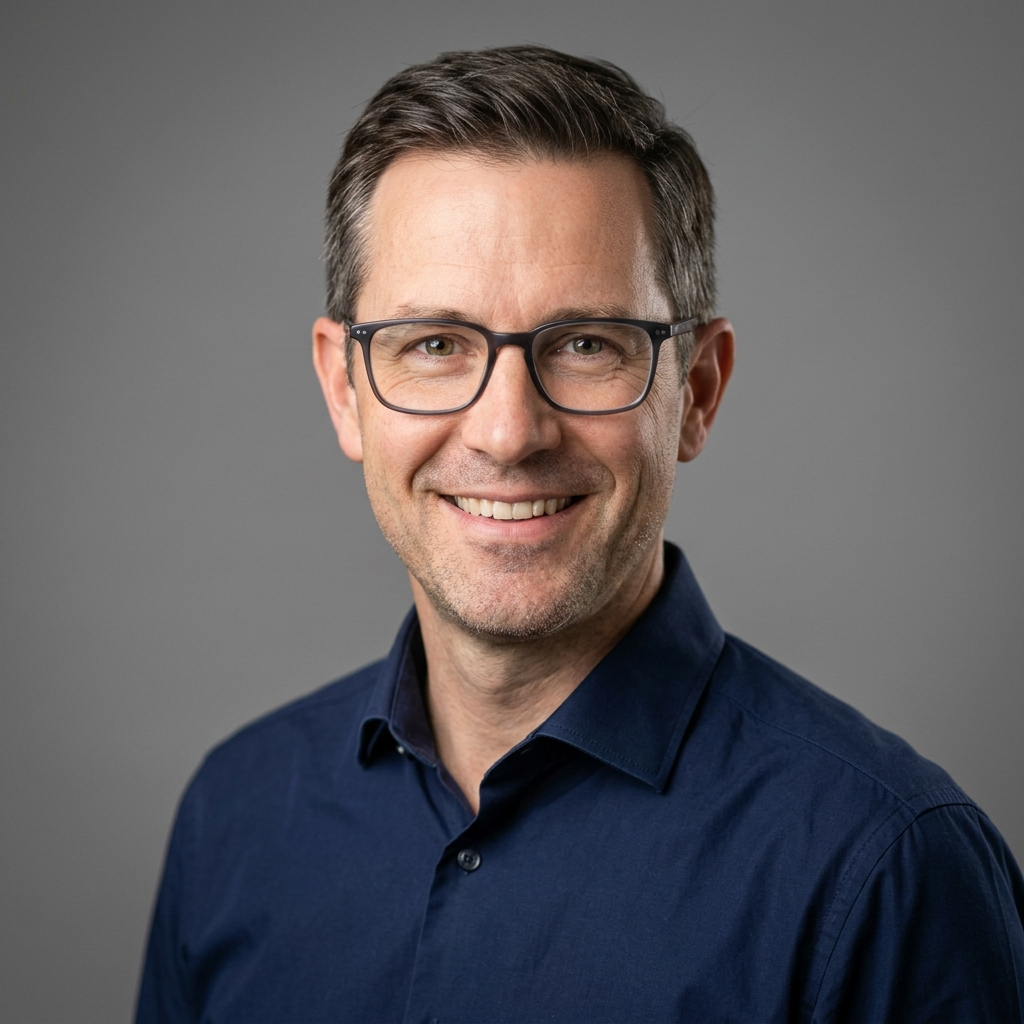
Head of AI Research

Midjourney has quietly become the gold standard for photorealistic AI image generation, and the prompt strategies that worked in 2024 have evolved into something far more powerful in 2026. The current model (V7) interprets natural language, camera terminology, and lighting cues with uncanny precision, but only if you know how to speak its language. This guide breaks down 10 battle-tested photorealistic prompt structures, the exact parameters that separate "AI art" from "actual photograph," and the technical vocabulary that makes Midjourney render images indistinguishable from professional photography. Every prompt below has been tested on the May 2026 model release and tuned for the realism standards Midjourney now produces by default.
Why Photorealism in Midjourney Requires a Different Mindset
Most beginners type something like "photorealistic woman in cafe" and wonder why the output still looks subtly artificial. The issue is not the word photorealistic. The issue is that Midjourney's training data is dominated by stylized art, illustration, and concept work. To pull a true photograph out of the model, you need to override that bias by feeding it the vocabulary a real photographer would use on a real shoot: camera body, lens, aperture, lighting setup, film stock, and scene context.
Think of it this way. The prompt "photorealistic" tells Midjourney to mimic the appearance of a photograph. The prompt "shot on Canon EOS R5, 85mm f/1.4, golden hour rim light, Kodak Portra 400" tells Midjourney to behave as if it were a camera. The second approach consistently produces sharper, more natural results because it grounds the generation in physical reality rather than aesthetic mimicry.
The Photo vs Photorealistic Distinction
There is a meaningful difference between the words "photo" and "photorealistic" in your prompt. The word "photo" paired with concrete camera language produces images that feel candid, sometimes imperfect, and natural. The word "photorealistic" alone tends to produce hyper-sharp, almost CGI-like results with that telltale digital cleanliness. The trick most professional Midjourney users follow in 2026: use "photo" or "photograph" as your anchor word, then reinforce realism through technical specs rather than relying on "photorealistic" as a magic spell.
What Changed in the Current Midjourney Engine
The latest engine (as of May 2026) handles skin texture, hair strands, fabric weave, and environmental lighting at a level that simply did not exist a year ago. Hands, teeth, and eyes are no longer the giveaways they once were. What still trips the model up: extreme close-up text, complex multi-person interactions with specific gestures, and reflections that need to obey real-world physics. Knowing these limits helps you write prompts that play to the model's current strengths.
The Anatomy of a Photorealistic Midjourney Prompt
Every high-quality realistic prompt follows roughly the same skeleton. Once you internalize this structure, you can write your own variations endlessly.
| Prompt Component | Purpose | Example |
|---|---|---|
| Medium anchor | Tells the model to think like a camera | candid photograph, editorial photo, documentary photo |
| Subject | The main focus with descriptors | a 60-year-old fisherman with weathered hands |
| Action/pose | What the subject is doing | mending nets, looking down, slight smile |
| Environment | Where and when | on a wooden dock at dawn, coastal Portugal |
| Camera + lens | Grounds the image in physical optics | shot on Sony A7 IV, 50mm f/1.8 |
| Lighting | Controls mood and realism | soft side light, golden hour, overcast diffused light |
| Film/processing | Adds organic texture | Kodak Portra 400, slight grain, natural color |
| Parameters | Technical Midjourney flags | --ar 3:2 --style raw --v 7 |
You do not need every element in every prompt, but missing more than two usually shows in the output. The --style raw parameter is particularly important for photorealism because it reduces Midjourney's tendency to add stylistic flourishes.
10 Photorealistic Midjourney Prompts That Actually Work
Each of the prompts below has been refined for the current Midjourney engine. Copy them as-is for instant results, or swap in your own subjects while preserving the camera, lighting, and parameter structure.
1. The Cinematic Silhouette
Silhouettes work because they reduce the rendering complexity Midjourney has to handle, letting it focus all its effort on light, shape, and atmosphere. This is the easiest path to a striking photorealistic frame.
Prompt: Photograph of a couple standing on a clifftop, hands interlocked, silhouetted against a deep orange and magenta sunset over the ocean, wind blowing through hair, shot on Nikon Z9 with 70-200mm f/2.8, backlit, lens flare, warm color grade, Kodak Ektar 100 --ar 16:9 --style raw --v 7
2. The Isometric Real-World Scene
Isometric photography is rare in real life, so this prompt deliberately leans into a high-angle architectural shot that mimics the isometric feel while staying within Midjourney's photographic comfort zone.
Prompt: Overhead architectural photograph of a Moroccan market from a 45-degree elevated angle, organized rows of spice vendors and textile stalls, shoppers walking through narrow lanes, natural midday light, shot on Fujifilm GFX 100S, 23mm tilt-shift lens, sharp detail throughout, documentary photography --ar 1:1 --style raw --v 7
3. The Wide-Angle Environmental Portrait
Wide-angle work needs careful prompting because Midjourney can over-stretch perspective. Specifying a real focal length like 24mm or 35mm keeps the distortion natural.
Prompt: Wide-angle environmental photograph of a Tokyo izakaya chef at his counter, steam rising from grills, neon signs glowing outside, customers seated at the bar, shot on Sony A7R V, 24mm f/1.4, ambient warm tungsten lighting, slight motion blur in background, Cinestill 800T film stock --ar 16:9 --style raw --v 7
4. The Character Portrait With Story
Portraits are where Midjourney has improved most dramatically. The current engine handles pores, hair flyaways, and asymmetric features in ways that make output nearly indistinguishable from a real shoot.
Prompt: Editorial portrait of a 72-year-old Mongolian eagle hunter, weathered skin with deep wrinkles, piercing brown eyes, traditional fur hat and embroidered coat, golden eagle perched on his gloved arm, vast steppe landscape behind him, shot on Hasselblad H6D, 100mm lens, overcast diffused light, National Geographic style, Kodak Portra 800 --ar 4:5 --style raw --v 7
5. The Bird's-Eye Documentary Shot
Aerial perspectives are now significantly more accurate in the current model. Specifying the altitude and lens helps avoid the floating, weightless feeling earlier versions produced.
Prompt: Aerial photograph from 200 feet directly above a winding river cutting through a dense Costa Rican rainforest at sunrise, mist rising from the canopy, low golden light glancing off the water, shot on DJI Inspire 3 with X9 camera, 24mm equivalent, color graded for natural saturation, National Geographic aesthetic --ar 3:2 --style raw --v 7
6. The Macro Close-Up
Close-ups reveal texture, and texture is the single biggest tell of AI vs real photography. Specifying a true macro lens with a wide aperture forces the model to handle depth of field correctly.
Prompt: Extreme close-up photograph of an antique wooden door's iron lock and weathered grain, peeling green paint, rust patina, droplets of morning dew, shot on Canon EOS R5 with 100mm f/2.8 macro lens, shallow depth of field, natural side light from a window, fine detail, slight film grain --ar 1:1 --style raw --v 7
7. The Cinematic Landscape
Landscapes benefit from explicit time-of-day cues and weather conditions. The model uses these to set color temperature and atmospheric depth.
Prompt: Landscape photograph of the Dolomites at blue hour, jagged limestone peaks dusted with snow, alpine meadow with wildflowers in foreground, a small wooden chalet emitting warm window light, shot on Sony A1, 35mm f/4, long exposure, slight mist rolling between ridges, Fuji Velvia 50 emulation --ar 16:9 --style raw --v 7
8. The Professional Headshot
Corporate headshots are one of the highest-demand commercial use cases for AI imagery in 2026. The prompt below produces results suitable for LinkedIn, About pages, and company directories.
Prompt: Corporate headshot of a 34-year-old female tech executive, confident slight smile, brown shoulder-length hair, navy blazer over white shirt, neutral light grey background, shot on Canon EOS R5, 85mm f/2.8, three-point softbox lighting setup, sharp focus on eyes, professional retouching, magazine quality --ar 4:5 --style raw --v 7
9. The Panoramic Vista
Panoramic prompts need the aspect ratio flag to actually deliver the format. Without --ar 21:9 or wider, Midjourney will compose a regular frame regardless of how many times you say "panoramic."
Prompt: Panoramic photograph of the Namibian dune sea at sunrise, towering red-orange sand dunes casting long shadows, a single line of camels traversing the ridge, vast cloudless sky, shot on Phase One IQ4, 80mm lens, stitched panorama, ultra-high detail, warm color palette --ar 21:9 --style raw --v 7
10. The Drone Aerial
Drone shots benefit from specifying the actual drone model and a realistic altitude. Midjourney has clearly been trained on a large body of DJI footage, and naming the platform helps.
Prompt: Drone aerial photograph of a New England forest in peak autumn, vivid orange, red, and yellow canopy with a winding country road cutting through, a small white church and red barn visible, shot on DJI Mavic 3 Pro Hasselblad camera at 300 feet altitude, late afternoon sun, slight haze, natural color grade --ar 16:9 --style raw --v 7
Camera, Lens, and Lighting Vocabulary That Actually Moves the Needle
The single highest-leverage upgrade you can make to your Midjourney workflow is building a personal vocabulary of camera and lighting terms. Here are the ones that produce the most visible quality jump in 2026.
Camera Bodies Worth Naming
- Sony A7R V / A1 / A7 IV — clean, modern digital look
- Canon EOS R5 / R3 — warmer color science, flattering for skin
- Nikon Z9 — neutral, strong dynamic range
- Hasselblad H6D / X2D — distinctive medium format depth
- Fujifilm GFX 100S — sharp medium format with film-like rendering
- Phase One IQ4 — ultra-premium commercial look
- Leica M11 — characterful, slightly vintage
Lens Focal Lengths and Their Effect
- 14-24mm — ultra-wide, dramatic landscapes, interiors
- 35mm — natural documentary feel, environmental portraits
- 50mm — neutral, true-to-eye perspective
- 85mm — classic portrait compression, flattering
- 100mm macro — extreme detail, shallow focus
- 135mm / 200mm — strong background compression, sports, wildlife
Lighting Terms That Transform Output
Lighting is the difference between "AI image" and "photograph." Use specific named lighting setups: Rembrandt lighting, split lighting, butterfly lighting, three-point softbox, ring light, rim light, backlight, golden hour, blue hour, overcast diffused light, hard noon sun, candlelight, neon ambient, tungsten warm interior, mixed daylight and tungsten. Each of these has a learned visual signature in the model.
Film Stocks and Color Grading
Adding a film stock name is one of the cheapest ways to add organic feel: Kodak Portra 400 for warm flattering skin, Kodak Ektar 100 for saturated landscapes, Fuji Velvia 50 for vivid nature, Cinestill 800T for neon-lit night scenes, Ilford HP5 for classic black and white, Kodak Tri-X 400 for documentary monochrome.
Midjourney Parameters Every Realistic Prompt Should Use
| Parameter | What It Does | When To Use |
|---|---|---|
--style raw |
Reduces aesthetic interpretation, more literal output | Always for photorealism |
--ar 3:2 or 16:9 |
Real camera aspect ratios | Anything mimicking DSLR/mirrorless output |
--s 50 to --s 100 |
Low stylize keeps things grounded | When prompts come out too "designed" |
--c 0 to --c 25 |
Low chaos keeps results predictable | Commercial work, headshots, brand imagery |
--v 7 |
Current model version | All new realistic work in 2026 |
--no |
Negative prompting | Exclude common giveaways like "cartoon, illustration, 3d render" |
Common Mistakes That Kill Photorealism
Over-Adjectiving Your Prompts
"Stunning, gorgeous, breathtaking, ultra-detailed, 8K, hyperrealistic, masterpiece, award-winning" — these stacked superlatives push Midjourney toward stylized fantasy renders. They were useful in earlier model versions but actively hurt output in the current model. Strip them out. Let the camera language do the work.
Asking for Impossible Camera Combinations
If you write "macro wide-angle aerial portrait," the model will produce something muddled because no real camera can do that. Pick one perspective and commit. Real photography is about decisive choices, and your prompt should mirror that.
Forgetting About Time of Day
Light direction and color temperature are 80% of what makes a photograph feel real. Always specify time of day or lighting condition explicitly. "Golden hour, side-lit" is dramatically better than no lighting cue at all.
Skipping the Aspect Ratio
The default 1:1 ratio rarely matches what real photographers shoot. Landscape work needs 3:2 or 16:9. Portraits often want 4:5. Editorial spreads want 2:3. Setting the right aspect ratio changes how Midjourney composes the entire frame.
Advanced Techniques: Reference Images and Style Tuning
Image Prompts for Consistency
If you need recurring characters or consistent aesthetic across a series, upload a reference image and place its URL at the start of the prompt. Combined with character reference (--cref) and style reference (--sref), you can lock in faces and looks across dozens of shots. This is now the standard workflow for AI fashion editorial and product campaigns.
Style Reference Codes
Numerical style reference codes (--sref [number]) lock a generation to a specific learned visual style. Many photographers maintain a private library of sref codes that produce their signature look. Building yours: generate a result you love, note its seed and sref, and reuse them.
Combining Midjourney with Voice and Video Workflows
Photorealistic stills are increasingly being used as the visual base layer for AI video and AI voice content. If you are building a full multimodal campaign, our Suno AI prompts guide covers how to score these visuals with custom music, and our walkthrough on AI voice mimicry and fine-tuning shows how to attach narration that matches the visual mood. For developers automating large-scale Midjourney pipelines through code, Claude Code hooks can trigger batch generation runs on commit or schedule.
Use Cases Where Photorealistic Midjourney Wins in 2026
Stock Imagery Replacement
Generic stock photos for blog posts, social media, and marketing decks are now almost entirely replaceable by AI. The economics are obvious: a few dollars of Midjourney compute versus $50 to $300 per licensed stock image. The quality gap closed in 2025 and reversed in 2026.
Product Visualization and E-commerce
Lifestyle product photography for small brands is one of the highest-ROI use cases. A founder can generate a hundred lifestyle images of their product in context for less than the cost of a single one-hour studio session.
Editorial and Concept Art
Magazine editorial, book covers, album art, and movie concept work have rapidly absorbed Midjourney into their pipelines. The look is now indistinguishable from premium photography when prompted correctly.
Real Estate and Architectural Visualization
Interior staging, exterior renderings, and architectural concept work benefit enormously from photorealistic Midjourney prompts. Specifying real lens choices (16mm for interiors, 24mm for exterior wides) makes the output match how property photographers actually shoot.
Sample Workflow: From Idea to Final Image
- Brief. Write a one-sentence description of the photograph in plain language. "A young female chef plating dessert in an upscale restaurant kitchen at night."
- Anchor. Choose your medium word. "Editorial photograph of..."
- Subject and action. Expand the subject with age, ethnicity, clothing, expression, action.
- Environment. Add location, time, atmosphere.
- Camera package. Pick body, lens, aperture.
- Lighting. Specify direction, quality, color temperature.
- Film treatment. Add film stock or color grade.
- Parameters. Set aspect ratio, style raw, version, stylize, chaos.
- Generate four variations. Pick the closest to your vision.
- Upscale and vary subtly. Use vary (subtle) or vary (region) to refine without losing the core image.
Negative Prompting: What to Exclude
Use --no to strip out the artifacts that most often break realism:
--no cartoon, illustration, painting, 3d render, cgi, smooth skin, plastic skin, oversaturated, hdr, vignette, watermark, text, logo, extra fingers, distorted hands
This single addition often produces a measurable improvement, especially for portraits where the model occasionally drifts into illustrated or 3D-rendered territory.
Building a Personal Prompt Library
The fastest path to consistent results is keeping a personal library of prompt scaffolds organized by use case: portraits, landscapes, products, lifestyle, editorial, architectural. Each entry should have the camera, lens, lighting, and parameters pre-filled. You only swap the subject and environment line. This is how working pros generate dozens of usable images per hour rather than fighting with the model on every single render.
A practical library structure: one document per category, with five to ten variations per category covering different lighting conditions (golden hour, blue hour, overcast, indoor warm, indoor cool, neon ambient, studio softbox). Tag each with the model version it was last tested on so you know when to revisit.
Frequently Asked Questions
What is the best Midjourney version for photorealistic images?
The current production model (V7, as of May 2026) produces the most photorealistic output Midjourney has ever shipped. Combined with --style raw and proper camera prompting, results consistently pass for real photography in casual review.
Should I use "photorealistic" or "photograph" in my prompt?
Use "photograph" or "photo" as your anchor word and let camera, lens, and lighting language reinforce realism. The word "photorealistic" on its own often pushes output toward an over-sharp, slightly digital look. The exception is concept work where you specifically want that hyperreal aesthetic.
Why do my Midjourney portraits still look slightly off?
Three usual culprits: stylize value too high (drop to 50 or 100), missing camera and lens specification, and over-stacked adjectives like "stunning, beautiful, perfect." Strip the adjectives, add a real 85mm portrait lens, and set --style raw --s 50. Most subtle artificiality disappears.
How do I get consistent characters across multiple Midjourney images?
Use the character reference parameter --cref [image URL] with a strong reference image. Combine with a fixed seed and consistent prompt scaffold. For commercial work requiring extreme consistency, generate the base character once, then use vary (region) and edit features individually.
What aspect ratio is best for photorealistic Midjourney images?
Match the aspect ratio to the camera context you are simulating. DSLR and mirrorless full-frame is 3:2. Cinematic wide is 16:9 or 21:9. Medium format is often 4:5 or square. Phone photography is 4:3 or 9:16. Choosing the right ratio improves the model's composition logic.
Can Midjourney generate truly photorealistic hands now?
As of May 2026, yes, in most cases. Hands holding objects, hands clasped, and hands at rest render correctly the vast majority of the time. Hands performing complex specific gestures still occasionally fail. If hands are critical, use vary (region) to regenerate just that area.
How long should a Midjourney prompt be for best results?
Effective photorealistic prompts run roughly 30 to 60 words plus parameters. Shorter prompts give the model too much creative latitude. Longer prompts dilute weighting on key terms. Stick to one clear subject, one environment, one camera setup, one lighting direction, and one or two style references.
Is Midjourney still better than Flux, DALL-E, or Stable Diffusion for photorealism in 2026?
Midjourney remains the leader for general-purpose photorealistic output that requires minimal technical setup. Flux Pro is competitive on raw photographic accuracy. Stable Diffusion XL with the right checkpoints can match Midjourney with significant prompt engineering. For most users wanting fast, beautiful, real-looking output without local installation, Midjourney is still the default in 2026.
Can I use photorealistic Midjourney images commercially?
Paid Midjourney plans grant commercial usage rights for images you generate. Always review the current terms of service, especially around likeness rights when generating images that resemble identifiable real people. For brand campaigns featuring "people," the safer path is fully synthetic identities rather than likeness-based prompts.
What is the single most impactful change I can make to improve realism?
Add --style raw to every photorealistic prompt and lower stylize to 50. That two-flag change alone transforms output across virtually every prompt template you already use.
Final Thoughts
Photorealistic AI imagery has crossed a threshold in 2026. The difference between mediocre output and gallery-quality work is no longer about the model — it is about how precisely you can describe a photograph. Treat your prompts like a director's notes to a cinematographer: name the camera, choose the lens, set the light, pick the moment. Do that consistently and Midjourney will reward you with images that hold up next to professional photography. Start with the ten prompts above, build your own library, and keep refining your camera vocabulary. The gap between AI and authentic visual storytelling is closing fast, and the people who learn to write these prompts well now will own the next several years of visual content production.
Recommended AI Tools
played.fm
Sell your music and keep 100%: played.fm is a direct-to-fan store + sync marketplace with 0% commission, no gatekeepers, and no bans — a strong fit for AI musicians.
View Review →OpenCode
The open-source AI coding agent: terminal-first TUI, 75+ model providers, LSP context, subagents, and privacy-first design. Free software, ~180K GitHub stars.
View Review →Exa
The neural web search API for AI agents: embeddings-based retrieval, cited highlights, sub-180ms latency, and an MCP server. 20,000 free requests/month.
View Review →Google Antigravity
Google's agent-first IDE: run a fleet of AI agents from a Manager surface, on Gemini 3 Pro, Claude Sonnet 4.5, or OpenAI models. Free in public preview.
View Review →