Best AI Humanizer 2026: 5 Tools Tested (And When Not to Use One)

AI Infrastructure Lead
⚡ Key Takeaways
- The best AI humanizer we tested is StealthWriter — three rewrite strengths, a built-in detector, and a Deep Scan that shows flagged text sentence by sentence. Free plan at 1,000 words per input; paid from $20/month.
- Free tiers are genuinely usable. StealthWriter, QuillBot and Surfer all humanize for free. Paying mostly buys bigger inputs and more daily volume, not better output.
- Never publish the raw output. Aggressive settings flatten voice and can introduce factual drift. Humanize light, then edit by hand — that workflow beats every tool on this list used alone.
- Detectors are not reliable evidence. They produce false positives on human writing and false negatives on AI text, and none publish audited accuracy figures.
- One use case to walk away from: if your school or university prohibits AI-assisted submissions, a humanizer does not make it allowed. It just makes it harder to catch. That is misconduct, and it is not what these tools are for.
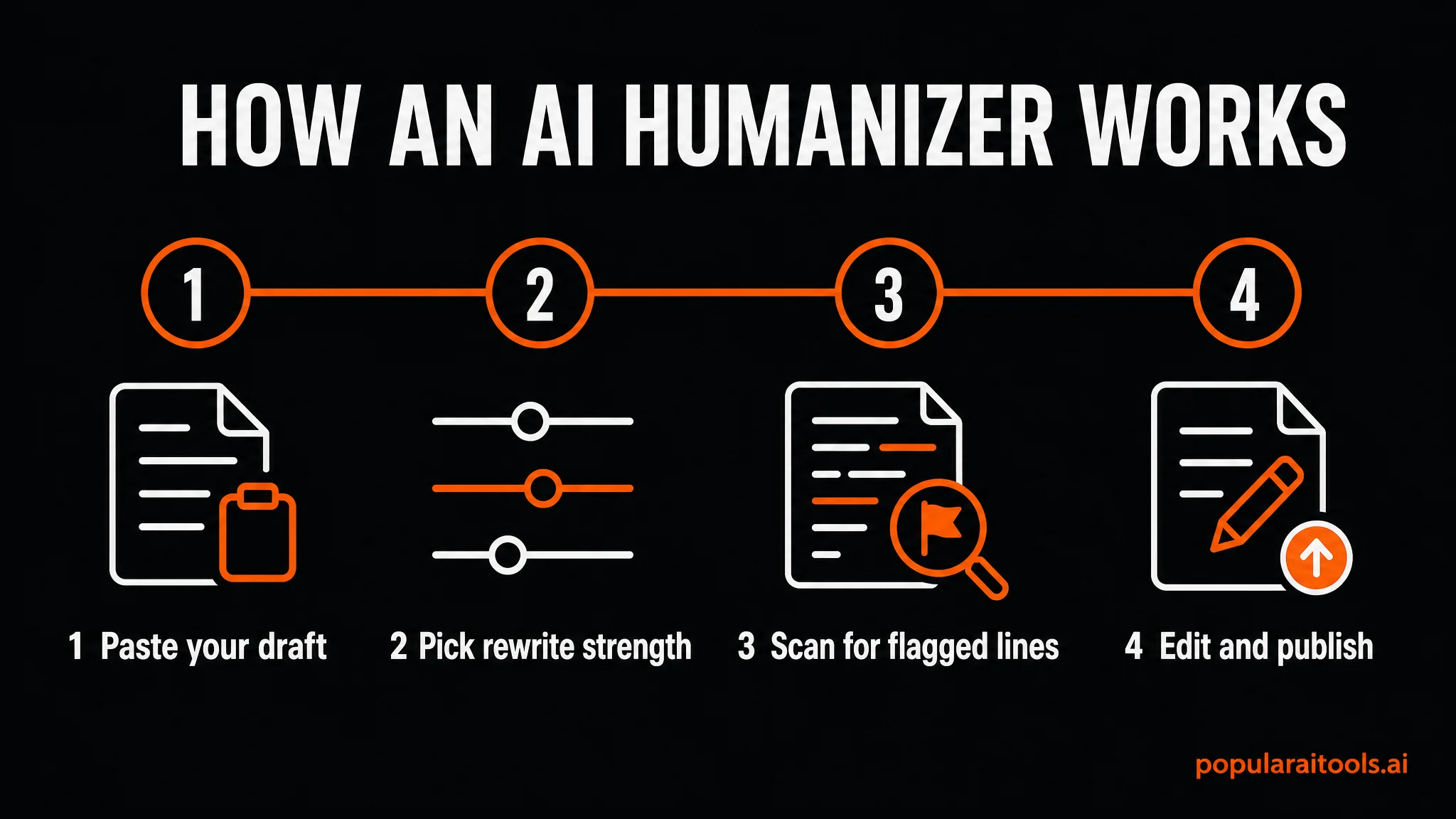
- What an AI Humanizer Actually Does
- 1. StealthWriter — our pick
- 2. QuillBot — best free everyday option
- 3. Surfer — best if you already do SEO
- 4. Undetectable AI — the best-known name
- 5. Walter Writes — the newer challenger
- Everything Compared
- Why Detector Scores Prove Less Than You Think
- The Workflow That Actually Produces Good Writing
- When Not to Use One
- FAQ
- Verdict
You drafted something with ChatGPT or Claude, it came out competent and completely lifeless, and now every sentence starts the same way. That is the actual problem an AI humanizer solves — and it is a different problem from the one most articles on this topic pretend to solve.
We ran five tools over real AI-generated drafts, checked what each costs from its own pricing page, and paid attention to something the listicles skip: whether the output is still good, not just whether a detector stops flagging it. Those are not the same test.
What an AI Humanizer Actually Does
Large language models write with statistical regularity. Sentence lengths cluster. Word choices sit near the most probable option. Paragraphs resolve tidily. That regularity is what detectors measure, and it is also why AI prose feels flat to read — the two problems share a cause.
A humanizer rewrites the text to break that regularity: varying rhythm, swapping predictable phrasing, restructuring sentences. A good one improves readability as a side effect. A bad one just adds noise until the score moves.
1. StealthWriter — our pick
StealthWriter wins here for one reason: it shows its working. Most humanizers hand back a block of rewritten text and leave you to guess what changed. StealthWriter's Deep Scan marks the text sentence by sentence with colour-coded highlights, so you can see precisely which lines were flagged and how each was treated.
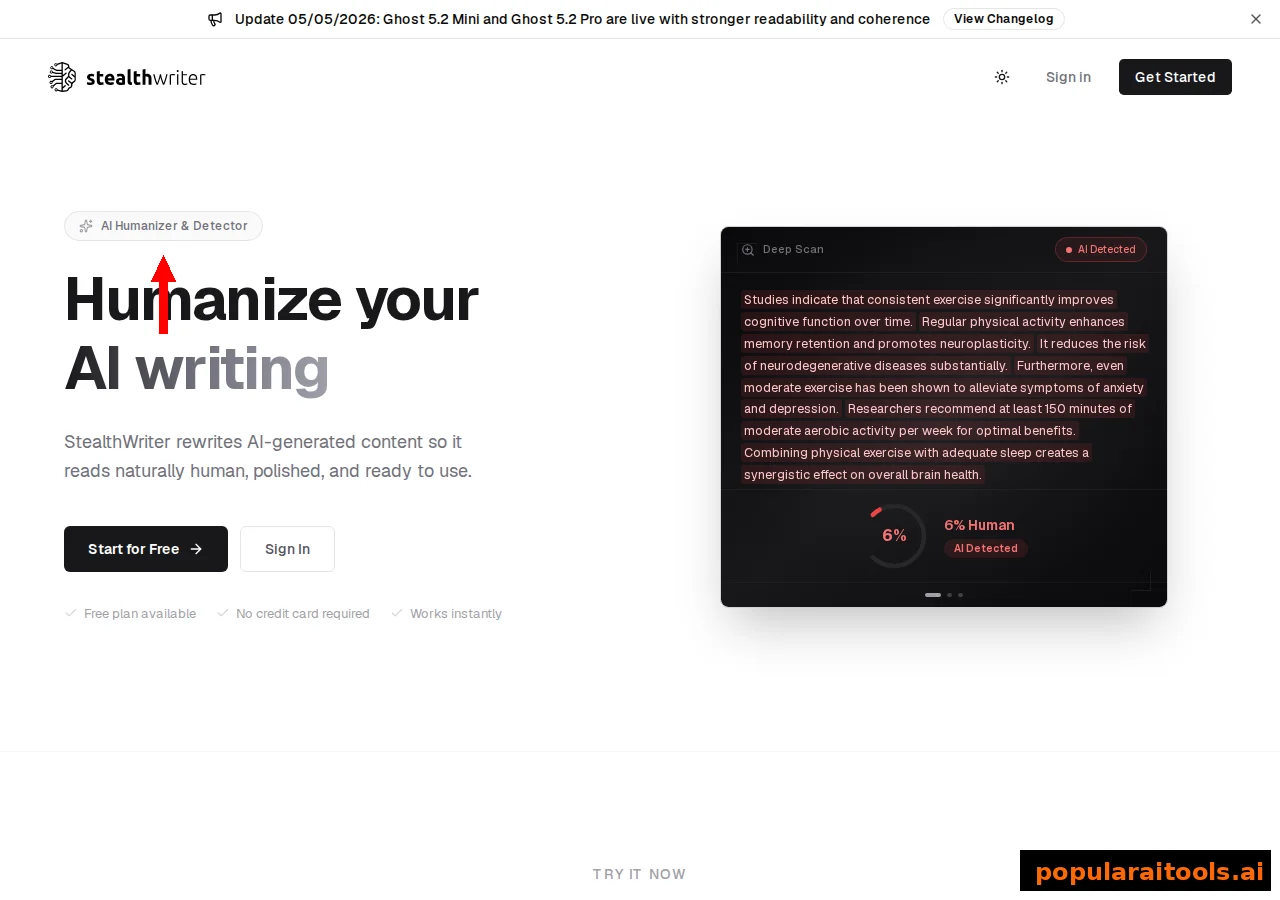
Three things make it the practical choice for anyone editing seriously:
- Three rewrite strengths — light, medium and aggressive. Light is the one you want; more on that below.
- Alternative rewrites per sentence. Click any sentence and choose from several options rather than accepting whatever the model produced first. This is the feature that keeps your voice intact.
- Detector built in. Scan before and after in the same place.
Pricing is straightforward: a free plan at 1,000 words per input with no credit card, then paid tiers at $20, $50 and $100 per month, all at 5,000 words per input with increasing daily volume. The models were updated in May 2026 to Ghost 5.2 Mini and Ghost 5.2 Pro, which the changelog credits with better readability and coherence — consistent with what we saw.
The catch: the paid tiers all cap a single input at 5,000 words, so you are pasting a long article in sections regardless of what you pay. In practice that is fine — it forces a review pass per section — but do not buy the $100 tier expecting to drop in a 10,000-word piece whole.
2. QuillBot — best free everyday option
QuillBot is the one most people already have open. Its humanizer is free, handles output from ChatGPT, Gemini, Claude and DeepSeek, and sits alongside the paraphraser, grammar checker and AI detector you were probably using anyway.
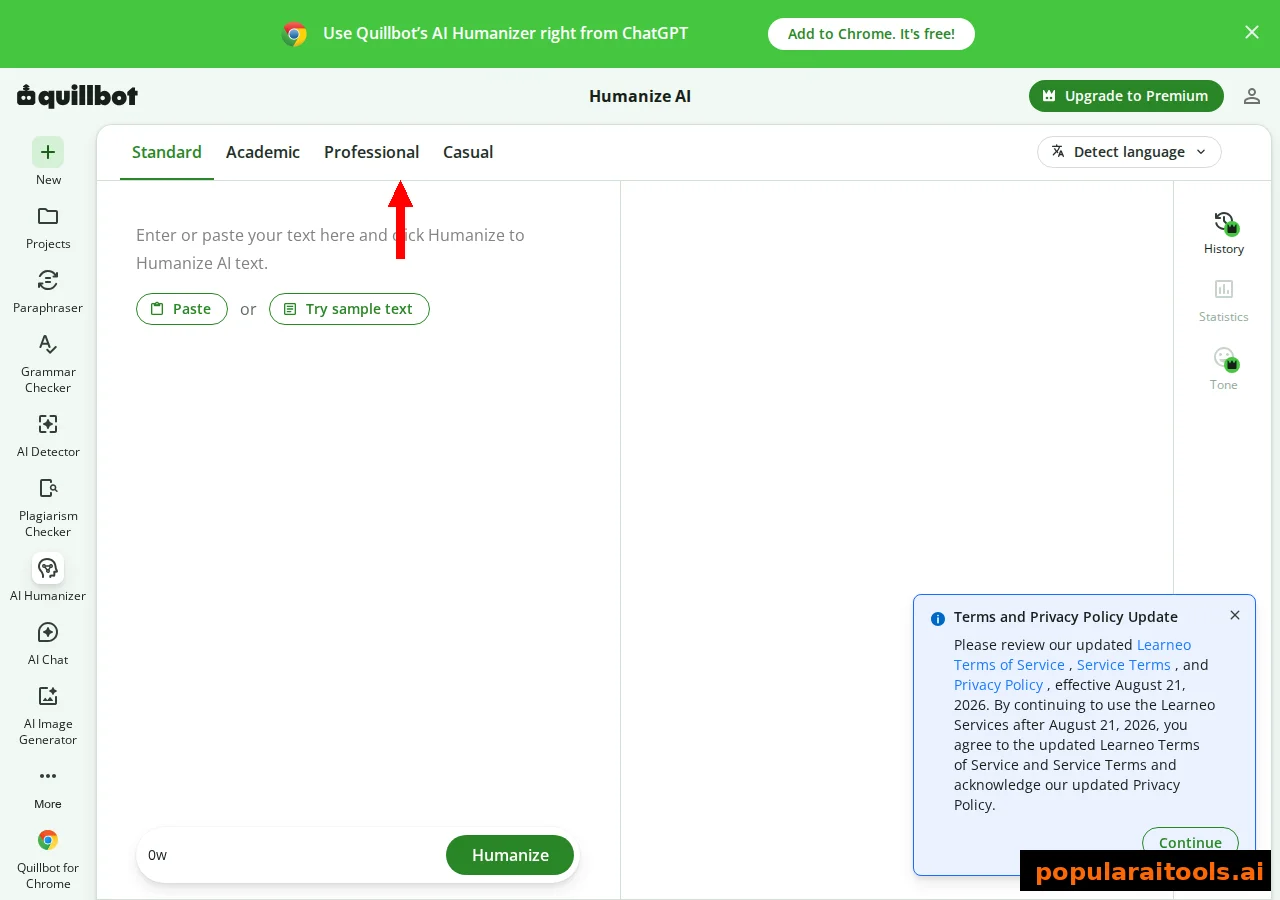
The advantage is friction: it is one tab, free, and the output is conservative enough that it rarely mangles meaning. The disadvantage is control — you get far less say over rewrite strength than StealthWriter gives you, and the forbidden-words feature that removes the tell-tale AI vocabulary sits behind Premium.
Pick it if you humanize occasionally and want zero setup. Skip it if you are editing long pieces where preserving a specific voice matters.
3. Surfer — best if you already do SEO
Surfer gives away 50,000 free words of humanizing, which is the most generous free allowance here by a distance. If you already use Surfer for content optimisation, the humanizer is simply part of the workflow rather than another subscription.
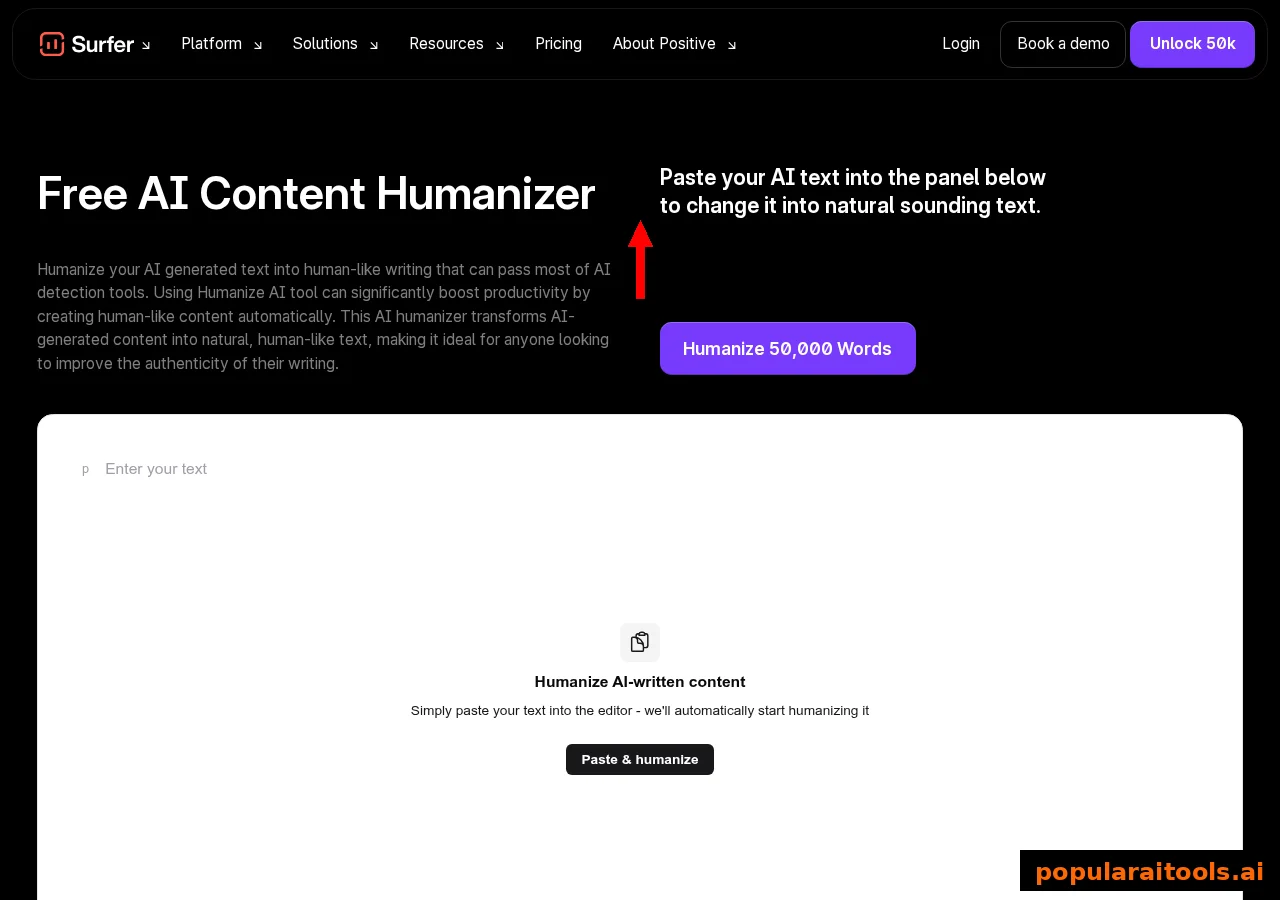
Read the allowance carefully: 50,000 words is a total, not a monthly reset or a per-input cap. It is a large trial rather than an ongoing free tier. Surfer's real value is as part of the wider platform, covered in our Surfer vs Frase comparison.
4. Undetectable AI — the best-known name
Undetectable AI has the largest brand presence in this category and a broad toolset — humanizing, detection, and AI image detection alongside it. It is the default recommendation in a lot of roundups largely because it is the name people recognise.
It performs perfectly respectably. Our reservation is positioning rather than quality: the product is built and marketed around evading detection as the goal in itself, which shapes the defaults toward aggressive rewriting. If your aim is better prose rather than a lower score, that emphasis works against you.
5. Walter Writes — the newer challenger
Walter Writes has grown quickly and turns up increasingly often in this space. It does the job and the output reads acceptably. It earns fifth here on transparency rather than performance — pricing and limits are harder to establish from the marketing pages than with the four above, and we would rather rank a tool we can describe precisely.
Everything Compared
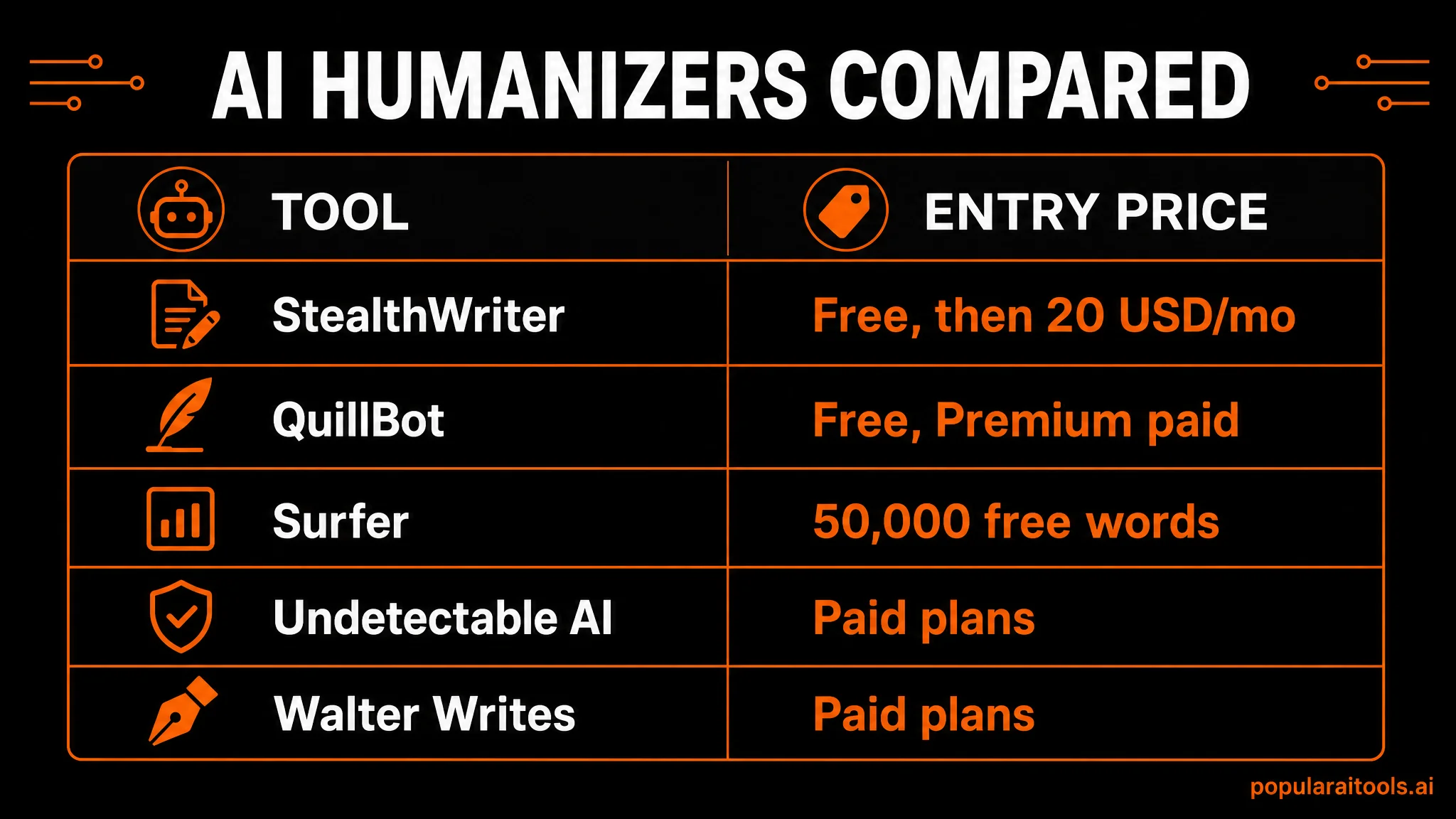
| Tool | Free tier | Best for | Main limitation |
|---|---|---|---|
| StealthWriter | 1,000 words/input | Serious editing, keeping voice | 5,000-word input cap on all tiers |
| QuillBot | Yes | Occasional use, zero setup | Little control over strength |
| Surfer | 50,000 words total | Existing Surfer users | Allowance is a trial, not recurring |
| Undetectable AI | Limited | Broad toolset, brand trust | Defaults lean aggressive |
| Walter Writes | Limited | Trying a newer option | Least transparent pricing |
Why Detector Scores Prove Less Than You Think
Every tool here reports a percentage, and it is tempting to treat that number as truth. It is not. AI detectors produce false positives on genuine human writing and false negatives on AI text, and none of the major ones publish an audited accuracy rate you could check.
Two consequences follow, and they point in opposite directions. If a detector flags your writing, that is not proof you used AI — plenty of careful, formal human prose scores badly. And if a humanizer gets you to a clean score, that is not proof the writing is any good. You have optimised a proxy.
Use the score as a rough smell test for flat, repetitive prose. Do not use it as a target. We cover the same measurement problem on the media side in our AI image detector guide.
The Workflow That Actually Produces Good Writing
After running the same drafts through all five, the tool mattered less than how it was used. This is what worked:
- Humanize on the lightest setting. Aggressive modes reliably move the score and reliably flatten whatever voice was there. They also introduce the most factual drift.
- Read every changed sentence. This is where StealthWriter's per-sentence alternatives earn the pick — you are choosing rather than accepting.
- Check the facts again after rewriting. Rewriting can quietly alter a number, a date or a hedge. Anything specific needs re-verifying against your source.
- Add something no model could produce. A real example, a measured result, an opinion you will defend. This does more for how human the piece reads than any tool.
- Read it aloud. Still the fastest detector anyone has built.
When Not to Use One
This guide is written for marketing copy, blog drafts, documentation and business writing — work where AI assistance is either disclosed or simply nobody's concern.
It is not written for coursework. If your institution prohibits AI-assisted submissions, running the text through a humanizer does not make it permitted. It makes it harder to detect, which is a different thing entirely, and it is academic misconduct whichever tool did the rewriting. Every product here markets itself partly on beating Turnitin; we are not going to pretend that is the same as a legitimate use case.
The other place to stop: anything where accuracy is load-bearing — medical, legal or financial content — should not be passing through an automated rewriter at all. The drift risk is small per sentence and unacceptable in aggregate.
Frequently Asked Questions
Verdict
Take StealthWriter if you edit AI drafts regularly and care what comes out the other side. The per-sentence alternatives and Deep Scan are the difference between rewriting text and actually editing it, and the free tier is enough to judge that for yourself.
Take QuillBot if you do this occasionally and want it free and immediate. Take Surfer if you are already inside it for SEO work.
But the finding that survived all five tools: the tool is not what makes writing sound human. Editing is. A humanizer on its lightest setting followed by ten minutes of your own attention beats any tool here run at maximum and published untouched. If you are not going to do the second part, the first part is not worth paying for.
Recommended AI Tools
played.fm
Sell your music and keep 100%: played.fm is a direct-to-fan store + sync marketplace with 0% commission, no gatekeepers, and no bans — a strong fit for AI musicians.
View Review →OpenCode
The open-source AI coding agent: terminal-first TUI, 75+ model providers, LSP context, subagents, and privacy-first design. Free software, ~180K GitHub stars.
View Review →Exa
The neural web search API for AI agents: embeddings-based retrieval, cited highlights, sub-180ms latency, and an MCP server. 20,000 free requests/month.
View Review →Google Antigravity
Google's agent-first IDE: run a fleet of AI agents from a Manager surface, on Gemini 3 Pro, Claude Sonnet 4.5, or OpenAI models. Free in public preview.
View Review →