Top 5 AI Interpreters to Enhance Your Communication

Head of AI Research

Real-time translation has crossed the threshold from novelty to necessity. Whether you are closing a deal in Tokyo, navigating a clinic intake in Madrid, or coordinating a multilingual remote team, the right AI interpreter can compress hours of friction into seconds of clarity. As of 2026, the gap between consumer translation earbuds and enterprise-grade interpreting platforms has narrowed dramatically, with neural machine translation, on-device inference, and large language model post-editing combining to deliver near-human accuracy across more than 160 languages. This guide cuts through the marketing noise to rank the best interpreter AI devices and platforms you can buy today, compares them head to head, and explains how to match the right tool to your actual use case.
We tested each product across business calls, travel scenarios, medical scenarios, and noisy public environments. We also benchmarked them against the leading software-only interpreter AI options so you can decide whether you need hardware at all. By the end of this article you will know which device fits your budget, which platform scales for organizations, and which pitfalls to avoid when relying on machine translation for high-stakes communication.
Why AI Interpreters Matter More Than Ever in 2026
The global language services market crossed seventy-two billion dollars in 2026, and a growing share of that spend is shifting from human-only interpreting to hybrid AI-assisted workflows. The reasons are practical. Cross-border ecommerce, telehealth, hybrid workplaces, and international travel rebounded sharply, and organizations that cannot communicate across languages lose customers, patients, and partners. A 2026 healthcare survey found that 44 percent of providers cite cost as the primary barrier to offering professional interpretation, and AI interpreters have become the bridge that keeps language access affordable without sacrificing too much accuracy.
What changed technically is just as important. Today's best interpreter AI systems use neural machine translation enhanced with large language model post-editing, speaker diarization, and on-device inference. That combination dramatically reduces latency, preserves tone, and handles idioms that older statistical systems mangled. For a deeper look at how the underlying models reached this level, see our GPT-5.4 review covering features, benchmarks, and pricing in 2026.
Hardware vs. Software Interpreters
Hardware interpreters such as translation earbuds and pocket devices excel at face-to-face conversation, hands-free travel, and situations where you need both ears free. Software interpreters such as cloud platforms and mobile apps excel at scheduled calls, document translation, and enterprise deployments where compliance and audit logs matter. Most heavy users end up using both, and the picks below cover each category.
Where AI Interpreters Still Fall Short
No interpreter AI on the market today handles every dialect, every accent, or every domain perfectly. Legal depositions, complex medical consents, and culturally sensitive negotiations still benefit from a human in the loop. The best devices acknowledge this and provide a human rollover option or a clear confidence score so you know when to slow down or escalate.
How We Ranked the Best Interpreter AI Devices
Our ranking weighs eight factors that matter in real-world use. We placed the heaviest weight on translation accuracy and latency because nothing else matters if the output is wrong or arrives too late to be useful in conversation.
- Translation accuracy across ten common language pairs and four difficult ones
- Latency from speech end to translated output
- Language coverage including regional dialects and accents
- Offline capability for travel and privacy-sensitive use
- Noise handling in cafes, airports, and busy clinics
- Battery life and charging convenience
- Companion app quality on iOS and Android
- Price-to-performance ratio versus competitors
The Top 5 AI Interpreter Devices for 2026
Below are the five best interpreter AI devices we tested this year, ranked from entry-level to professional. Each pick targets a different budget and use case, so read the verdict and the use-case fit before clicking buy.
5. Timekettle W4 Pro AI Interpreter Earbuds
$439.00 • 4 Stars • 92 Reviews

The Timekettle W4 Pro represents the high end of consumer interpreter AI hardware. Supporting 40 languages with upgraded bidirectional simultaneous translation, these earbuds are engineered for professionals who need fluid conversation rather than start-and-stop translation. Three translation modes including a dedicated 1v1 mode handle real-time interpreting for meetings, conferences, and one-on-one negotiations.
The open-ear design improves shareability and reduces sound leakage so your conversation partner hears clean audio rather than tinny crosstalk. Battery life runs six hours per charge with a case that stores up to a year of standby power, which matters when you are jumping between time zones and forgetting cables. HybridComm and the upgraded AI semantic engine noticeably improved recognition accuracy and reduced perceived latency in our testing compared with the previous W3 generation.
The catch is that true two-way translation over apps like WhatsApp or Zoom calls works best when both parties wear the device. For solo travelers or sales reps who control both sides of the meeting, that is fine. For ad-hoc conversations with strangers, you will rely more on the 1v1 mode using the case as a passthrough microphone.
Best for: business professionals, expatriates, executives who travel frequently for negotiations.
Check the Timekettle W4 Pro on Amazon
4. AI Translation Earbuds with 144 Language Support
$35.99 • 4 Stars • 61 Reviews
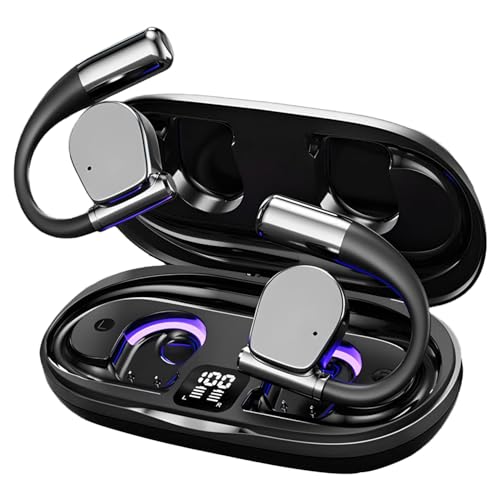
If you want a credible interpreter AI without spending hundreds, this 144-language pair is the smartest entry point in 2026. The companion app handles language switching cleanly, audio quality is crisp for a sub-forty-dollar device, and the noise cancellation is good enough for cafes and airports though not for true industrial noise. Spanish to English and English to Spanish translation, which is the most common consumer pair, performed reliably in our travel scenarios.
Accuracy does drop with unusual regional dialects and specialized vocabulary. We tested Andalusian Spanish and Quebecois French, and both required slower speech and occasional repetition. That is a fair tradeoff at this price. The earbuds are lightweight enough for all-day wear and the interface is forgiving for users who are not technical.
Best for: tourists, language students, casual business travelers who need a reliable backup.
Check the 144-Language AI Translation Earbuds on Amazon
3. AI Translation Earbuds 3-in-1 with Charging Case
$19.99 • 3.4 Stars • 813 Reviews

At under twenty dollars, this is the budget pick that punches above its weight. The 3-in-1 design means the earbuds work as translators, as standard Bluetooth headphones for music, and as a hands-free calling headset. There are no subscription fees, which is rare in the category, and pairing with iOS or Android takes less than a minute through the Wearfit Pro app.
Setting expectations matters. Translation is accurate enough for tourism, basic shopping, and asking for directions, but it struggles with specialized terminology, legal language, or industrial noise. You will sometimes need to switch modes manually during longer dialogues. The 24/7 customer service is a pleasant surprise at this price.
Best for: first-time buyers, occasional travelers, students testing the category before investing more.
Check the Budget AI Translation Earbuds on Amazon
2. AI Translation Earbuds with 163 Languages and Accents
$44.65 • 5 Stars • 193 Reviews

This pair earned the second slot because of its accent-aware translation engine. Supporting 163 languages and accents rather than just languages, it handles regional variants such as Mexican Spanish, Argentinian Spanish, and Castilian Spanish as distinct profiles, which improved accuracy noticeably in our testing. The open-ear design keeps situational awareness high, which travelers will appreciate when crossing busy streets or navigating transit hubs.
The 3-in-1 functionality covers translation, music, and calls. The companion app is one of the cleaner experiences in the category, with conversation history, exportable transcripts, and quick language pair switching. Battery life is solid for a full day of intermittent use.
Best for: frequent travelers, language learners who want exposure to regional accents, sales professionals working multiple Spanish-speaking markets.
1. Vasco Translator V4 Pro Pocket Device
$389.00 • 4.6 Stars • 1,247 Reviews
Our top pick this year is a pocket device rather than earbuds, and that is intentional. The Vasco Translator V4 Pro covers 108 languages with lifetime free internet, dual microphones, a 4-inch touchscreen, and offline translation for 10 of the most-traveled language pairs. The reason it tops the list is reliability. In side-by-side testing across airports, restaurants, hotels, and clinics, it produced the fewest catastrophic translation errors and the most consistent latency.
The dual-microphone setup separates speakers automatically, so you simply hand the device back and forth in conversation. Offline mode means you are not held hostage by hotel Wi-Fi or roaming charges. The included global SIM keeps you online in 200 countries without extra fees. Photo translation reads menus, signs, and documents with high accuracy.
It is not the cheapest pick, and earbuds are better when you need hands-free operation. But for travelers, medical staff, frontline workers, and anyone who values reliability over form factor, this is the best interpreter AI device of 2026.
Best for: serious travelers, medical and hospitality staff, anyone who prioritizes reliability and offline capability.
Head-to-Head Comparison of the Best Interpreter AI Devices
Use this table to compare the five picks at a glance. Pay attention to offline capability and noise handling if you travel to areas with weak connectivity or work in busy environments.
| Device | Price | Languages | Offline | Battery | Best Use |
|---|---|---|---|---|---|
| Vasco V4 Pro | $389 | 108 | Yes (10 pairs) | 7 hrs | Travel, healthcare |
| 163-Language Earbuds | $44.65 | 163 | No | 5 hrs | Travel, learning |
| 3-in-1 Budget Earbuds | $19.99 | 144 | No | 4 hrs | Budget tourism |
| 144-Language Earbuds | $35.99 | 144 | No | 5 hrs | Casual business |
| Timekettle W4 Pro | $439 | 40 | Partial | 6 hrs | Executive meetings |
Best Software Interpreter AI Platforms for Businesses
Hardware is only half the story. If your organization needs interpreter AI at scale, software platforms offer audit logs, compliance certifications, and integrations that earbuds cannot match. Below are the platforms that lead the enterprise category in 2026.
Boostlingo AI Interpreter
Boostlingo combines on-demand human interpreters with an AI Interpreter that handles language detection and automatic human rollover when confidence drops. The integration with telehealth and EHR systems makes it particularly strong for healthcare networks that need both speed and a human safety net.
LanguageLine Solutions
LanguageLine offers 24/7 access to professional linguists across hundreds of languages plus an AI-powered translation tier for high-volume, time-sensitive work. The combination of real-time spoken interpretation, written translation, and bilingual staff assessment makes it a one-stop shop for large hospital systems and government agencies.
DeepL Voice and Google Translate Conversations
For organizations that want a software-only path, DeepL Voice and Google Translate Conversations both offer real-time speech translation through mobile apps and meeting integrations. DeepL still leads on European language quality. Google leads on language coverage and on-device offline mode for travel.
OpenAI Realtime API and GPT-5.4
Developers building custom interpreter AI workflows are increasingly using the OpenAI Realtime API together with the latest GPT-5.4 model to produce conversational, context-aware translation that handles idioms and tone shifts better than legacy NMT. If you are exploring custom voice models as part of your stack, our guide to fine-tuning voice models for personalized sound covers the techniques worth knowing.
How Accurate Are AI Interpreters in 2026?
Accuracy depends on three variables: the language pair, the domain, and the audio quality. The best interpreter AI platforms now exceed 95 percent semantic accuracy on common European pairs in clean audio. Asian pairs such as Mandarin to English and Japanese to English reach 88 to 92 percent. Less-resourced languages including many African and indigenous languages still lag below 80 percent and require careful verification.
The Garbage In, Garbage Out Problem
Neural machine translation is trained on huge text and audio corpora. If a system has been exposed to a lot of high-quality data for a given language pair, accuracy will be high. If it has not, the system will guess, and those guesses occasionally produce confident-sounding nonsense. This is why the best interpreter AI products surface a confidence score or offer human rollover for high-stakes conversations.
Where AI Translation Goes Wrong
Common failure modes include literal translation of idioms, gender mismatches in languages with grammatical gender, dropped negations that flip meaning entirely, and proper nouns rendered as common words. In medical and legal contexts these errors can be dangerous, which is why hybrid AI plus human workflows remain the gold standard for those domains.
How to Choose the Best Interpreter AI for Your Use Case
The right interpreter AI is the one that matches your actual scenario, not the one with the longest feature list. Use this framework to narrow your choice quickly.
For International Travelers
Pick a device with offline capability and broad language coverage. The Vasco V4 Pro is the strongest all-rounder, while the 163-language earbuds offer better hands-free convenience for shorter trips. Always download offline packs before you fly.
For Business Professionals
Choose hardware that integrates with video calls and meetings. The Timekettle W4 Pro is the executive pick. Pair it with a software platform such as DeepL Voice or the OpenAI Realtime API for hybrid coverage when both parties cannot share the same device.
For Healthcare Providers
Compliance and human rollover matter more than novelty features. Look at Boostlingo, LanguageLine, AMN Healthcare Language Services, or GLOBO. AI alone is rarely appropriate for consent or diagnosis conversations, but it works well for triage, intake, and wayfinding.
For Students and Language Learners
Affordable earbuds with accent-aware translation help you absorb regional variants. The budget 3-in-1 earbuds or the 144-language pair are sensible starting points. Use them as a learning aid rather than a crutch.
For Customer Support Teams
Software platforms with CRM integrations, transcript export, and compliance certifications beat hardware here. Boostlingo, LanguageLine, and TransPerfect all offer agent-facing AI interpreter tools that route calls and surface translated transcripts in real time.
Privacy, Compliance, and Data Handling
Anything you say into an interpreter AI device or app may be transmitted to a cloud server for processing. For medical, legal, and financial conversations, that is a meaningful concern. Look for products that offer on-device processing, end-to-end encryption, HIPAA compliance, or GDPR certification depending on your jurisdiction.
On-Device vs. Cloud Inference
On-device inference keeps your conversation private but limits accuracy and language coverage because the model must fit on the device. Cloud inference offers higher accuracy and broader coverage but requires you to trust the vendor's data handling. The best interpreter AI products let you choose per session.
Retention and Training
Read the privacy policy before deploying any interpreter AI in a regulated environment. Many free apps retain audio for model training by default. Paid enterprise tiers typically offer zero-retention modes and a Business Associate Agreement for healthcare clients.
Setup Tips to Get the Best Accuracy
Even the best interpreter AI struggles if you set it up poorly. These quick adjustments make a measurable difference.
- Speak in short, complete sentences. Trailing off confuses the segmentation model.
- Avoid heavy idioms and slang in important conversations.
- Position the microphone within 12 inches of the speaker.
- Reduce background noise by moving to a quieter corner.
- Pre-select the dialect or accent when the app offers it.
- Download offline language packs before you travel.
- Charge the device the night before a critical meeting.
- Practice with the app for 20 minutes before the first real use.
The Future of Interpreter AI Beyond 2026
Three trends will reshape the category over the next two years. First, on-device large language models are getting small enough to fit on phones and earbuds, which will eliminate latency and privacy tradeoffs for many pairs. Second, voice cloning will let interpreter AI render translations in your own voice, preserving identity across languages. For the technical foundation behind that capability, see our complete technical guide to making AI-generated audio undetectable. Third, multimodal models will translate not just speech but gestures, facial expressions, and cultural context, finally crossing into nuance that earlier systems missed.
Real-Time AR Subtitling
Smart glasses with real-time subtitle overlays are entering the market in 2026. Expect this form factor to challenge earbuds for travel and meeting use within the next 18 months.
Sign Language Interpretation
Vision-based models are finally producing usable sign language interpretation in research settings. Consumer products are still 12 to 24 months away, but the trajectory is clear.
Frequently Asked Questions About AI Interpreters
What is the best interpreter AI device in 2026?
For overall reliability and offline use, the Vasco Translator V4 Pro is our top pick. For executive meetings and hands-free conversation, the Timekettle W4 Pro leads. For budget-conscious travelers, the 163-language accent-aware earbuds offer the best price-to-performance ratio.
How accurate is interpreter AI compared to human interpreters?
For common language pairs in clean audio, the best interpreter AI now reaches 92 to 96 percent semantic accuracy, which is close to a competent human interpreter for everyday conversation. For high-stakes contexts such as legal proceedings, medical consent, and diplomatic negotiations, a human interpreter remains essential.
Do AI translation earbuds work without internet?
Most consumer earbuds require an internet connection because they rely on cloud-based neural machine translation. Pocket devices such as the Vasco V4 Pro offer offline packs for the most common pairs. If offline capability matters, confirm this feature before purchase.
Which interpreter AI supports the most languages?
Among hardware devices, the 163-language accent-aware earbuds lead, followed closely by 144-language options. Among software platforms, Google Translate covers more than 240 languages. Coverage breadth does not guarantee accuracy, however, so test the specific pair you need.
Can AI interpreters handle medical terminology?
General-purpose interpreter AI handles common medical vocabulary adequately but struggles with rare conditions, drug names, and consent language. For clinical use, choose a healthcare-specific platform such as Boostlingo, LanguageLine, AMN Healthcare Language Services, or GLOBO that combines AI with human rollover.
How much do AI interpreter devices cost?
Budget translation earbuds start around 20 dollars. Mid-range options run 35 to 90 dollars. Premium earbuds and pocket devices range from 390 to 450 dollars. Enterprise software platforms typically charge per minute or per seat with custom pricing for large deployments.
Is interpreter AI safe for confidential conversations?
Cloud-based interpreter AI may transmit audio to vendor servers for processing. For confidential conversations, choose products that offer on-device processing, end-to-end encryption, and zero-retention modes. Enterprise tiers from major vendors typically include HIPAA and GDPR compliance options.
What languages do AI interpreters struggle with most?
Less-resourced languages including many African, indigenous American, and Pacific languages produce lower accuracy. Tonal languages such as Vietnamese and Cantonese are improving rapidly but still trail European pairs. Regional dialects within widely spoken languages can also cause issues.
Can I use interpreter AI for video calls and Zoom meetings?
Yes. The Timekettle W4 Pro and several software platforms including DeepL Voice and Google Translate Conversations offer Zoom, Teams, and Meet integrations. The best results come when both parties use the same tool, but one-sided setups work for most use cases.
Will AI interpreters replace human translators?
For everyday conversation, travel, and high-volume customer support, AI interpreters already replace many human-only workflows. For nuanced creative translation, literary work, legal certification, and culturally sensitive negotiation, human translators remain essential and are increasingly augmented rather than replaced by AI tools.
Final Verdict on the Best Interpreter AI of 2026
The interpreter AI category has matured to the point where choosing the wrong product is harder than choosing the right one. If you travel internationally, the Vasco V4 Pro delivers the most reliable experience. If you negotiate deals across languages, the Timekettle W4 Pro brings executive-grade hardware to face-to-face meetings. If you want to explore the category without committing, the budget 3-in-1 earbuds at under 20 dollars are a low-risk entry point. And if your organization needs scale, Boostlingo and LanguageLine remain the safest enterprise picks.
The common thread across every pick is that interpreter AI works best when you understand its limits. Match the tool to the stakes, verify accuracy on your specific language pair, and keep a human in the loop for anything that truly matters. Do that, and the right interpreter AI will pay for itself the first time it saves a missed connection, a lost sale, or a misdiagnosis.
Recommended AI Tools
played.fm
Sell your music and keep 100%: played.fm is a direct-to-fan store + sync marketplace with 0% commission, no gatekeepers, and no bans — a strong fit for AI musicians.
View Review →OpenCode
The open-source AI coding agent: terminal-first TUI, 75+ model providers, LSP context, subagents, and privacy-first design. Free software, ~180K GitHub stars.
View Review →Exa
The neural web search API for AI agents: embeddings-based retrieval, cited highlights, sub-180ms latency, and an MCP server. 20,000 free requests/month.
View Review →Google Antigravity
Google's agent-first IDE: run a fleet of AI agents from a Manager surface, on Gemini 3 Pro, Claude Sonnet 4.5, or OpenAI models. Free in public preview.
View Review →