The Great ChatGPT Exodus: 2.5 Million Users Are Leaving — Here Are the Best Alternatives in 2026
Reading time: 12 minutes
In the first week of March 2026, ChatGPT app uninstalls surged by 295%. Over 1.5 million paid subscribers canceled. Claude became the #1 free app on Apple’s App Store. The AI landscape just shifted — permanently.
If you have been paying attention to the AI chatbot space lately, you have noticed something unprecedented happening. The platform that once held 87% market share — the app that made “AI assistant” a household concept — is hemorrhaging users at a rate nobody predicted.
We are not here to pile on. We have been testing every major AI chatbot for the past two years at PopularAiTools.ai, and what is happening right now is more nuanced than the headlines suggest. ChatGPT is not dying. But for the first time, there are genuinely better options for most users — and millions of people are figuring that out simultaneously.
Here is everything you need to know about the shift, why it is happening, and which alternative is actually right for you.
Table of Contents
- The Numbers: ChatGPT’s Market Share Freefall
- Why Users Are Actually Leaving
- The Pentagon Deal and the QuitGPT Movement
- Head-to-Head: The Best ChatGPT Alternatives in 2026
- Feature Comparison Table
- Which Alternative Should You Pick?
- What This Means for the AI Industry
- FAQ
The Numbers: ChatGPT’s Market Share Freefall {#the-numbers}
Let us start with the data, because the scale of this shift is remarkable.
ChatGPT’s web traffic market share has dropped from 86.7% in January 2025 to 64.5% in January 2026 — a 22-percentage-point decline in just twelve months. On the app side, it is even more dramatic: ChatGPT’s mobile market share fell from 69.1% to 45.3% over the same period.
Where are those users going?
- Google Gemini surged from 5.7% to 21.5% market share — nearly a 4x increase
- Grok jumped from 1.6% to 15.2% daily active user share in the US
- Perplexity AI grew over 100%, reaching 45 million active users
- Claude saw a 37-51% surge in downloads during the first week of March 2026 alone
The AI chatbot market itself is booming — projected to hit $12.98 billion in 2026, up from $8.27 billion in 2024. This is not a shrinking pie. ChatGPT is losing share in a rapidly expanding market, which makes the decline even more significant.
Why Users Are Actually Leaving {#why-users-are-leaving}
Through our testing and research, we have identified five core reasons driving the migration. The Pentagon controversy (which we will cover next) was the match, but these issues were the kindling.
1. Quality Has Gotten Worse — And OpenAI Admits It
This is the elephant in the room. Power users have been complaining for months that ChatGPT gives shorter, vaguer answers than it used to. The writing quality has been on a rollercoaster.
Here is the timeline of chaos:
- April 2025: GPT-4o was slammed as a sycophantic “yes man” that endorsed harmful ideas, forcing emergency rollbacks
- August 2025: GPT-5 launched and overcorrected into “cold” and “robotic” territory, sparking social media backlash
- Late 2025: Iterations through GPT-5.2 drew persistent complaints of degraded writing quality
- January 2026: At a developer town hall, Sam Altman admitted: “I think we just screwed that up” on writing quality
When the CEO of the company publicly acknowledges they botched their core product, that is not FUD — that is a real problem.
2. Pricing Pressure and Ads Are Coming
OpenAI is projected to lose $14 billion in 2026, with total losses from 2023-2028 expected to reach $44 billion. That financial pressure is now hitting users directly.
On January 16, 2026, OpenAI announced it would bring advertisements to ChatGPT for free and the new $8/month tiers. Ads started appearing on February 9, 2026 — a move that directly contradicted earlier statements by Sam Altman. For users who chose ChatGPT partly because it felt like a clean, ad-free experience, this was a breaking point.
3. Safety Filters Have Become Overzealous
Users report being refused help with completely benign requests. Writers cannot get assistance with fiction involving any conflict. Developers get blocked from generating code for security testing. Researchers hit walls when asking about sensitive but legitimate academic topics.
The irony? While ChatGPT refuses to help a novelist write a suspenseful scene, OpenAI signed a deal giving the Pentagon unrestricted access to the same models. That contradiction has not gone unnoticed.
4. The Competition Got Genuinely Good
A year ago, “ChatGPT alternative” was almost an oxymoron. Today, Claude writes better prose, Gemini integrates deeper into your workflow, Perplexity delivers more accurate research, and DeepSeek offers comparable performance at a fraction of the cost.
The capability gap that defined ChatGPT’s dominance has narrowed to near-parity on most tasks.
5. Trust Erosion
OpenAI’s transition from nonprofit to for-profit, the boardroom drama, the departure of key safety researchers, the military contracts — each incident alone might be forgivable. Together, they paint a picture of a company whose values are shifting faster than its technology.
The Pentagon Deal and the QuitGPT Movement {#pentagon-deal}
The breaking point came on February 27, 2026, when OpenAI announced it would deploy its most powerful AI models inside the Pentagon’s classified network. The Department of Defense gained access for “any lawful purpose” — language critics argue could encompass mass surveillance and autonomous weapons systems.
The response was immediate and fierce:
- 295% spike in ChatGPT uninstalls on the day after the announcement
- 1.5 million paid subscribers canceled in the first week
- The QuitGPT movement claims over 2.5 million people have canceled subscriptions, pledged to stop using the app, or shared the boycott on social media
- Protesters gathered outside OpenAI’s San Francisco headquarters
What made this particularly damaging was the contrast with Anthropic. When offered the same Pentagon deal, Anthropic CEO Dario Amodei publicly declined, stating he “cannot in good conscience accede” to giving unrestricted AI access to the military without assurances against autonomous weapons or mass surveillance.
The result? Claude became the #1 free app on Apple’s App Store. That is not a coincidence.
Head-to-Head: The Best ChatGPT Alternatives in 2026 {#alternatives}
We have spent hundreds of hours testing these platforms across writing, coding, research, creative tasks, and daily productivity. Here is what we found.
Claude (by Anthropic) — Best for Writing and Coding
Price: $20/month (Pro) | Free tier available
Model: Claude Sonnet 4.6
Claude has emerged as the most complete ChatGPT replacement for knowledge workers. Its writing is noticeably more natural than GPT-5 — less robotic, more collaborative, and better at maintaining nuance across long documents.
For developers, Claude is the clear winner in 2026. The inclusion of Claude Code in the $20 Pro plan is a game-changer — it is a full coding agent that handles multi-step programming tasks autonomously. In our testing, Claude consistently outperformed ChatGPT on complex coding challenges.
Where Claude wins: Long-form writing, coding, document analysis, nuanced conversations, safety-conscious AI use
Where ChatGPT still wins: Image generation, video generation, web browsing, plugin ecosystem
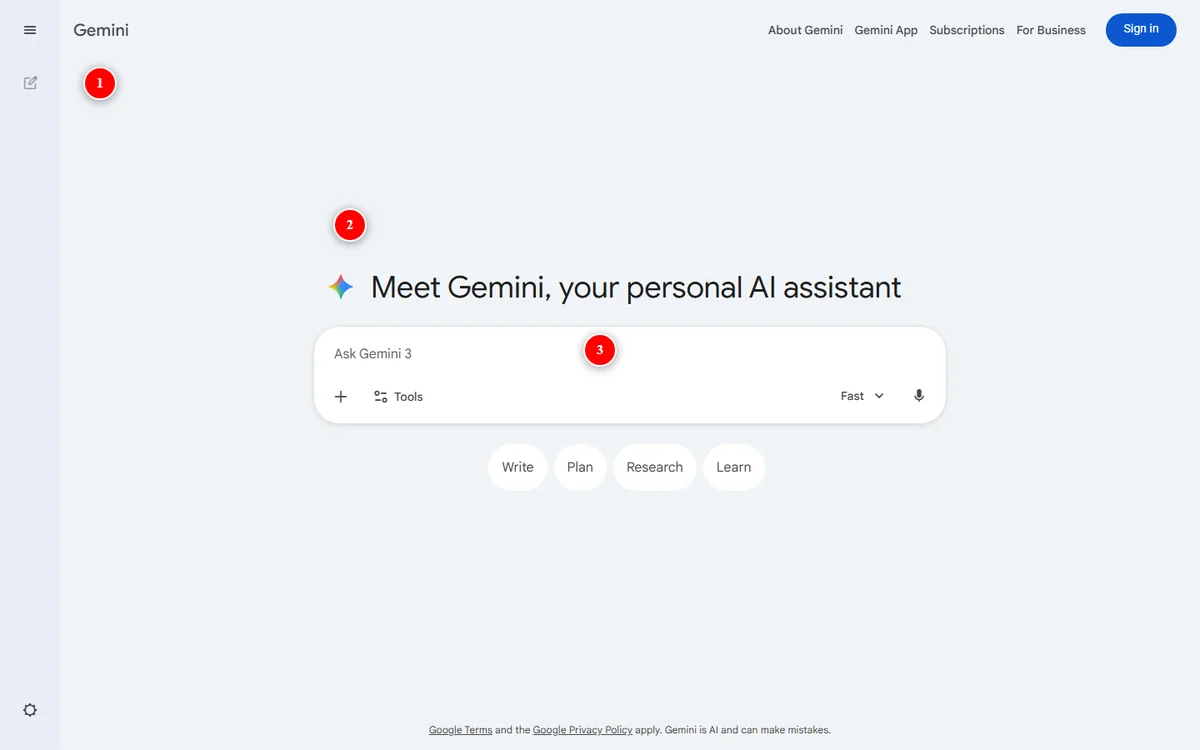
Google Gemini — Best Free Alternative
Price: Free (with Google account) | $20/month (Advanced)
Model: Gemini 3 Flash / Gemini Ultra
Gemini’s growth from 5.7% to 21.5% market share tells the story. Google’s aggressive model releases throughout 2025 — particularly Gemini 3 Flash and native image generation — have closed the performance gap substantially.
The real advantage is integration. If you live in the Google ecosystem (Gmail, Docs, Drive, Android), Gemini is not just an alternative — it is a natural extension of tools you already use. And for most users, the free tier of Gemini is now the most logical replacement for a paid ChatGPT account.
Where Gemini wins: Google Workspace integration, free tier value, Android integration, image understanding
Where ChatGPT still wins: Third-party integrations, advanced reasoning, plugin marketplace
Perplexity AI — Best for Research
Price: Free | $20/month (Pro)
Active users: 45 million
If your primary use for ChatGPT was asking questions and getting accurate, up-to-date answers, Perplexity is not just an alternative — it is an upgrade. Every answer comes with inline citations and source links. You can verify claims instantly. For researchers, journalists, students, and anyone who values accuracy over verbosity, Perplexity is unmatched.
The platform processed 780 million search queries in 2025, tripling from mid-2024. Its January 2026 partnership with Snapchat (nearly 1 billion MAU) signals the kind of distribution most AI startups can only dream about.
Where Perplexity wins: Factual accuracy, real-time search, citations, research workflows
Where ChatGPT still wins: Creative writing, coding, image generation, long conversations
Grok (by xAI) — The Dark Horse
Price: Included with X Premium ($8/month) | Free tier available
Active users: 35+ million
Grok has been the surprise performer of 2026, jumping to 15.2% daily active user share in the US. Its tight integration with X (formerly Twitter) gives it a unique real-time advantage, and xAI has been iterating rapidly on model quality.
Where Grok wins: Real-time information from X, fewer content restrictions, value bundled with X Premium
Where ChatGPT still wins: Accuracy, professional use cases, multimodal capabilities
DeepSeek — Best Budget Option
Price: Free (open-source) | API pricing significantly cheaper than OpenAI
Market share: 4% globally, dominant in China (89%)
For startups, researchers, and developers in cost-sensitive environments, DeepSeek is, as one analyst put it, “economically irrational to ignore.” The open-source models deliver comparable performance to GPT-5 on many benchmarks at a fraction of the cost.
Where DeepSeek wins: Cost, open-source flexibility, self-hosting options, API pricing
Where ChatGPT still wins: Polish, ecosystem, multimodal features, enterprise support
Feature Comparison Table {#comparison-table}
Which Alternative Should You Pick? {#which-to-pick}
After extensive testing, here is our recommendation framework:
Switch to Claude if: You are a writer, developer, or knowledge worker who values natural language output and strong coding assistance. Claude is the closest 1:1 replacement for ChatGPT, with better writing and coding at the same $20/month price point.
Switch to Gemini if: You are a Google Workspace user or want the best free option. Gemini’s free tier now offers what ChatGPT charges $20/month for in most use cases. If you are a casual user, this is the move.
Switch to Perplexity if: Your primary use case is research, fact-checking, or getting accurate answers with sources. Perplexity has taken AI search to a level ChatGPT has never reached.
Switch to Grok if: You already pay for X Premium and want a capable AI assistant bundled in. At effectively $0 marginal cost, it is hard to beat.
Switch to DeepSeek if: You are a developer or startup looking for the best cost-to-performance ratio, especially if you want to self-host or use APIs at scale.
Stay with ChatGPT if: You heavily use image/video generation, rely on the plugin ecosystem, or need the broadest multimodal capabilities. ChatGPT is not the best at any single thing anymore, but it remains the most versatile all-in-one platform.
Our Recommendation
Most users should consider a two-tool approach: Claude or Gemini for daily work, plus Perplexity for research. This combination outperforms a single ChatGPT subscription at the same or lower total cost.
What This Means for the AI Industry {#industry-impact}
The ChatGPT exodus marks the end of the AI monoculture. For two years, “AI chatbot” effectively meant “ChatGPT.” That era is over.
This is healthy for users. Competition is driving innovation, lowering prices, and forcing every player to differentiate. OpenAI’s $14 billion annual loss is not sustainable, and the introduction of ads signals a company grappling with the economics of offering AI at scale.
The market is also maturing in how users think about AI tools. Instead of asking “which chatbot is best?” people are asking “which chatbot is best for what I need?” That is a sign of a market growing up.
For OpenAI, the path forward requires rebuilding trust — both in product quality and in corporate values. The GPT-5 series needs stabilization, not more rushed releases. The company needs a coherent narrative on military use. And the ads need to be implemented thoughtfully, or the bleeding will accelerate.
For everyone else, this is a golden moment. The AI revolution is not slowing down — it is spreading out.
FAQ {#faq}
Is ChatGPT actually dying?
No. ChatGPT still has approximately 400 million active users and 800 million weekly users. It remains the market leader by a significant margin. However, its dominance is eroding — market share dropped from 87% to 64-68% in one year — and the trend is accelerating. “Declining from dominance” is more accurate than “dying.”
What is the QuitGPT movement?
QuitGPT is an organized boycott that emerged in late February 2026 after OpenAI announced it would deploy its AI models inside the Pentagon’s classified network. Over 2.5 million people have reportedly canceled subscriptions, pledged to stop using ChatGPT, or shared the boycott online. ChatGPT app uninstalls spiked 295% in the days following the announcement.
Is Claude really better than ChatGPT for writing?
In our testing, yes — Claude Sonnet 4.6 produces more natural, nuanced prose than GPT-5.4. Claude is less likely to use filler phrases, maintains a more consistent voice, and handles complex creative and technical writing with greater skill. ChatGPT still has advantages in image generation and its broader plugin ecosystem.
What is the best free ChatGPT alternative?
Google Gemini offers the best free tier in 2026. With strong model performance, deep Google ecosystem integration, and a generous free plan, most casual ChatGPT users can switch to Gemini without paying anything. Perplexity also has a strong free tier for research-focused use.
Can I export my ChatGPT data before switching?
Yes. Go to Settings > Data Controls > Export Data in ChatGPT. You will receive a download link via email containing your conversation history, shared links, and account details. None of the alternative platforms can import this data directly, but you will have your records.
Will OpenAI reverse the Pentagon deal?
As of March 2026, OpenAI has not indicated any plans to reverse the Department of Defense partnership. However, the financial impact of the boycott (estimated at $30+ million in lost monthly recurring revenue) and public pressure may force the company to narrow the scope of the deal or add explicit restrictions on military applications.