
Two mysterious AI models quietly appeared on OpenRouter around March 11, 2026 — and the AI community has been buzzing ever since. Hunter Alpha and Healer Alpha arrived as “stealth models” from an unnamed provider, both completely free to use, and both packing capabilities that rival the biggest names in AI.
We spent the past few days putting both models through their paces. Here is everything we found.
Table of Contents
- What Are Hunter Alpha and Healer Alpha?
- Hunter Alpha: The 1-Trillion-Parameter Reasoning Beast
- Healer Alpha: The Omni-Modal Powerhouse
- Feature Comparison Table
- Who Actually Built These Models?
- How to Set Up and Use Both Models (Free)
- Real-World Performance: What We Found
- Pros and Cons
- Who Should Use Each Model?
- FAQ
- Final Verdict
What Are Hunter Alpha and Healer Alpha?
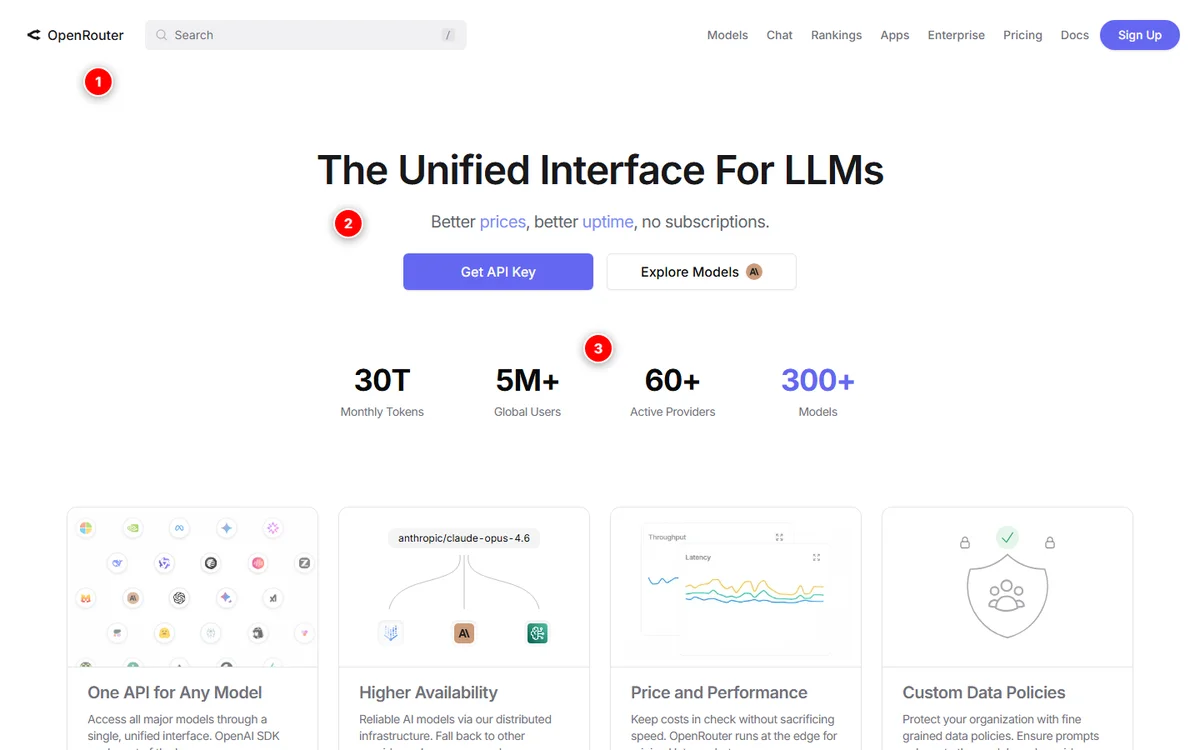
Hunter Alpha and Healer Alpha are two frontier AI models that launched simultaneously on OpenRouter in stealth mode. Neither model has an officially disclosed creator — they are listed under OpenRouter’s own namespace as anonymous submissions.
What makes them remarkable:
- Both are completely free — $0 per million input tokens, $0 per million output tokens
- Both support multimodal input — you can send text, images, and more
- Both are designed for agentic workflows — meaning they can plan, reason, and execute multi-step tasks
- Both log all prompts and completions — the provider uses this data to improve the models
They are not minor experiments. Hunter Alpha reportedly has 1 trillion parameters and a 1 million token context window. Healer Alpha brings omni-modal capabilities including vision and audio processing. These are serious, frontier-class models being offered at zero cost.
Hunter Alpha: The 1-Trillion-Parameter Reasoning Beast
Hunter Alpha is built for one thing above all else: complex, multi-step reasoning. Its official description calls it a “frontier intelligence model built for agentic use,” and the specs back that up.
Key Specifications
What It Excels At
Hunter Alpha is optimized for scenarios where you need an AI to think long and hard:
- Long-horizon planning — mapping out complex project architectures
- Sustained multi-step task execution — following through on agentic workflows without losing context
- Complex reasoning — scoring 96% on reasoning benchmarks, 95% on mathematics, and 93% on coding
- Instruction following — 100% success rate across reliability benchmarks
Where It Struggles
The tradeoff for all that reasoning power is speed. Hunter Alpha ranks in the 16th percentile for response time, meaning it is noticeably slower than most models. If you need quick, snappy responses, this is not your model. If you need a model that thinks deeply and gets the answer right, it may be exactly what you need.
Healer Alpha: The Omni-Modal Powerhouse
Healer Alpha takes a fundamentally different approach. Instead of maximizing parameter count and context length, it focuses on breadth of perception — combining vision, audio, reasoning, and action into a single model.
Key Specifications
What It Excels At
Healer Alpha is described as a “frontier omni-modal model” that can:
- Process visual input — analyze screenshots, UI designs, photos, and diagrams
- Handle audio input — understand spoken content and audio files
- Generate professional UI designs — early testing shows it produces high-quality HTML dashboards and interface layouts
- Faster response times — at 93 tokens/second, it is nearly twice as fast as Hunter Alpha
Where It Struggles
With a smaller context window (262K vs. 1M) and fewer estimated parameters, Healer Alpha may not match Hunter Alpha on pure reasoning depth. Its strengths lie in breadth — processing multiple types of input — rather than in sustained, deep analytical tasks.
Feature Comparison Table
Who Actually Built These Models?
This is the question everyone is asking. Neither model has an officially confirmed creator, but the community has done significant detective work.
The DeepSeek V4 Theory: Some users noticed that Hunter Alpha’s chain-of-thought reasoning style is similar to DeepSeek V3.2, with both starting responses with phrases like “Hmm, the user said…” This led to speculation that Hunter Alpha could be a leaked or early version of DeepSeek V4.
The ZhiPu AI Theory: Others point out that the same anonymous provider on OpenRouter previously released “Pony Alpha,” which was later confirmed to be ZhiPu’s GLM-5. If the pattern holds, Hunter Alpha could be ZhiPu’s new flagship text model and Healer Alpha could be GLM-5V or a new multimodal variant.
The Xiaomi Clue: When prompted about its origins, Healer Alpha has reportedly stated it was “built by Xiaomi” — though AI models are not always reliable narrators about their own provenance.
The most widely accepted theory in the community: these are likely from ZhiPu AI, based on the provider’s track record of anonymous stealth launches through OpenRouter.
How to Set Up and Use Both Models (Free)
Getting started takes about two minutes. Here is the step-by-step process.
Step 1: Create an OpenRouter Account
Go to openrouter.ai and sign up. No credit card is required for free models.
Step 2: Get Your API Key
Navigate to your account settings and generate an API key. Copy it somewhere safe.
Step 3: Access the Models
You can use either model through:
- OpenRouter’s web playground — test directly in your browser
- API calls — integrate into your own applications
- Compatible clients — tools like OpenClaw, Krater.ai, and others support OpenRouter models
API Endpoint Examples
Hunter Alpha:
“`
Model ID: openrouter/hunter-alpha
Endpoint: https://openrouter.ai/api/v1/chat/completions
“`
Healer Alpha:
“`
Model ID: openrouter/healer-alpha
Endpoint: https://openrouter.ai/api/v1/chat/completions
“`
Step 4: Enable Reasoning (Optional)
For Hunter Alpha, you can enable reasoning mode by passing the reasoning parameter in your API request. The model’s internal chain-of-thought will appear in the reasoning_details array of the response.
Rate Limits
Free models on OpenRouter typically have rate limits of approximately 20 requests per minute and 200 requests per day. For heavier usage, you can add credits to your account.
Real-World Performance: What We Found
We ran both models through practical tasks to see how they perform outside of benchmarks.
Coding Tasks
Hunter Alpha handled complex coding prompts well — generating functional applications, game prototypes, and multi-file project structures. Its 1M context window is a real advantage when working with large codebases. However, it stumbled on some basic arithmetic that simpler models handle easily, which was surprising given its benchmark scores.
UI and Design Generation
Healer Alpha shined here. It produced clean, professional-grade HTML dashboards and UI mockups. If you need quick prototyping or design iteration, Healer Alpha is the better choice.
Reasoning and Analysis
Hunter Alpha’s deep reasoning mode is genuinely impressive for complex analytical tasks. It takes longer, but the thoroughness of its chain-of-thought process often produces more nuanced answers than faster models.
Multimodal Tasks
Healer Alpha’s ability to process images, audio, and video input opens up use cases that Hunter Alpha simply cannot handle. Analyzing screenshots, understanding audio content, and processing video frames are all within its capabilities.
Pros and Cons
Hunter Alpha
Pros:
- Massive 1M token context window — best-in-class for free models
- Strong reasoning, math, and coding benchmarks (93-96%)
- 100% reliability score across benchmarks
- Tool use and structured output support
- Completely free
Cons:
- Slow output speed (~48 tok/s, 16th percentile)
- Text-only output
- All prompts are logged by the provider
- Struggles with some basic math despite high benchmark scores
- Anonymous provider — no accountability or long-term support guarantees
Healer Alpha
Pros:
- True omni-modal input (text, images, audio, video)
- Nearly 2x faster than Hunter Alpha (~93 tok/s)
- Excellent UI/design generation capabilities
- Completely free
- Strong real-world performance on creative tasks
Cons:
- Smaller context window (262K vs 1M)
- Fewer disclosed specifications
- All prompts are logged by the provider
- Limited benchmark data available
- Anonymous provider — same accountability concerns
Who Should Use Each Model?
Choose Hunter Alpha if you:
- Work with large codebases or documents that need massive context
- Need complex multi-step reasoning and planning
- Build agentic AI workflows
- Prioritize accuracy over speed
- Want a free alternative to GPT-4.5 or Claude for reasoning tasks
Choose Healer Alpha if you:
- Work with images, audio, or video content
- Need fast response times
- Do UI/UX prototyping or design work
- Want multimodal analysis capabilities
- Need a free alternative to Gemini for multimodal tasks
Use both if you:
- Route different types of tasks to different models
- Want to compare outputs for important decisions
- Build applications that need both deep reasoning AND multimodal capabilities
FAQ
Are Hunter Alpha and Healer Alpha really free?
Yes. As of March 2026, both models are priced at $0 per million input tokens and $0 per million output tokens on OpenRouter. However, there are rate limits (roughly 20 requests/minute, 200 requests/day), and all prompts and completions are logged by the provider.
Will they stay free?
Unknown. Many stealth models on OpenRouter start free and later transition to paid pricing once officially launched. We recommend trying them now while they are still free.
Are my prompts private?
No. OpenRouter’s listing explicitly states that all prompts and completions are logged by the provider and may be used to improve the model. Do not send sensitive, confidential, or proprietary information to either model.
Who made these models?
Officially unknown. Community analysis suggests they are likely from ZhiPu AI (the company behind GLM-5), based on the provider’s history of anonymous releases on OpenRouter. Some speculate a connection to DeepSeek V4, but this is considered less likely.
Can I use these models in production?
Proceed with caution. The anonymous provider, data logging policy, and lack of SLAs make these models better suited for experimentation, prototyping, and personal projects than production workloads.
How do they compare to GPT-5, Claude, or Gemini?
Hunter Alpha’s benchmark scores (96% reasoning, 95% math, 93% coding) place it in competitive territory with frontier models. However, real-world testing shows inconsistencies — it can solve complex problems but occasionally fails simple ones. Healer Alpha’s multimodal breadth is impressive but lacks the extensive benchmark data needed for a definitive comparison.
Do I need to pay for OpenRouter to use them?
No. You can create a free OpenRouter account without a credit card and access both models immediately.
Final Verdict
Hunter Alpha and Healer Alpha represent something genuinely exciting: frontier-class AI models available to everyone at zero cost. Hunter Alpha’s 1-trillion-parameter architecture and 1M context window make it one of the most powerful free AI models ever released. Healer Alpha’s omni-modal capabilities bring vision, audio, and video understanding to the free tier.
Are they perfect? No. Hunter Alpha is slow, and both models have the inherent risk of being anonymous, temporary offerings that could change or disappear. But for experimentation, learning, prototyping, and exploring what cutting-edge AI can do — they are hard to beat at the price of free.
We recommend bookmarking both on OpenRouter and taking them for a spin while you can.
{“@context”: “https://schema.org”, “@type”: “FAQPage”, “mainEntity”: [{“@type”: “Question”, “name”: “Key SpecificationsnnSpecDetail**Parameters**~1 Trillion (1T)**Context Window**1,048,576 tokens (1M)**Max Output**32,000 tokens**Output Speed**~48 tokens/second**Input Modality**Text + Images**Output Modality**Text only**Pricing**Free ($0/$0)**Supports**Tools, Response Format, ReasoningnWhat It Excels At”, “acceptedAnswer”: {“@type”: “Answer”, “text”: “Hunter Alpha is optimized for scenarios where you need an AI to think long and hard:”}}, {“@type”: “Question”, “name”: “Where It Struggles”, “acceptedAnswer”: {“@type”: “Answer”, “text”: “The tradeoff for all that reasoning power is speed. Hunter Alpha ranks in the 16th percentile for response time, meaning it is noticeably slower than most models. If you need quick, snappy responses, this is not your model. If you need a model that thinks deeply and gets the answer right, it may be exactly what you need.”}}, {“@type”: “Question”, “name”: “Key SpecificationsnnSpecDetail**Parameters**Undisclosed (estimated ~500B activated)**Context Window**262,144 tokens (262K)**Output Speed**~93 tokens/second**Input Modality**Text + Images + Audio + Video**Output Modality**Text**Pricing**Free ($0/$0)**Supports**Multimodal input, ReasoningnWhat It Excels At”, “acceptedAnswer”: {“@type”: “Answer”, “text”: “Healer Alpha is described as a “frontier omni-modal model” that can:”}}, {“@type”: “Question”, “name”: “Where It Struggles”, “acceptedAnswer”: {“@type”: “Answer”, “text”: “With a smaller context window (262K vs. 1M) and fewer estimated parameters, Healer Alpha may not match Hunter Alpha on pure reasoning depth. Its strengths lie in breadth — processing multiple types of input — rather than in sustained, deep analytical tasks.”}}, {“@type”: “Question”, “name”: “Step 1: Create an OpenRouter Account”, “acceptedAnswer”: {“@type”: “Answer”, “text”: “Go to openrouter.ai and sign up. No credit card is required for free models.”}}, {“@type”: “Question”, “name”: “Step 2: Get Your API Key”, “acceptedAnswer”: {“@type”: “Answer”, “text”: “Navigate to your account settings and generate an API key. Copy it somewhere safe.”}}, {“@type”: “Question”, “name”: “Step 3: Access the Models”, “acceptedAnswer”: {“@type”: “Answer”, “text”: “You can use either model through:”}}, {“@type”: “Question”, “name”: “API Endpoint Examples”, “acceptedAnswer”: {“@type”: “Answer”, “text”: “Hunter Alpha:”}}]}