
KEYWORD RESEARCH TABLE
Morgan Stanley AI Prediction 2026: Wall Street Warns the World Isn’t Ready for What’s Coming
On March 13, 2026, Morgan Stanley published a warning that stopped Wall Street in its tracks: a massive AI breakthrough is coming in the first half of this year, and most of the world is not prepared for it. We are not talking about incremental improvements to chatbots. We are talking about a fundamental leap in machine intelligence that could reshape the global economy, overload national power grids, and displace millions of workers faster than any policy can keep up.
This is one of the most consequential reports to come out of a major financial institution in years. Below, we break down exactly what Morgan Stanley is predicting, why their “Intelligence Factory” model matters, and what it means for businesses, workers, and investors in 2026 and beyond.
Table of Contents
- The Core Warning: An AI Breakthrough in H1 2026
- The Intelligence Factory: Morgan Stanley’s Framework for What’s Coming
- The Power Grid Crisis Nobody Is Solving Fast Enough
- AI Job Displacement: The Numbers Are Already Showing Up
- Wall Street’s $650 Billion AI Bet
- Recursive Self-Improvement: The 2027 Wildcard
- What This Means for You Right Now
- FAQ
The Core Warning: An AI Breakthrough in H1 2026

Morgan Stanley’s March 13 report centers on a blunt thesis: the accumulation of compute power at America’s top AI labs — OpenAI, Google DeepMind, Anthropic, xAI, and Meta — has reached a tipping point. The investment bank’s analysts argue that applying 10x the compute to large language model training effectively doubles a model’s “intelligence,” and the scaling laws backing that claim are holding firm.
This is not speculation from a blog or a tech influencer. This is Morgan Stanley’s institutional research division telling its clients — the world’s largest asset managers, pension funds, and sovereign wealth funds — to prepare for a step-change in AI capability within months.
The report came just one day after the firm’s annual TMT (Technology, Media, and Telecom) Conference, where CEO after CEO laid out, in clinical detail, how AI-driven efficiencies had already led their companies to execute significant workforce reductions. Nvidia CEO Jensen Huang captured the prevailing sentiment in three words: “Compute equals revenue.”
We have been covering AI tools and breakthroughs for years at PopularAiTools.ai. We have seen bold predictions come and go. But when a bank that manages over $1.5 trillion in client assets tells the world to brace for impact, we pay attention — and so should you.
The Intelligence Factory: Morgan Stanley’s Framework for What’s Coming
At the heart of the report is a concept Morgan Stanley calls the “Intelligence Factory.” This is their model for understanding the current AI buildout — not as a gradual evolution, but as an industrial-scale manufacturing process for intelligence itself.
Here is how it works:
- Raw materials: Electricity, semiconductors (primarily Nvidia GPUs), and data.
- Factory floor: Hyperscale data centers operated by Amazon, Google, Microsoft, and Meta.
- Output: Increasingly capable AI models that can perform cognitive work previously reserved for humans.
The Intelligence Factory framework matters because it reframes AI development as an infrastructure problem, not just a software problem. The labs have the algorithms. They have the data. The bottleneck is now physical: power, chips, and cooling capacity.
Morgan Stanley’s model projects that U.S. data center demand could reach 74 gigawatts by 2028. To put that in perspective, that is roughly equivalent to the entire electricity consumption of a country the size of the United Kingdom. The report forecasts a net U.S. power shortfall of 9 to 18 gigawatts through 2028 — a 12% to 25% deficit in the energy required to keep the Intelligence Factory running at full capacity.
This is not a hypothetical. Developers are already scrambling to close the gap. They are converting former Bitcoin mining operations into high-performance computing centers. They are firing up natural gas turbines. They are deploying fuel cells. None of it is enough.
The Power Grid Crisis Nobody Is Solving Fast Enough
The AI power grid shortfall is arguably the most underreported crisis in tech right now. While headlines focus on which chatbot can write better poetry, the physical infrastructure underpinning all of it is buckling.
Consider the numbers:
- U.S. data centers consumed roughly 4% of total electricity in 2023. By 2028, Morgan Stanley and the IEA project that figure will hit 12-15%.
- PJM Interconnection, the largest U.S. grid operator serving 65 million people across 13 states, projects it will be a full 6 gigawatts short of its reliability requirements by 2027.
- Global data center electricity consumption is projected to double to approximately 945 terawatt-hours by 2030, representing nearly 3% of total global electricity consumption.
- Looking further out, by 2033, the nation’s peak electricity supply is estimated to fall short of demand by 175 gigawatts — equivalent to the power consumed by 130 million homes.
The grid was built decades ago for a different world. It was designed for steady, predictable demand from homes, offices, and factories. AI data centers are a completely different animal. A single large-scale training run can consume as much electricity as a small city for weeks on end. The grid was never designed for these spikes, and the permitting and construction timelines for new power infrastructure are measured in years, not months.
We are watching a collision in slow motion: AI capability is scaling on a curve measured in months, while energy infrastructure scales on a curve measured in decades.
AI Job Displacement: The Numbers Are Already Showing Up
Perhaps the most sobering section of the Morgan Stanley report deals with workforce impact. And unlike previous years where job displacement was theoretical, the 2026 data is making it concrete.
A Morgan Stanley survey of roughly 1,000 executives across five countries found an average net workforce reduction of 4% over the past 12 months — directly attributable to AI adoption. This is not a projection. This is reported data from companies that have already made the cuts.
The firm’s TMT Conference on March 12 put a human face on the numbers. Morgan Stanley analyst Adam Jonas revealed that the single most common investor question he fielded throughout the conference was: “What will our kids do?”
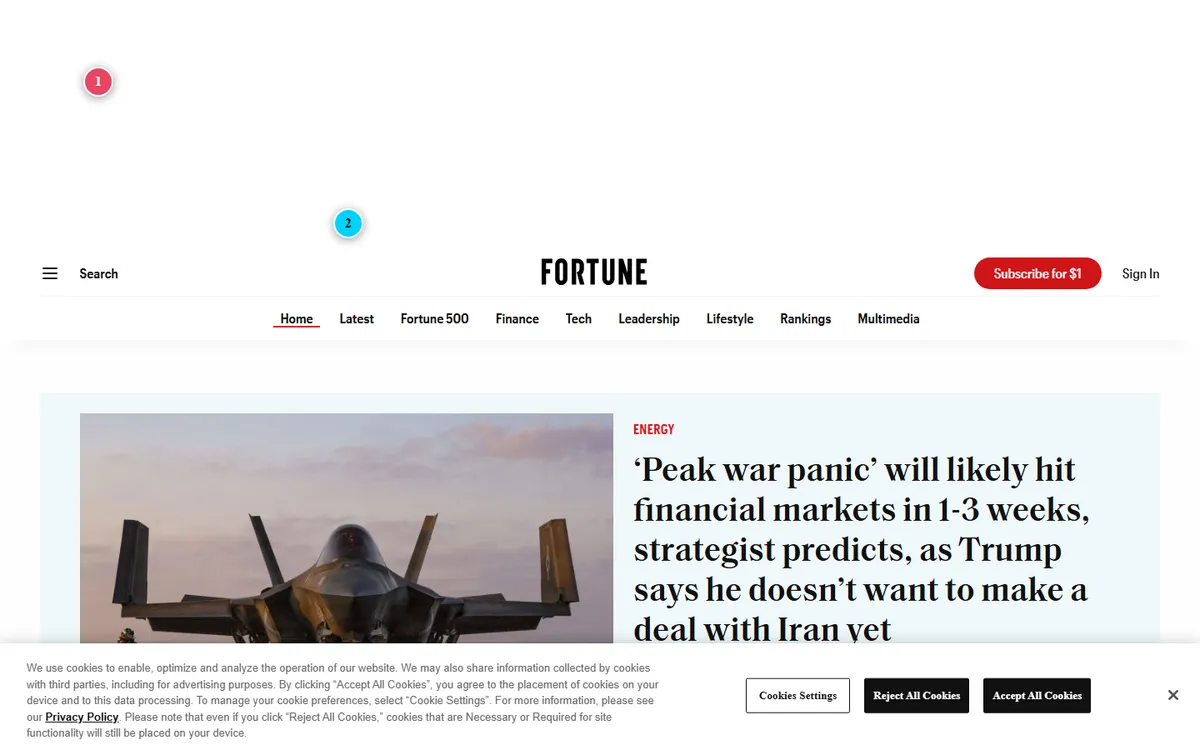
That question — reported by Fortune — is haunting because of who is asking it. These are not anxious parents at a school board meeting. These are portfolio managers overseeing billions of dollars, and they are looking at the same data the CEOs are presenting and arriving at a deeply uncomfortable conclusion.
Specific examples from the conference:
- Snowflake cut roughly 200 positions in Q4 tied to AI-driven efficiencies, adding only a net 37 workers despite revenue reaccelerating to 30% growth.
- OpenAI CEO Sam Altman suggested a future where a single individual — or a small handful of people — could run an entire company with AI systems.
- Multiple Fortune 500 executives described replacing entire departments with AI agents handling customer service, data analysis, legal review, and financial reporting.
Morgan Stanley predicts “Transformative AI” will become a powerful deflationary force, as AI tools replicate human cognitive work at a fraction of the cost. The productivity gains economists once debated in theory are now showing up in macro data, signaling a looming crisis for middle- and upper-middle-income workers whose jobs are most exposed to automation.
Wall Street’s $650 Billion AI Bet
If there is one thing that tells us Wall Street believes its own warning, it is where the money is going. According to Bloomberg, total AI capital expenditure for 2026 has been revised upward to $650 billion — a 70% increase over 2025, driven by the hyperscalers.
Here is the breakdown:
And this is just the beginning. Goldman Sachs projects cumulative hyperscaler capex from 2025 through 2027 will reach $1.15 trillion. Morgan Stanley managing director Brian Nowak projects Alphabet alone could spend up to $250 billion in 2027.
Here is a telling detail: Wall Street’s capex estimates have come in low for two straight years. At the start of both 2024 and 2025, consensus implied around 20% annual growth. Actual spending exceeded 50% both times. The market keeps underestimating how aggressively these companies are building the Intelligence Factory.
This is not reckless optimism. These companies are seeing returns. Nvidia’s core thesis — that compute equals revenue — is being validated quarter after quarter. The companies buying the GPUs are shipping products that generate real revenue, which funds the next round of GPU purchases. It is a self-reinforcing cycle, and it shows no sign of slowing.
Recursive Self-Improvement: The 2027 Wildcard
The most forward-looking — and frankly, the most unsettling — part of the Morgan Stanley report involves what comes after the H1 2026 breakthrough.
The report cites xAI co-founder Jimmy Ba, who suggests that recursive self-improvement loops could emerge as early as the first half of 2027. In practical terms, this means AI systems that can autonomously upgrade their own capabilities — identifying weaknesses in their own architecture and fixing them without human intervention.
If the H1 2026 breakthrough is about raw intelligence scaling, the 2027 wildcard is about intelligence that compounds on itself. The difference is profound. Linear improvement gives industries time to adapt. Recursive improvement does not.
Morgan Stanley frames this carefully. The report does not claim AGI (artificial general intelligence) is imminent. But it does argue that the gap between current AI capabilities and the point where adaptation becomes extremely difficult for institutions is much smaller than most policymakers and business leaders realize.
We think this is the most important takeaway from the entire report: the window for preparation is not years. It is months.
What This Means for You Right Now
We have distilled the Morgan Stanley report into actionable takeaways for three audiences:
For business leaders:
- Audit your workforce for AI-exposed roles immediately. The 4% net reduction average is just the beginning.
- Evaluate your energy costs. If you operate data centers or rely on cloud infrastructure, budget for electricity price increases.
- Build AI adoption roadmaps now. Companies that wait for the “right moment” will find themselves competing against firms operating at 10x efficiency.
For workers and professionals:
- Learn to work alongside AI systems, not in competition with them. The highest-value roles in 2026-2027 will involve directing, auditing, and refining AI outputs.
- Focus on skills that AI handles poorly: complex negotiation, physical coordination, creative judgment under ambiguity, and relationship building.
- Take the Morgan Stanley finding seriously — this is not a distant threat. Companies are already making headcount decisions based on AI capabilities available today.
For investors:
- Infrastructure plays (power generation, grid modernization, cooling technology) may be as important as the AI model companies themselves.
- Watch the capex-to-revenue conversion ratio at hyperscalers. The $650 billion bet only works if it generates proportional returns.
- Consider exposure to companies building the physical layer of the Intelligence Factory, not just the software layer.
FAQ
What exactly is Morgan Stanley predicting about AI in 2026?
Morgan Stanley’s March 13, 2026 report warns that a major breakthrough in AI capability will occur in the first half of 2026, driven by unprecedented compute accumulation at top AI labs. The bank says scaling laws — where 10x more compute roughly doubles model intelligence — are holding firm, and the resulting leap will strain power grids, displace workers, and disrupt markets faster than most institutions are prepared for.
What is the “Intelligence Factory” concept?
The Intelligence Factory is Morgan Stanley’s framework for understanding the current AI buildout. It treats AI development as an industrial manufacturing process where raw materials (electricity, GPUs, data) are fed into hyperscale data centers to produce increasingly capable AI models. The framework highlights that the bottleneck is now physical infrastructure — power and chips — not algorithms or data.
How severe is the AI power grid shortfall?
Morgan Stanley projects a net U.S. power shortfall of 9 to 18 gigawatts through 2028, representing a 12-25% deficit. U.S. data centers are expected to consume 12-15% of total national electricity by 2028, up from 4% in 2023. PJM Interconnection, the largest U.S. grid operator, forecasts it will be 6 gigawatts short of reliability requirements by 2027.
Will AI actually replace jobs in 2026?
It already is. A Morgan Stanley survey of 1,000 executives across five countries found an average net workforce reduction of 4% over the past 12 months directly attributable to AI. Snowflake cut 200 positions in Q4 despite 30% revenue growth. Morgan Stanley describes “Transformative AI” as a deflationary force that replicates human cognitive work at a fraction of the cost, with middle- and upper-middle-income roles most exposed.
How much money is being invested in AI infrastructure?
Wall Street estimates total 2026 AI capital expenditure at $650 billion, a 70% increase over 2025. Amazon alone plans $200 billion, Alphabet up to $185 billion, and Meta up to $135 billion. Goldman Sachs projects cumulative hyperscaler capex from 2025-2027 will reach $1.15 trillion. These estimates have consistently undershot actual spending for two consecutive years.
We cover the most important AI tools, breakthroughs, and industry shifts daily at PopularAiTools.ai. Bookmark us and stay ahead of the curve.
METADATA
Meta Description
Morgan Stanley’s March 2026 report warns a major AI breakthrough is imminent — with power grid shortfalls, mass job displacement, and $650B in spending. Here’s what it means.
URL Slug
morgan-stanley-ai-prediction-2026
Rank Math Fields
- Focus Keyword: Morgan Stanley AI prediction 2026
- SEO Title: Morgan Stanley AI Prediction 2026: Wall Street Warns the World Isn’t Ready
- Meta Description: Morgan Stanley’s March 2026 report warns a major AI breakthrough is imminent — with power grid shortfalls, mass job displacement, and $650B in spending. Here’s what it means.
- Breadcrumb Title: Morgan Stanley AI Prediction 2026