
Blok Review 2026: Features, Pricing, Pros & Cons
Updated March 2026 · 12 min read · By PopularAiTools.ai
TL;DR
Blok is a predictive product testing platform that uses AI-powered synthetic users to simulate how real people will respond to product changes before you ship them. With 87% behavioral fidelity to real-world outcomes and results in hours instead of weeks, Blok eliminates the guesswork from product decisions. Backed by leaders from Meta, Google, Spotify, and Discord, it is designed for product teams who want to test onboarding flows, pricing pages, and feature changes without running slow A/B tests. Pricing is not publicly disclosed, suggesting enterprise-level positioning. Rating: 4.5/5

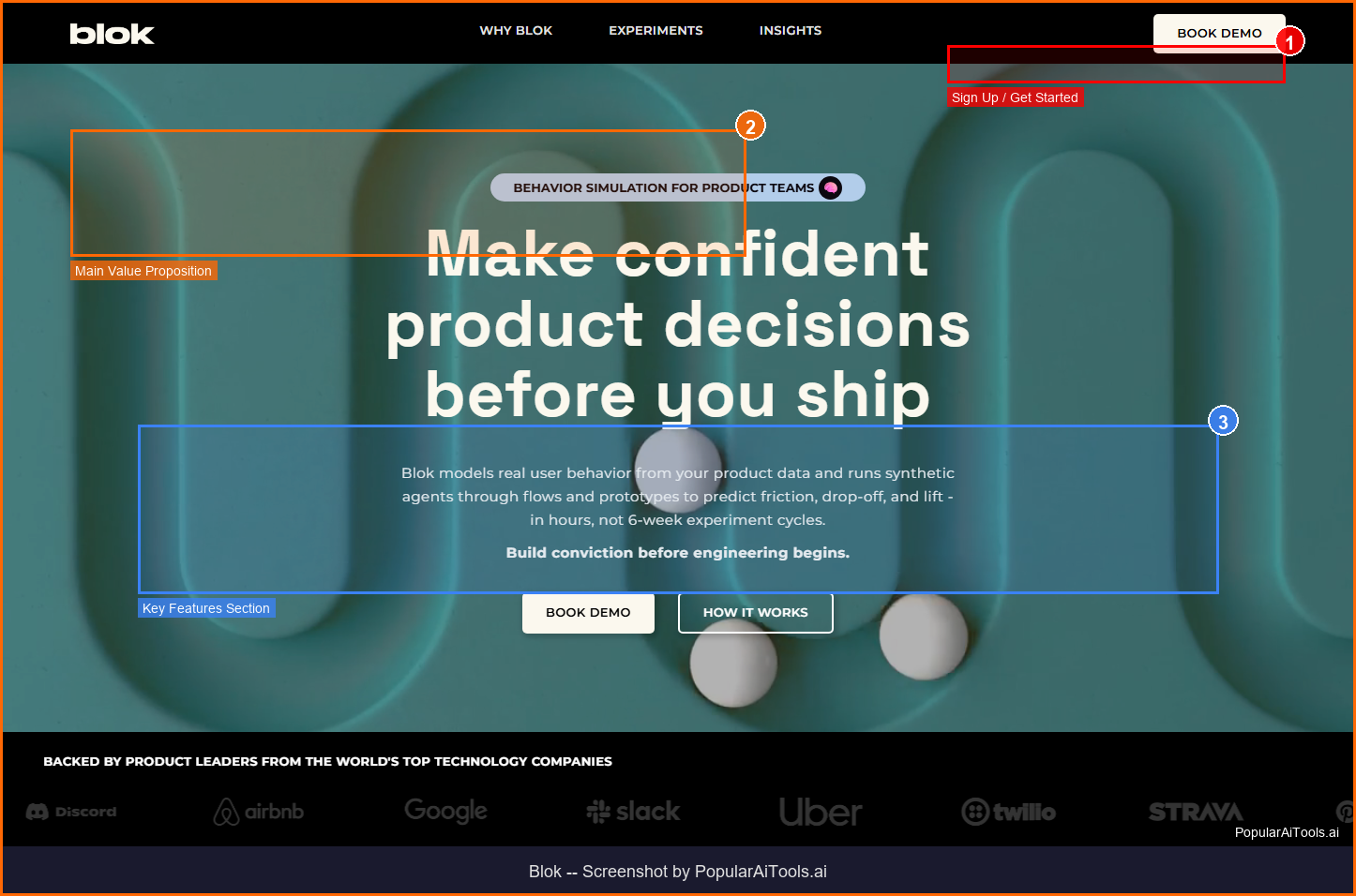
The Blok homepage — key features and navigation highlighted
What is Blok?
Blok is a product simulation platform that predicts user behavior before you ship changes. Instead of running A/B tests that take weeks to reach statistical significance, Blok creates AI-powered synthetic users modeled on real behavioral patterns to simulate how different user segments will interact with your product.
Each simulated user agent is generated from behavioral modeling, decision heuristics, and interaction patterns trained on real-world product usage data. These agents represent different user clusters -- high-intent buyers, casual browsers, skeptics, risk-averse users -- and can predict where users will hesitate, misclick, or drop off in your product flow.
Founded by serial entrepreneurs Tom Charman and Olivia Higgs, Blok has raised $7.5 million across two funding rounds, with its seed round led by MaC Venture Capital. The platform claims 87% behavioral fidelity backtested against real user data, and delivers results in hours rather than the typical 6-week experiment cycle. Product leaders from Meta, Google, Spotify, Uber, Airbnb, Discord, and Slack are among its backers and users.

Blok key features overview
Key Features
1. Behavioral Simulation Engine
Creates synthetic user agents modeled on real behavioral clusters including high-intent users, skimmers, skeptics, and risk-averse types to predict how each would behave in your product.
2. 87% Behavioral Fidelity
Backtested against real-world user data to achieve 87% accuracy in predicting actual user behavior, giving product teams confidence in simulation results.
3. Onboarding Flow Testing
Simulate how different user types navigate your sign-up and onboarding flow. Identify where users drop off, hesitate, or get confused before launching changes.
4. Pricing Page Optimization
Test pricing page layouts, tier structures, and CTA placements by predicting which version drives the highest conversion across user segments.
5. Feature Impact Prediction
Predict whether a new feature will increase engagement, cause confusion, or go unused before investing engineering resources in building it.
6. Friction and Drop-off Detection
Pinpoint exact moments where users hesitate, misclick, or abandon a flow. Get specific recommendations for reducing friction.
7. User Segment Analysis
Break down results by user segment to understand how different types of users (power users vs. newcomers vs. skeptics) will react differently to the same change.
8. Rapid Results
Get simulation results in hours rather than the 30+ days typically required for traditional A/B testing to reach statistical significance.

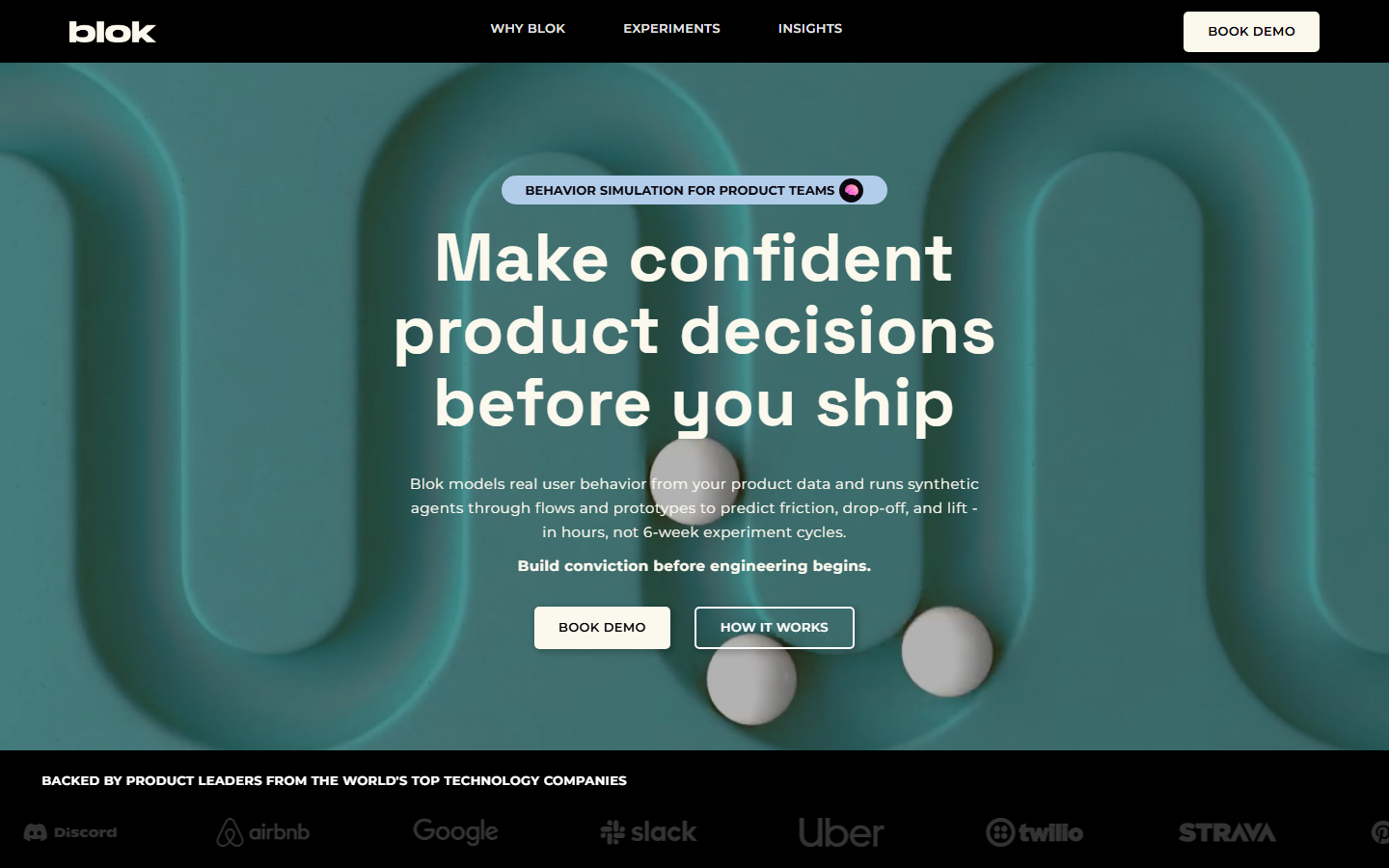
Blok homepage (March 2026)
How to Use Blok (Step-by-Step)
Step 1: Define Your Decision
Start with a specific product question: should we change the onboarding flow, adjust pricing, add this feature, or modify this CTA?
Step 2: Set Up the Simulation
Provide Blok with your product flow, design variations, or proposed changes. Configure which user segments you want to simulate.
Step 3: Run the Simulation
Blok generates synthetic user agents that navigate your product flows. Each agent represents a different behavioral cluster.
Step 4: Analyze Results
Review predictions for friction points, drop-off rates, conversion impact, and user segment behavior. Get specific recommendations for optimization.
Step 5: Ship with Confidence
Use the simulation data to make informed product decisions. Ship the winning version knowing how different user types will respond.

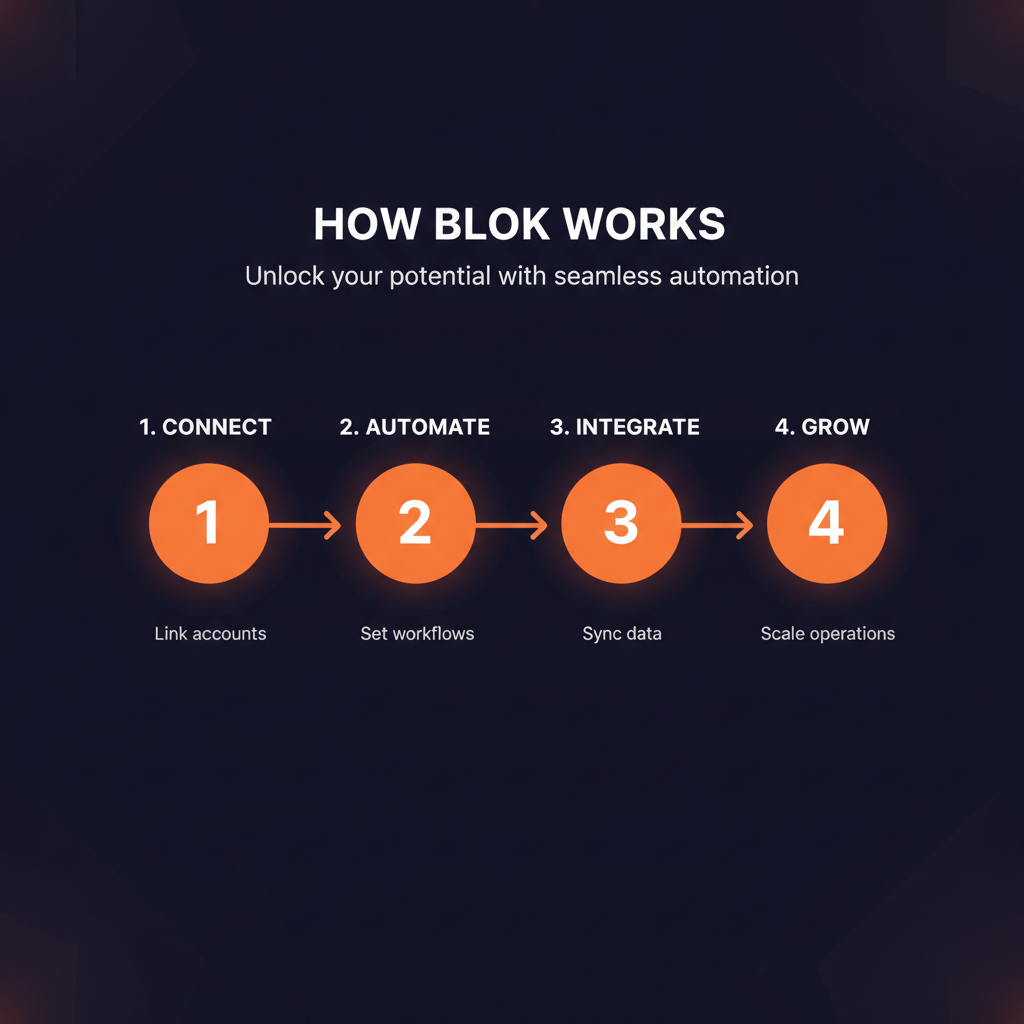
How Blok works — step by step
Pricing Plans
Pricing Summary: Pricing is not publicly disclosed | Contact sales for custom pricing | Enterprise-focused

Blok pricing overview

Pros and Cons
Pros
- ✓ 87% behavioral fidelity gives product teams reliable predictions
- ✓ Results in hours vs. weeks for traditional A/B testing
- ✓ Backed by product leaders from Meta, Google, Spotify, Uber, and Discord
- ✓ Tests across multiple user segments simultaneously
- ✓ $7.5M in funding signals strong investor confidence and product viability
- ✓ Eliminates the cost of shipping failed experiments to real users
Cons
- ✗ Pricing is not publicly disclosed, suggesting enterprise-level costs
- ✗ 87% fidelity means 13% of predictions may not match real behavior
- ✗ Requires well-defined user segments and product flows to produce useful results
- ✗ Relatively new platform with limited public case studies
- ✗ Simulation cannot capture every edge case or emotional user response

Blok compared to alternatives
Best Blok Alternatives
Final Verdict
Blok represents a genuinely novel approach to product development: simulating user behavior before shipping changes. For product teams tired of waiting weeks for A/B test results or shipping features that underperform, Blok offers a compelling shortcut. The 87% behavioral fidelity is impressive, and the backing from leaders at top tech companies adds credibility. The main question is cost -- with undisclosed pricing and enterprise positioning, it may be out of reach for smaller startups. If your team makes high-stakes product decisions frequently, Blok could save weeks of testing time and prevent costly mistakes.
Our Rating: 4.5/5

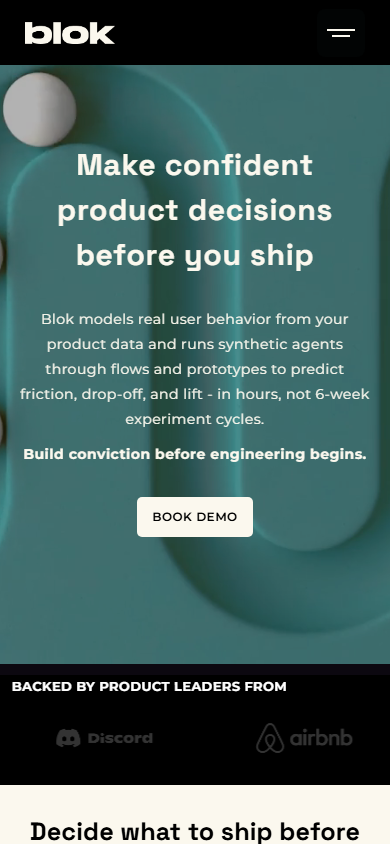
Blok mobile experience (March 2026)
Frequently Asked Questions
How accurate is Blok?
Blok claims 87% behavioral fidelity backtested against real-world user data. This means predictions match actual user behavior in 87 out of 100 scenarios.
How fast does Blok deliver results?
Results are available in hours rather than the 30+ days typically required for A/B testing to reach statistical significance.
What can I test with Blok?
You can simulate onboarding flows, pricing pages, feature changes, checkout flows, and any product experience where user behavior matters.
Does Blok replace A/B testing?
Blok is designed to complement A/B testing by providing rapid predictions before running live experiments, not to replace real-world validation entirely.
How much does Blok cost?
Blok does not publicly disclose pricing. Contact their sales team for custom pricing based on your team size and usage needs.
Get Premium AI Tool Insights
Subscribe to get weekly curated AI tool recommendations, exclusive deals, and early access to new tool reviews.
Related Tools

Chartcastr
ai-data
Updated March 2026 · 11 min read · By PopularAiTools.ai
openProd.io
ai-data
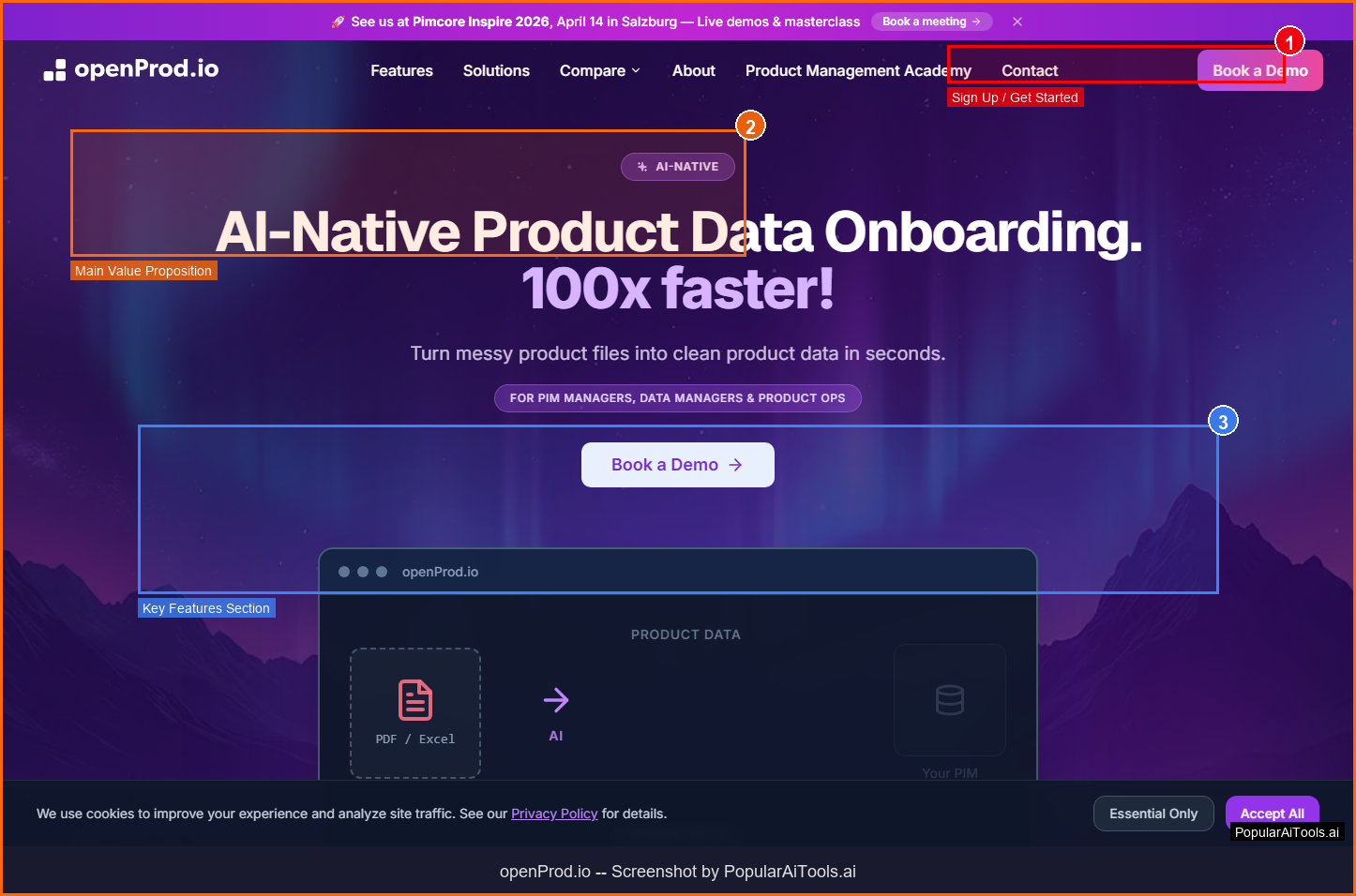
openProd.io: AI-native platform that extracts, cleans, normalizes, and enriches product data from supplier files and exports validated data to PIMs.
TubeSpark
ai-data
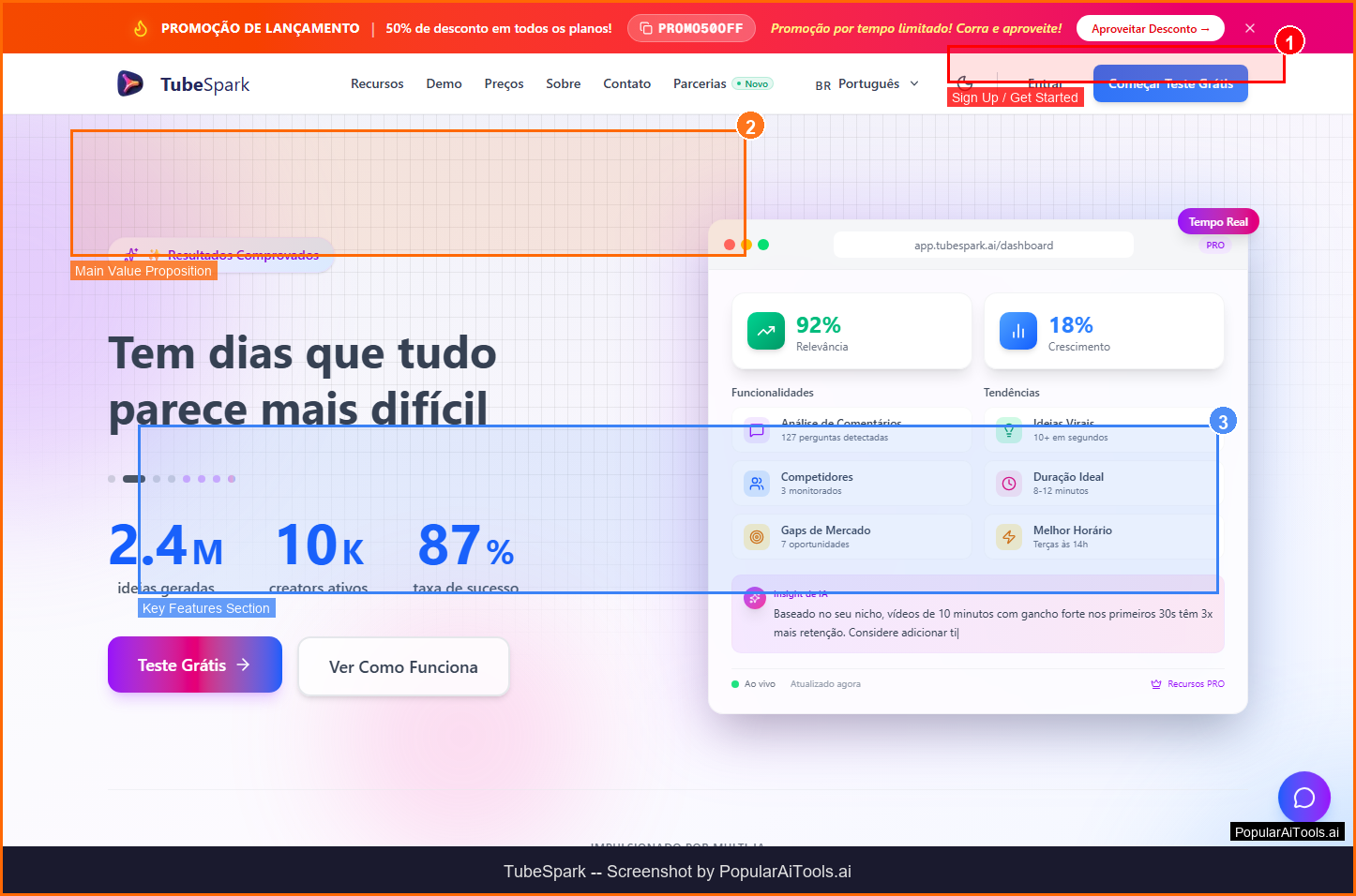
A tool to generate YouTube ideas, scripts, analytics.
mia
ai-data
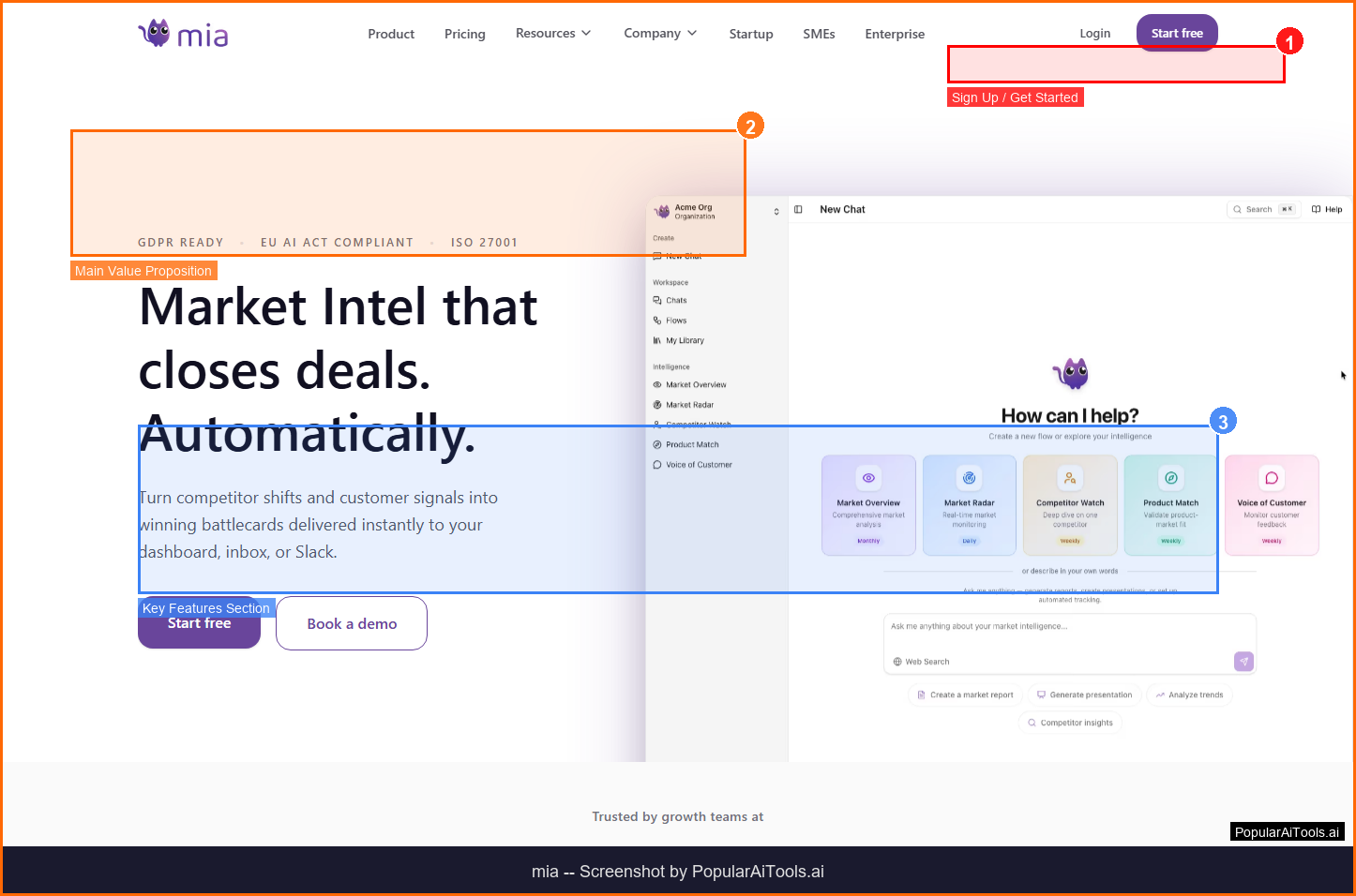
A tool to monitor competitors and generate market insights.
Related Articles
10 Claude Code Skills, Plugins & CLIs to Install on Day One (April 2026)
Starting Claude Code from scratch in 2026? Install these 10 skills, plugins, and CLIs on day one — Codex CLI, Obsidian, Autoresearch, Firecrawl, Playwright, NotebookLM, Skill Creator, RAG-Anything, Google Workspace CLI, and awesome-design-md. Full install commands included.
We Tested 24 AI Models Inside Claude Code: The 2026 Tier List
We swapped 24 different AI models into Claude Code and ran identical tool-call tests on each. Here's the S-tier-to-D-tier ranking, real cost comparison, and the single best Claude Sonnet 4.6 alternative for 2026 — including the GLM 4.6 sleeper pick that matched Sonnet at 15% the cost.
Claude as a Creative Studio: Make Ads, Images, and Video From One Chat (2026)
Claude doesn't generate raster images natively, but in 2026 it's the smartest creative director on Earth — orchestrating Nano Banana 2, Sora 2, Runway, Higgsfield, Remotion, and VEED into a single ad-and-video factory. The full stack, the variant matrix trick, and how to build a YouTube Shorts factory.