
Cubic Review 2026: Features, Pricing, Pros & Cons
Updated March 2026 · 11 min read · By PopularAiTools.ai
TL;DR
An AI-native code review platform that automatically reviews pull requests, catches bugs, enforces coding standards, and provides inline feedback directly within GitHub workflows. The freemium pricing model makes it accessible, with plans starting at $0. Rating: 4.4/5
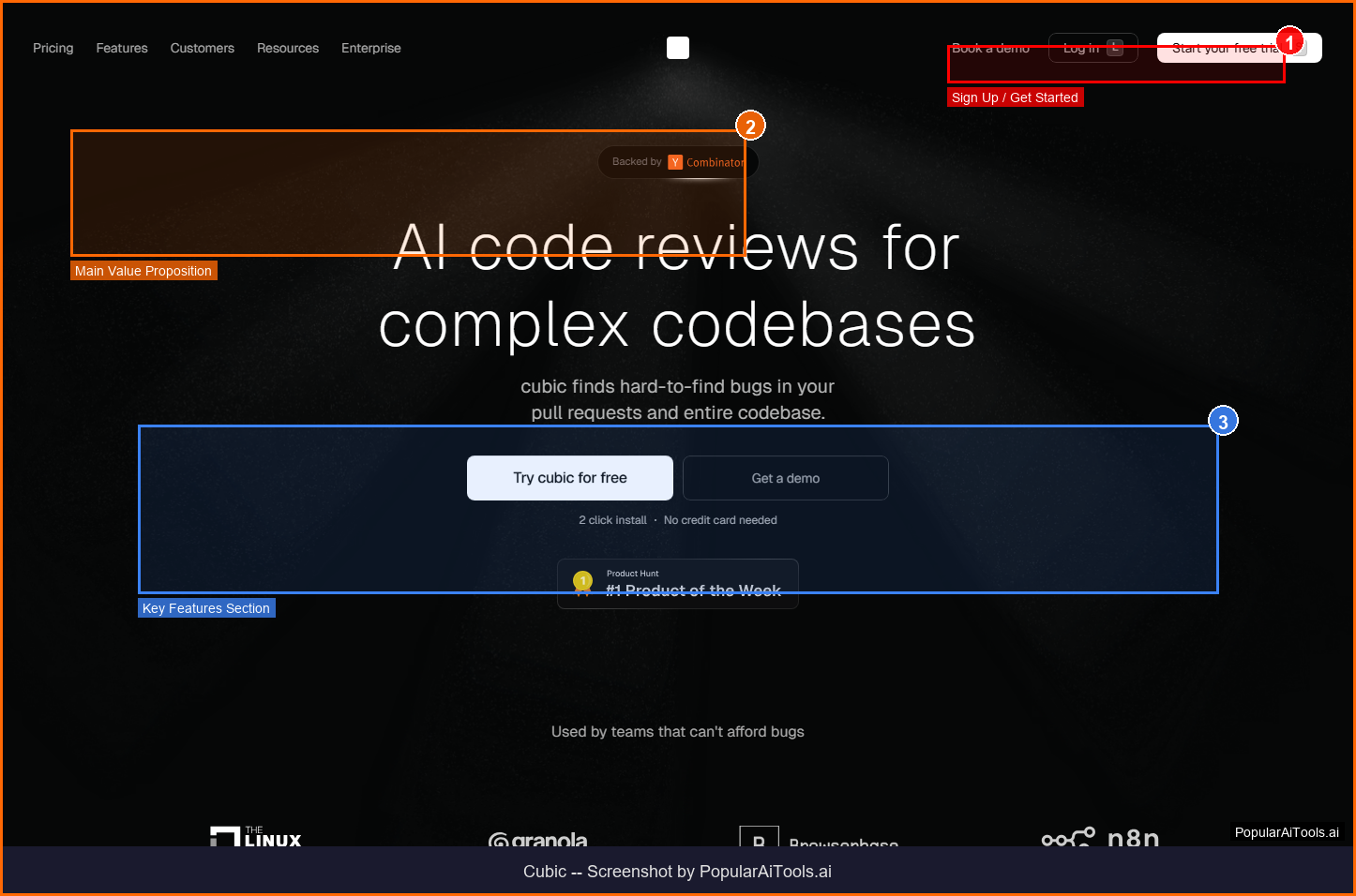
The Cubic homepage - key features and navigation highlighted
What is Cubic?
An AI-native code review platform that automatically reviews pull requests, catches bugs, enforces coding standards, and provides inline feedback directly within GitHub workflows.
Cubic stands out in the crowded AI landscape by focusing on solving a specific problem well rather than trying to be everything to everyone. The platform is designed to integrate seamlessly into existing workflows, reducing the learning curve and time-to-value for new users.
Whether you are an individual user looking to boost productivity or a team seeking to streamline operations, Cubic offers a freemium approach that lets you start with core features and scale as your needs grow. The platform has gained traction in 2026 as organizations increasingly adopt specialized AI tools for specific workflow challenges.
Cubic core features at a glance
Key Features
1. Automated Pull Request Reviews
Cubic automatically reviews every pull request with AI-powered analysis. It provides inline comments on code quality, potential bugs, performance issues, and security vulnerabilities directly in your GitHub PR interface, just like a human reviewer would.
2. Custom Coding Standards Agents
Define your team coding standards in plain English and Cubic enforces them automatically. Create up to 5 custom agents (Team plan) that check for specific patterns, conventions, and best practices unique to your codebase.
3. Continuous Codebase Scanning
Beyond PR reviews, Cubic Pro runs thousands of agents continuously on your entire codebase to find deep bugs, security issues from hijacked dependencies, and code quality problems that PR-level analysis would miss.
4. AI Wiki Documentation
Cubic automatically generates and maintains documentation for your codebase. The AI Wiki understands your code structure, patterns, and conventions, creating searchable documentation that updates as your code evolves.
5. SOC 2 Compliant Security
Cubic never stores or uses your code to train AI models. Complete data ownership is maintained, with SOC 2 compliance ensuring enterprise-grade security for sensitive codebases.
How Cubic fits into your workflow

How to Use Cubic (Step-by-Step)
Step 1: Install the GitHub App
Visit cubic.dev and install the Cubic GitHub App on your repositories. The setup takes under 5 minutes.
Step 2: Configure Your Rules
Define custom coding standards and review preferences in plain English. Tell Cubic what to look for in your codebase.
Step 3: Open a Pull Request
Create a PR as you normally would. Cubic automatically analyzes the changes and posts inline review comments within minutes.
Step 4: Review AI Feedback
Read Cubic feedback alongside your PR diff. Accept, dismiss, or discuss suggestions just like you would with a human reviewer.
Step 5: Iterate and Merge
Address the flagged issues, push fixes, and let Cubic re-review. Once all standards are met, merge with confidence.
Pricing Plans
Cubic pricing tiers compared (March 2026)
Cubic official pricing page (March 2026)
Cubic offers a freemium pricing structure. The Free plan at $0 provides enough functionality for basic use cases and evaluation. The paid plans unlock advanced features, higher limits, and priority support that professional users and teams will need.

Pros and Cons
Pros
- ✓ Free for public repositories
- ✓ Custom agents enforce team-specific coding standards
- ✓ Continuous codebase scanning catches deep bugs (Pro)
- ✓ SOC 2 compliance ensures code security
- ✓ Inline PR comments integrate naturally with GitHub workflow
- ✓ Per-seat licensing means you only pay for developers who need it
Cons
- ✗ Team plan at $40/dev/month adds up for larger teams
- ✗ Pro plan at $99/dev/month is expensive
- ✗ GitHub-only (no GitLab or Bitbucket support)
- ✗ Custom agents limited to 5 on Team plan
- ✗ Newer platform compared to established code review tools
Best Cubic Alternatives
How Cubic compares to top alternatives
GitHub Copilot Code Review ($19/mo) specializes in GitHub native and is the top choice for Copilot users wanting integrated review.
CodeRabbit (Free / $15/mo) specializes in AI code review and is the top choice for Budget-friendly PR review.
Sourcery (Free / $14/mo) specializes in Code quality and is the top choice for Python-focused code improvement.
Bugbot (Custom) specializes in Bug detection and is the top choice for Specialized bug finding.
Final Verdict: Is Cubic Worth It?
After thorough evaluation in 2026, Cubic proves to be a solid option in its category. The freemium pricing model makes it accessible for users who want to test before committing, and the core feature set addresses real workflow needs without unnecessary bloat.
The platform excels at its primary use case and delivers genuine value for users within its target audience. While there are areas for improvement, the development team appears actively engaged in expanding capabilities and addressing limitations.
For users seeking a focused, purpose-built tool rather than a sprawling all-in-one platform, Cubic earns its place in the consideration set. We recommend starting with the free tier to evaluate fit before upgrading.
Our Rating: 4.4 / 5
Build an AI Tool? Get It in Front of the Right Audience
PopularAiTools.ai reaches thousands of qualified AI buyers monthly.
Submit Your AI Tool →Frequently Asked Questions
Is Cubic free for open-source?
Yes, Cubic is completely free for public repositories. You get automated PR reviews and standard AI analysis at no cost.
Does Cubic store my code?
No. Cubic ensures that your code is never stored or used to train AI models. The platform maintains complete data ownership with SOC 2 compliance.
How does Cubic differ from GitHub Copilot code review?
Cubic specializes in code review with custom agents, continuous codebase scanning, and team-specific standards enforcement. Copilot code review is more general-purpose and integrated into the broader Copilot ecosystem.
Can I use Cubic for specific developers only?
Yes, you do not need to purchase Cubic for every team member. You can assign licenses to specific developers who need AI-powered code review.
Does Cubic work with GitLab?
Currently, Cubic is GitHub-only. GitLab and Bitbucket support may be added in the future.

Get Premium AI Tool Insights
Subscribe to get weekly curated AI tool recommendations, exclusive deals, and early access to new tool reviews.
Related Tools
V
VideoProc Converter AI
ai-coding

Relia
ai-coding
AI-powered Chrome extension that audits code flow, catches hallucinations in AI-generated code, and flags security vulnerabilities before they ship.

Git AutoReview
ai-coding
Updated March 2026 · 12 min read · By PopularAiTools.ai

Parallel Code
ai-coding
Free open-source desktop app that dispatches 10+ AI coding agents simultaneously across isolated git branches. Supports Claude Code, Codex CLI, and Gemini CLI. Keyboard-first Electron app with diff review workflow and QR code mobile monitoring. macOS + Linux. MIT license.
Related Articles
10 Claude Code Skills, Plugins & CLIs to Install on Day One (April 2026)
Starting Claude Code from scratch in 2026? Install these 10 skills, plugins, and CLIs on day one — Codex CLI, Obsidian, Autoresearch, Firecrawl, Playwright, NotebookLM, Skill Creator, RAG-Anything, Google Workspace CLI, and awesome-design-md. Full install commands included.
We Tested 24 AI Models Inside Claude Code: The 2026 Tier List
We swapped 24 different AI models into Claude Code and ran identical tool-call tests on each. Here's the S-tier-to-D-tier ranking, real cost comparison, and the single best Claude Sonnet 4.6 alternative for 2026 — including the GLM 4.6 sleeper pick that matched Sonnet at 15% the cost.
Claude as a Creative Studio: Make Ads, Images, and Video From One Chat (2026)
Claude doesn't generate raster images natively, but in 2026 it's the smartest creative director on Earth — orchestrating Nano Banana 2, Sora 2, Runway, Higgsfield, Remotion, and VEED into a single ad-and-video factory. The full stack, the variant matrix trick, and how to build a YouTube Shorts factory.