Suno Alternatives 2026: 7 AI Music Generators We Tested

AI Creative Tools Specialist
⚡ Key Takeaways
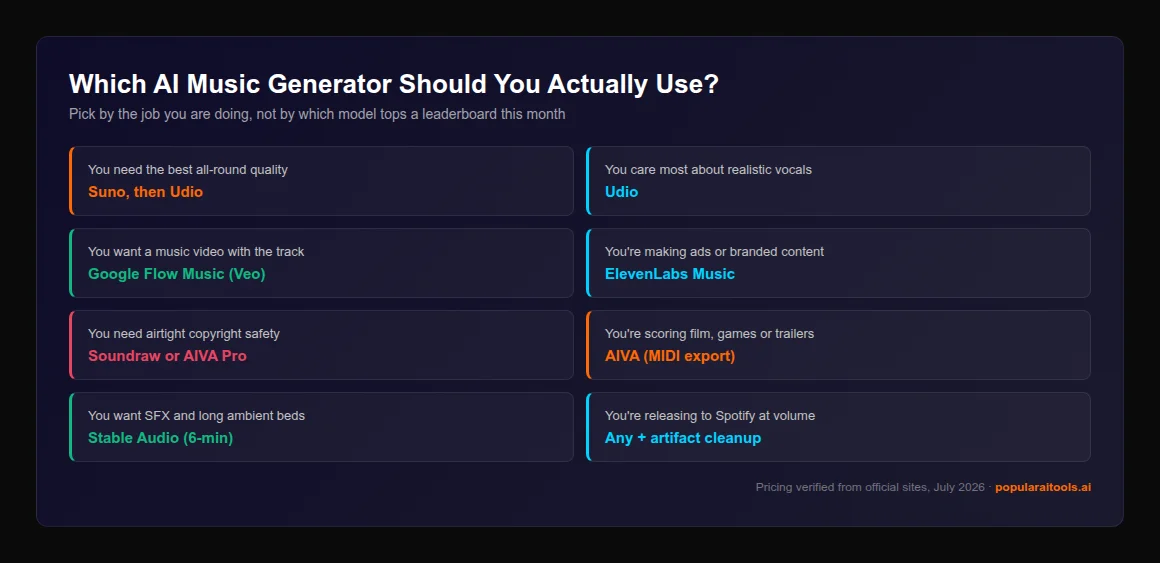
- There is no single best Suno alternative — there is a best one per job. Vocals go to Udio, music videos to Google Flow Music, ads to ElevenLabs Music, copyright safety to Soundraw or AIVA.
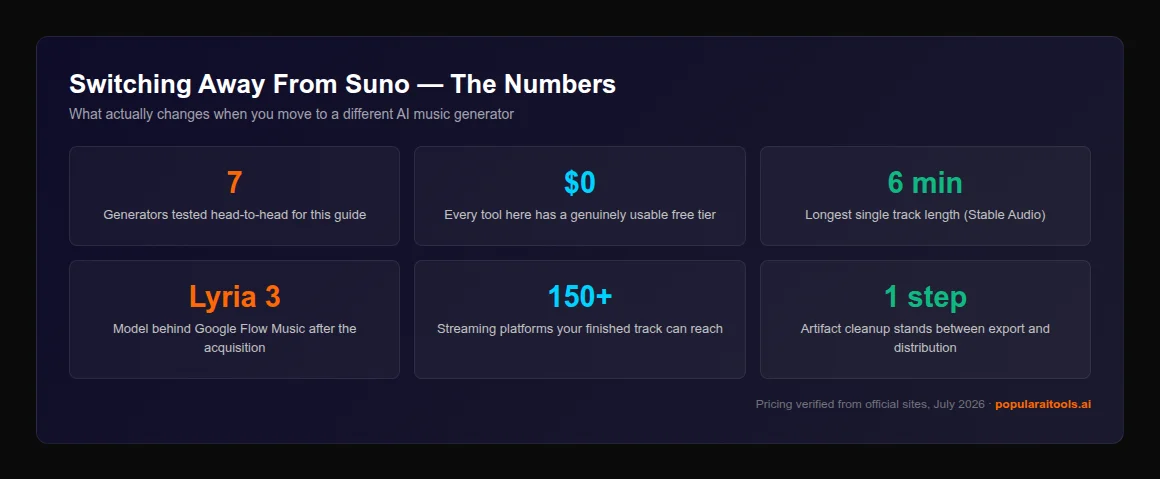
- Riffusion is now Google Flow Music. Google acquired it in February 2026 and rebranded it in April. It runs on Lyria 3 and generates Veo music videos alongside tracks — most alternative round-ups still list it under the old name.
- Every tool here has a free tier, but free almost always means a personal, non-commercial licence. Commercial rights start on paid plans, and the terms differ sharply between platforms.
- Prices range from $5.99/mo (Soundraw) to $89.99/mo (Stable Audio Max). We pulled every figure from the official pricing pages in July 2026.
- Switching generators does not fix distributor rejections — every AI export carries inaudible markers, so a cleanup pass stays part of the release workflow no matter which tool you pick.
- Why People Look for a Suno Alternative
- 1. Udio — The Closest Like-for-Like Swap
- 2. Google Flow Music — The One Everyone Missed
- 3. ElevenLabs Music — Built for Commercial Work
- 4. Stable Audio — Long Tracks and Sound Design
- 5. Soundraw — The Copyright-Safe Option
- 6. AIVA — Soundtracks, MIDI and Real Ownership
- 7. Mureka — Cheap Volume and DAW Control
- Full Pricing Comparison
- The Step Everyone Skips Before Distributing
- FAQ
- Our Verdict
Suno is still the default answer for AI music, and for good reason. But "default" and "right for your project" are different things, and if you have hit a credit wall, disliked how your vocals came out, or worried about what licence your track actually carries, you are asking the right question.
We tested seven Suno alternatives and pulled the pricing for every one of them from the official pages in July 2026 — no recycled numbers, no guessing. One of them turned out to have quietly become a Google product since most comparison articles were written. Here is what each tool is genuinely good at, what it costs, and who should use it.
Why People Look for a Suno Alternative
Three reasons come up again and again, and they lead to completely different replacements.
Credit economics. Heavy users burn through monthly credits fast, and regenerating a track that came out 80% right is expensive. If this is you, price per generation matters more than raw model quality.
Output quality on a specific thing. Usually vocals. Sometimes instrumental realism, sometimes track length. No model wins on every axis, so the fix is picking the model that wins on yours.
Licensing nerves. If you are putting music in a client's advert or a game you intend to sell, "probably fine" is not good enough. A few platforms now compete specifically on training-data provenance — and those are the ones to look at.
1. Udio — The Closest Like-for-Like Swap
If you want the same workflow with a different model, Udio is the switch. It is the tool most often described as beating Suno on vocal realism, and it gives you tighter control over the audio once generated.
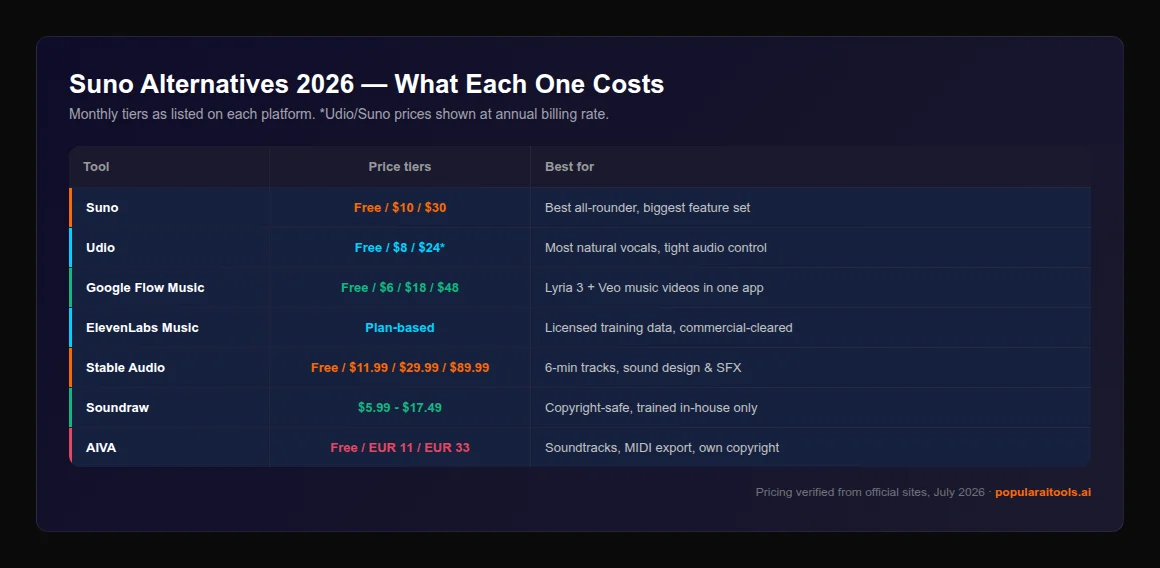
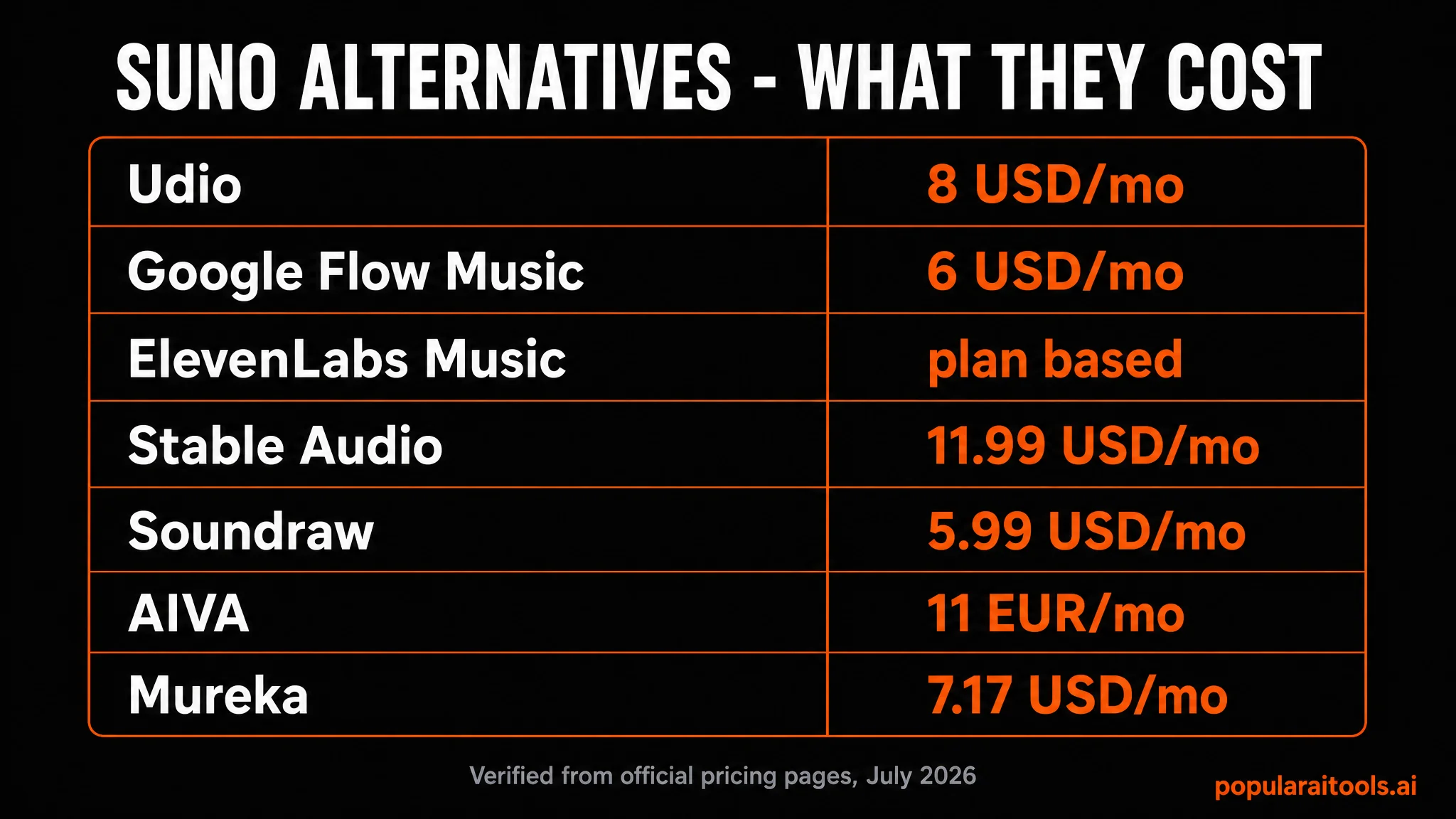
The free tier is genuinely usable for evaluation: 10 credits per day and 100 per month, up to 4 songs generating at once, with full-length (2:10) generations capped at 3 per day. Standard runs $10/month, or $8/month billed annually at $96, and lifts you to 2,400 monthly credits, 6 concurrent generations, and the daily full-length cap disappears. Pro is $30/month, or $24/month annually at $288, for 6,000 credits and 10 concurrent generations.
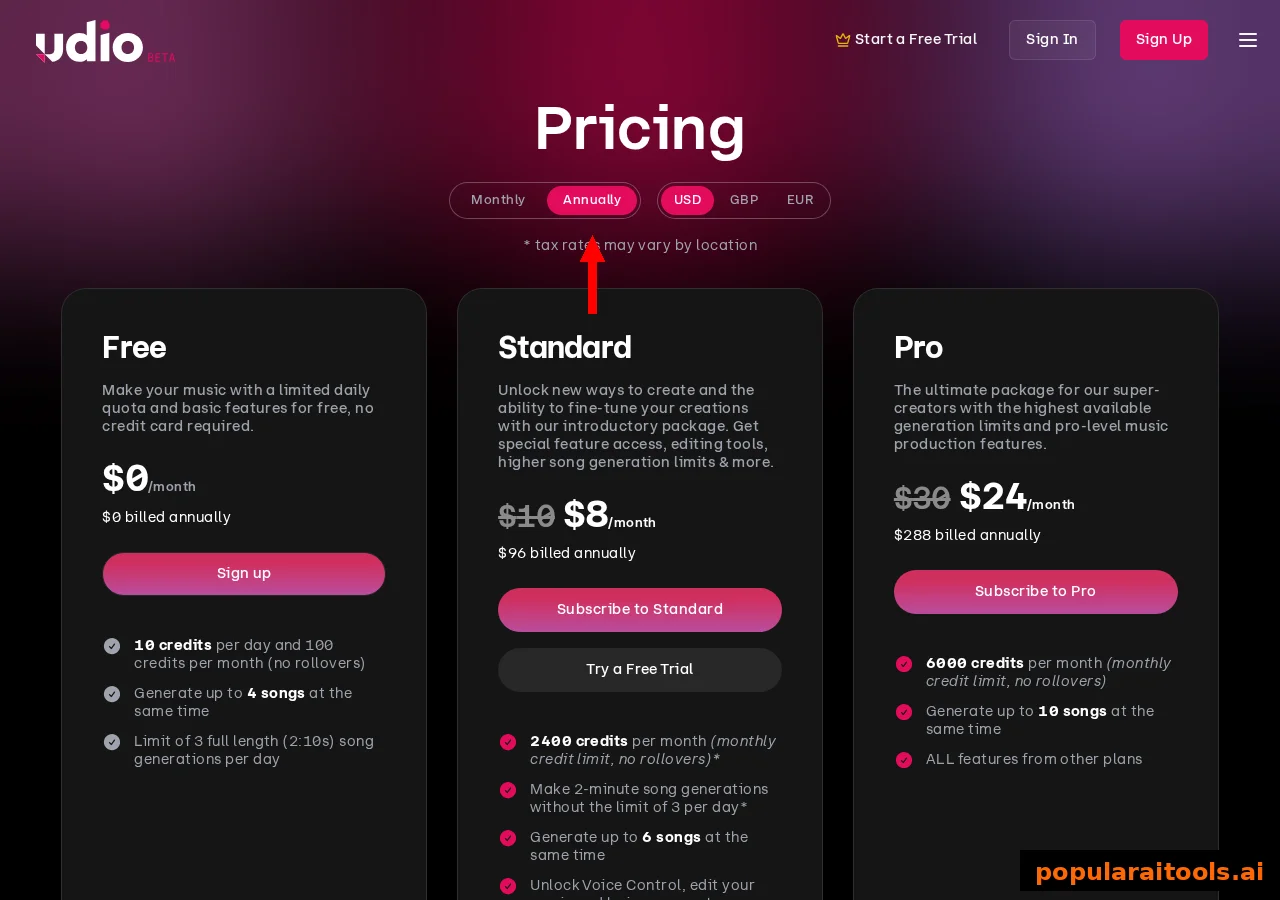
Worth knowing: credits do not roll over on any tier. If your output is bursty, you lose what you do not spend. We compared the two head to head in our Udio vs Suno breakdown, and the honest summary is that most serious producers keep both.
2. Google Flow Music — The One Everyone Missed
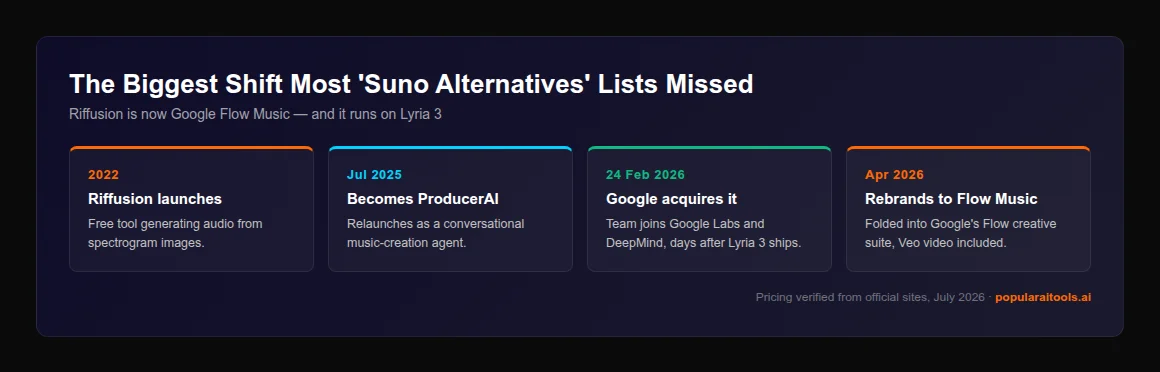
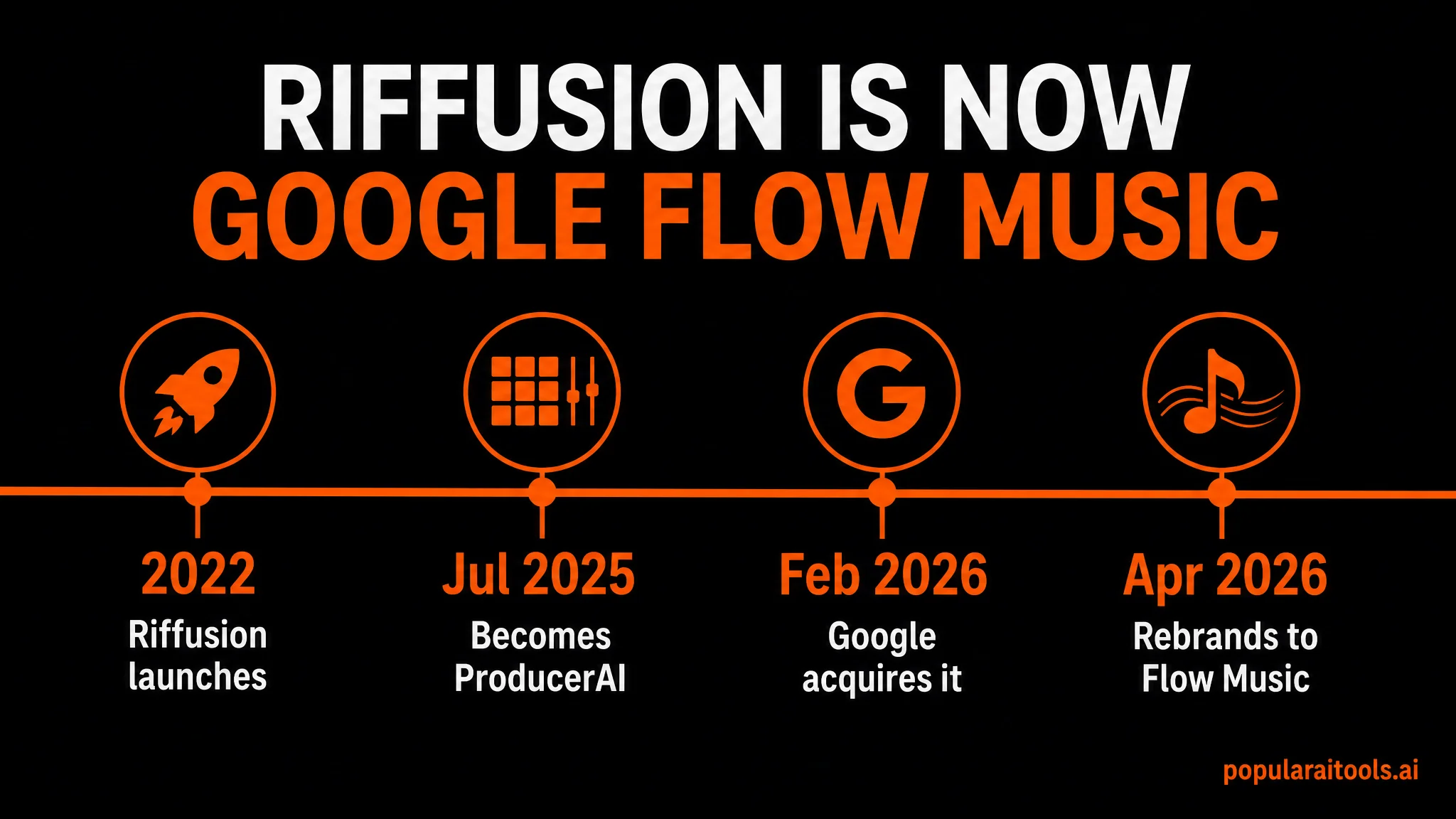
Here is the update that makes most "Suno alternatives" lists out of date. Riffusion — the free image-to-audio tool from 2022 — relaunched as ProducerAI in July 2025. On 24 February 2026, Google acquired it, moving the team into Google Labs and DeepMind days after Lyria 3 shipped. In April it was rebranded Google Flow Music and folded into Google's Flow creative suite.
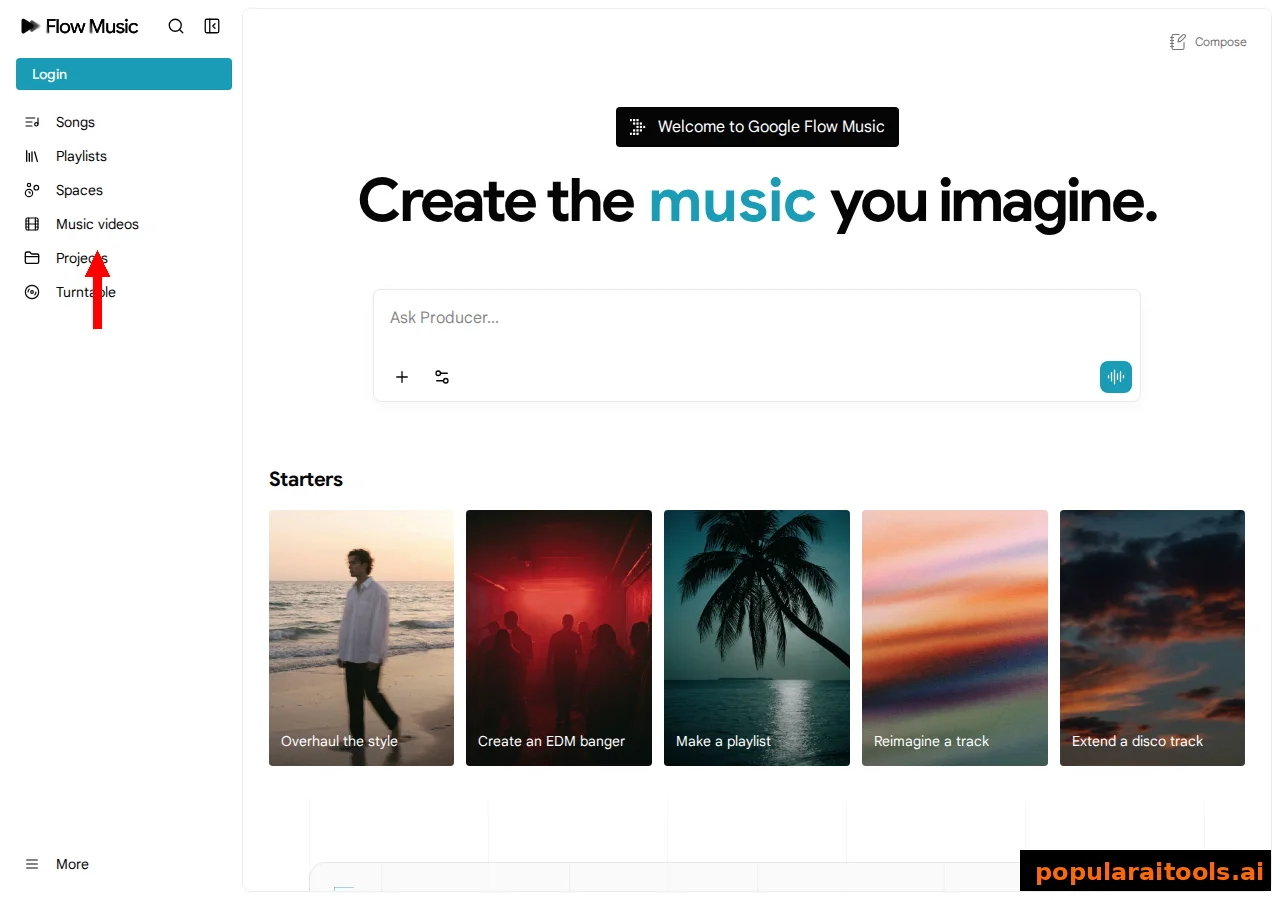
What you get now is a conversational "Producer" chat interface for building songs, running on Lyria 3 — plus music video generation using Veo in the same app, and a "Spaces" area for vibe-coding audio tools. For anyone publishing to YouTube, generating the track and the video in one place is a real workflow advantage nobody else on this list offers.
Pricing is the most aggressive here: Free with daily top-up credits and 2 concurrent generations, Starter at $6/month for 3,000 credits (roughly 600 songs) and 8 concurrent, Plus at $18/month for 10,000 credits (roughly 2,000 songs), and Member at $48/month. On a per-song basis nothing else here comes close.
3. ElevenLabs Music — Built for Commercial Work
ElevenLabs built its reputation on voice, and its Music v2 model is aimed squarely at people who need to invoice someone. The pitch is provenance: trained on licensed data only, with every generated track cleared for commercial use.
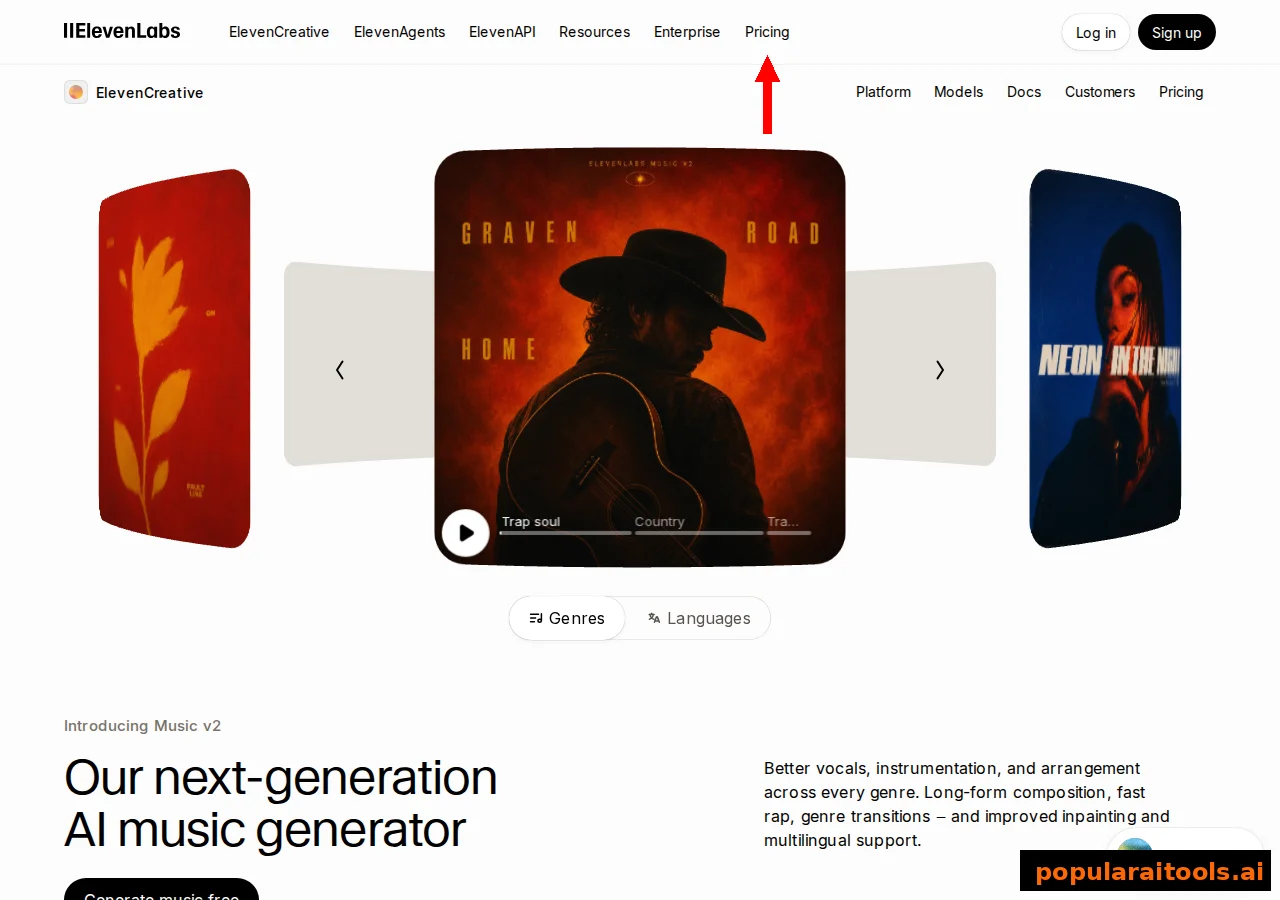
Read the terms before you commit, though. On self-serve plans, online and offline commercial use is permitted except for film, TV and Studio Games — those require Enterprise. If you are scoring a short film, that exclusion is the whole ballgame. Music access sits inside the wider ElevenLabs plan structure rather than being priced separately, so cost depends on which tier you are already on. Our ElevenLabs vs LOVO comparison covers the platform economics in more depth.
4. Stable Audio — Long Tracks and Sound Design
Stable Audio is the odd one out, in a useful way. It does text-to-audio and audio-to-audio, covers sound effects and soundscapes as well as music, and generates up to 6 minutes on every tier including free — the longest single-generation length on this list.
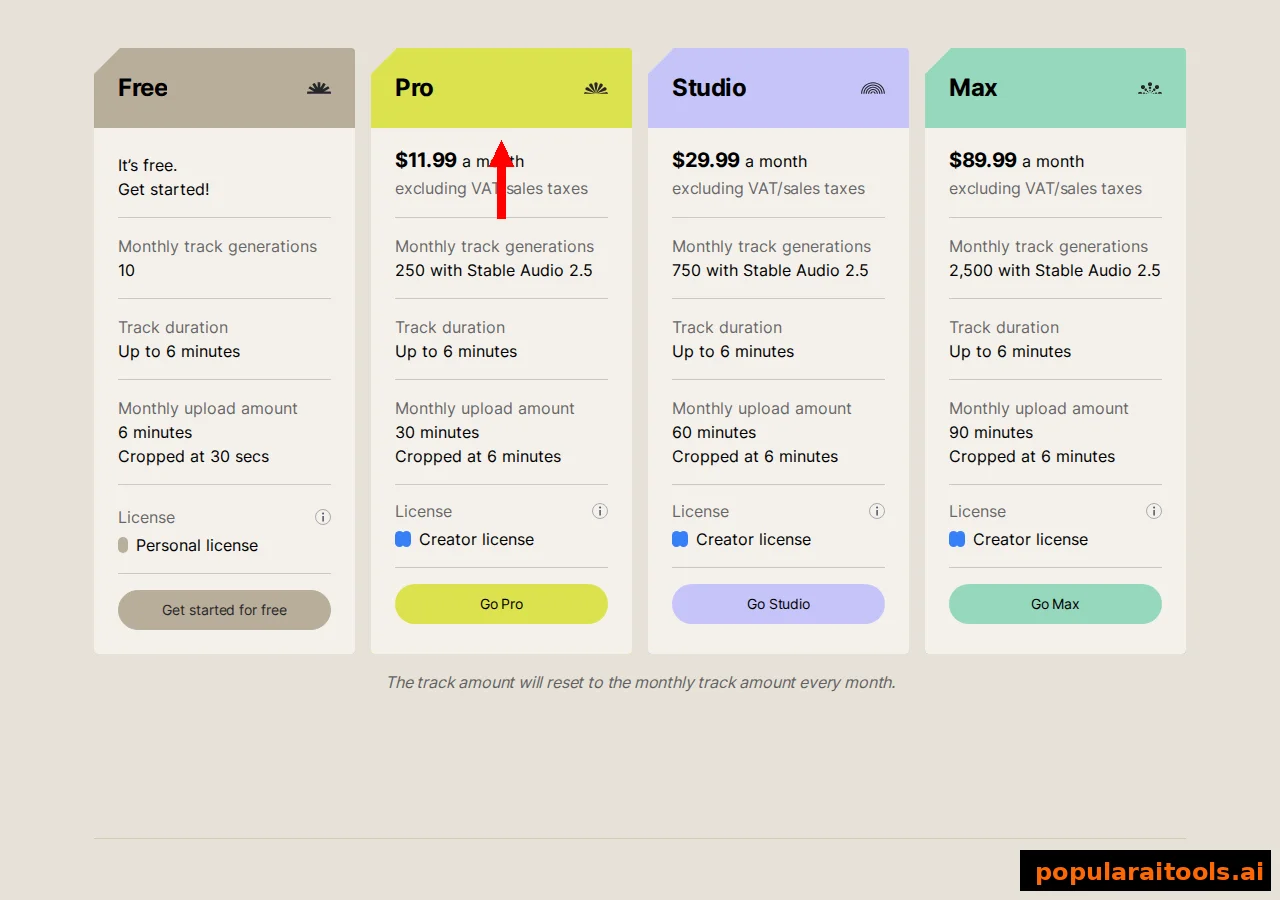
Tiers run Free (10 generations/month, personal licence), Pro $11.99/month (250 generations, creator licence), Studio $29.99/month (750), and Max $89.99/month (2,500). That licence distinction is the important part: the free tier is for trying it, not for shipping. If you need ambient beds, game audio or SFX rather than songs with hooks, this is your tool.
5. Soundraw — The Copyright-Safe Option
Soundraw takes the clearest position on training data of anyone here: no scraped songs, with the model trained only on music the company creates in-house. Every beat is presented as legally yours to use, monetise and share.
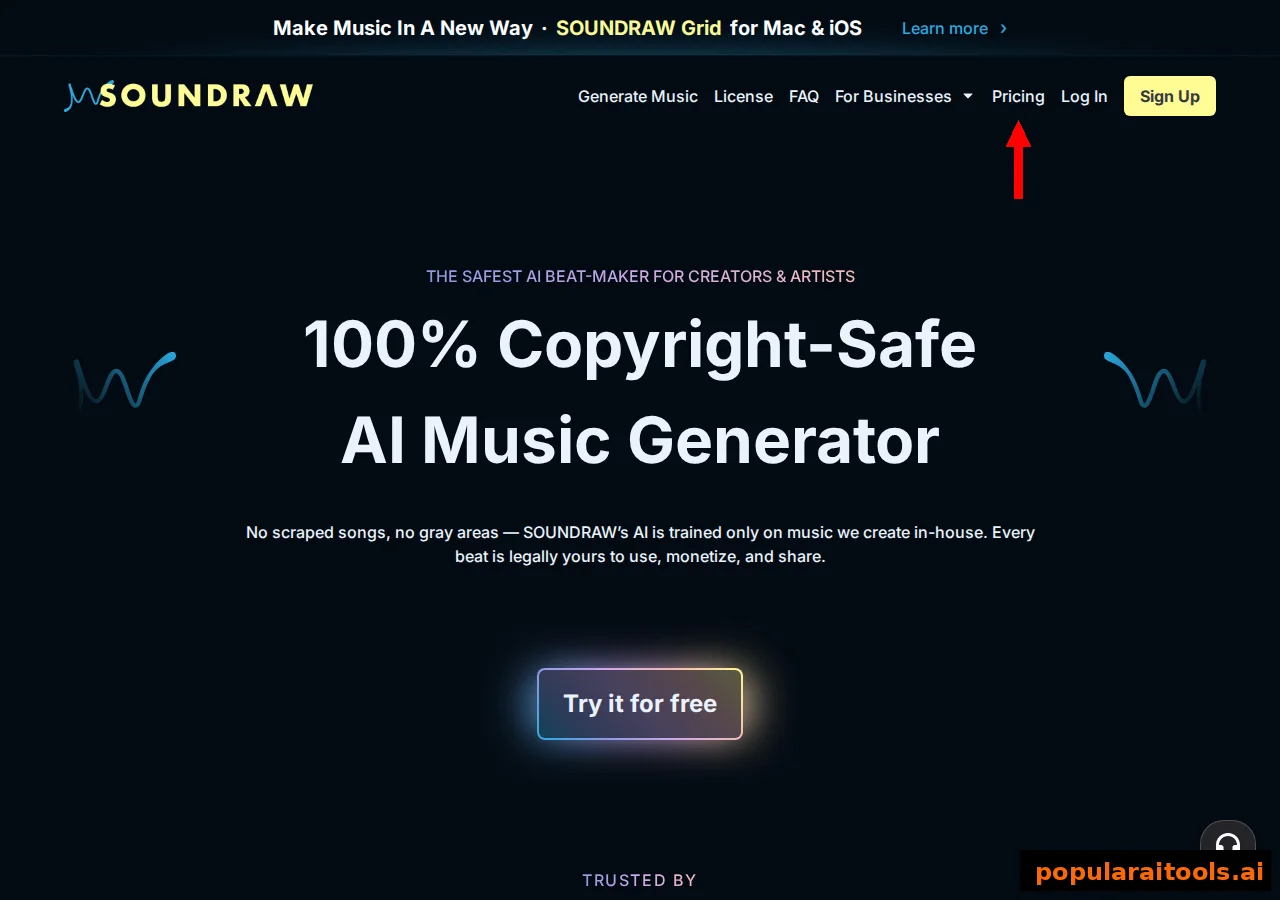
Plans run roughly $5.99 to $17.49 per month depending on tier and billing cycle, making it the cheapest entry point on this list, with business, API, enterprise and even in-store background music plans above that. The trade-off is creative: you are steering a generator toward a mood and genre rather than writing a song with lyrics and vocals. For YouTubers, podcasters and video editors who need unlimited safe background music, that trade is usually worth it.
6. AIVA — Soundtracks, MIDI and Real Ownership
AIVA has been at this longer than almost anyone and is aimed at composers rather than prompt-writers. It generates in over 250 styles, lets you upload an audio or MIDI influence to build your own style models, and — critically — exports in multiple formats including MIDI, so you can take the output into a DAW and actually finish it like a real arrangement.
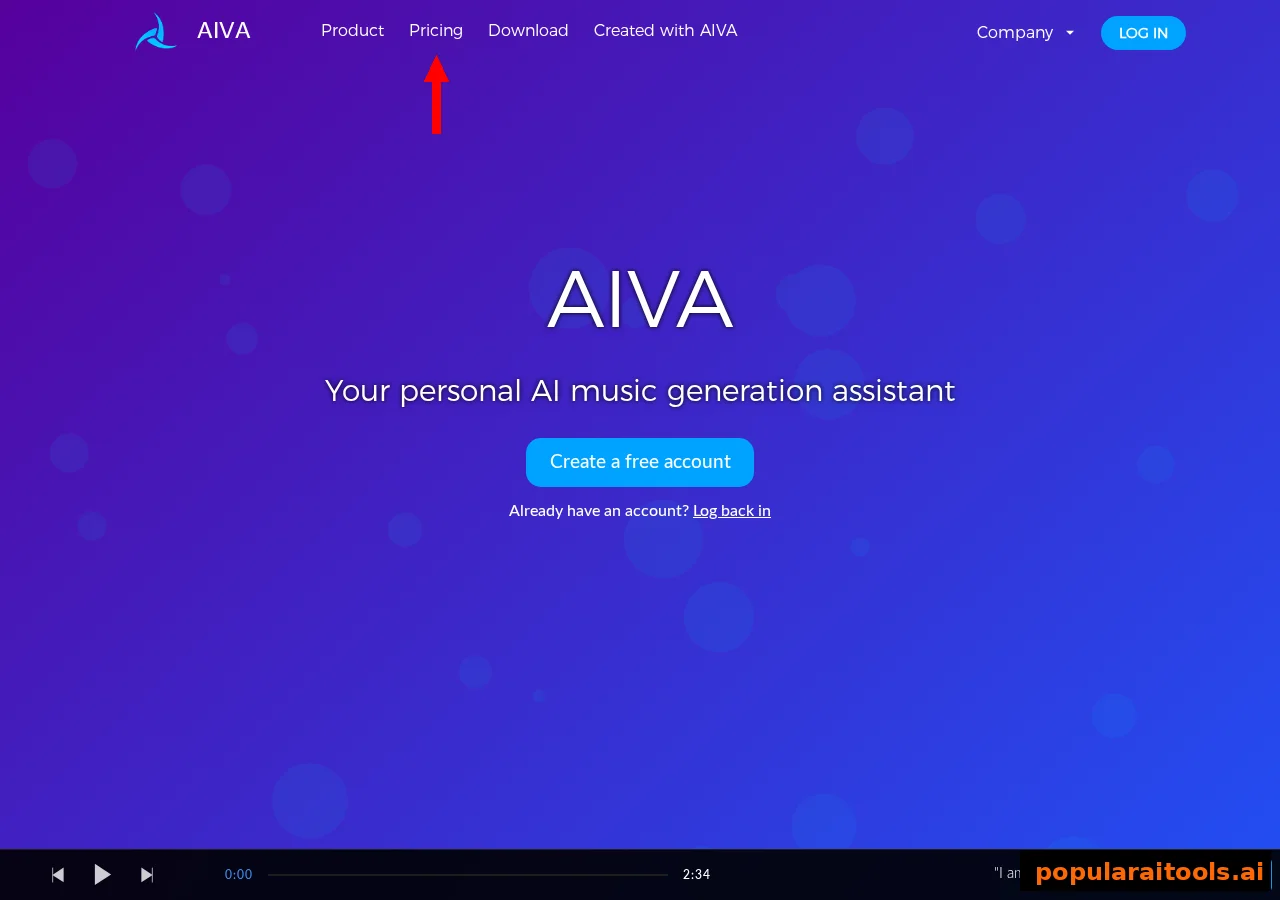
Pricing is download-based rather than credit-based: Free (3 downloads/month), Standard €11/month annually (15 downloads/month), and Pro €33/month (300 downloads/month). The Pro plan is the one that matters — it is where you own the full copyright of your compositions, forever. If you are scoring film, games or trailers and need stems and MIDI you can edit, AIVA is the pick.
7. Mureka — Cheap Volume and DAW Control
Mureka is the value play. Its editor covers lyrics, style prompts, vocal gender, reference tracks, remixing and instrumental mode, with a soundtrack mode alongside the standard song builder — and its "Mureka Co" feature drives your DAW from a prompt.
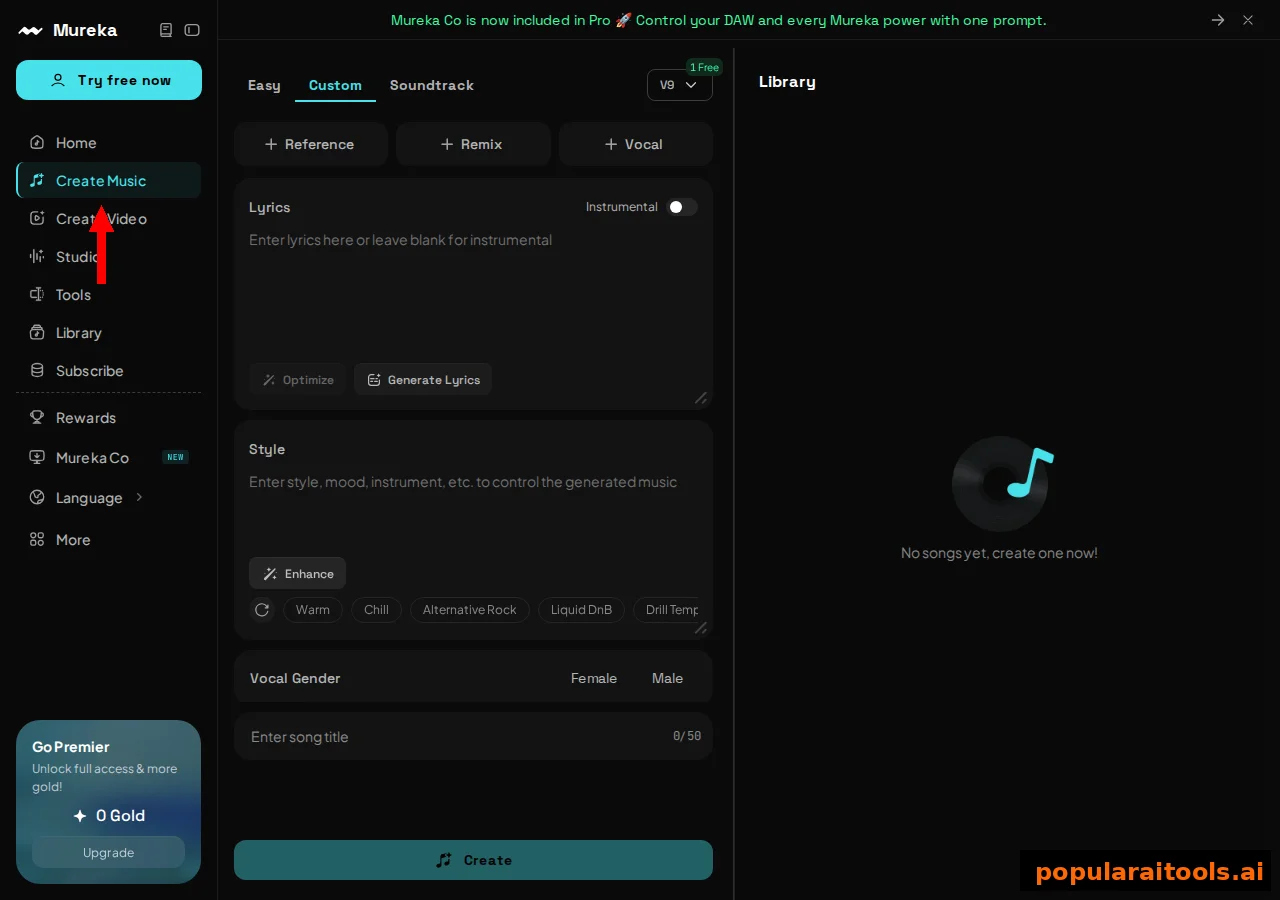
Entry pricing sits around $7.17/month billed annually ($86/year), or $9/month monthly, in the region of 500 songs per month. Higher tiers add WAV and stem downloads, region and melody editing, reference audio uploads and voice cloning. If you need volume and stems without paying Udio Pro money, it is worth a look.
Full Pricing Comparison
| Tool | Entry paid price | Standout strength | Main limitation |
|---|---|---|---|
| Udio | $8/mo annual | Most natural vocals | Credits never roll over |
| Google Flow Music | $6/mo | Lyria 3 + Veo music videos | Newest, still settling |
| ElevenLabs Music | Plan-based | Licensed training data | No film/TV on self-serve |
| Stable Audio | $11.99/mo | 6-minute tracks, SFX | Weaker on vocal songs |
| Soundraw | $5.99/mo | In-house training data | Not a lyric/vocal writer |
| AIVA | €11/mo annual | MIDI export, full copyright on Pro | Download caps, not credits |
| Mureka | $7.17/mo annual | Volume + DAW control | Stems locked to higher tier |
The Step Everyone Skips Before Distributing
One thing does not change when you switch generators, and it catches people out constantly: every one of these tools exports a file carrying inaudible AI markers — SynthID watermarks, C2PA content credentials, spectral fingerprints and generation metadata. Distributors scan for them on upload. Moving from Suno to Udio, or to Flow Music, does not remove them.
If your track is only ever going in a YouTube video or a client's advert, this does not matter much. If you are distributing to Spotify and Apple Music, it matters a lot — flagged tracks get rejected at the gate or quietly pulled weeks after release, and repeat rejections put your whole distributor account at risk.
We go through the technical detail of what gets embedded and why in our guide to AI watermark removal for music, and the detection side in can Spotify detect AI music.
- Udio vs Suno (2026): Which AI Music Generator Actually Wins?
- Suno v5.5 Review 2026: AI Music Generation That Actually Sounds Good
- Lyria 3 Pro Review 2026: Google DeepMind AI Music Creation
- AI Watermark Remover for Music: The Only Tool That Works in 2026
- How to Get Your Suno and Udio Music on Spotify in 2026
- Suno AI Prompts Guide: 100+ That Actually Work (2026)
Frequently Asked Questions
Our Verdict
If you want one recommendation: try Udio first. It is the smallest jump from Suno, the free tier is enough to judge it properly, and if vocals were your complaint it will probably fix them.
But the more interesting answer is Google Flow Music. It is the cheapest per song by a wide margin, it runs on Lyria 3, and generating the music video in the same app is a genuine workflow advantage — and because it only became a Google product in February, most comparison articles have not caught up. If you publish to YouTube, start there.
For commercial work where a licence dispute would be expensive, ElevenLabs Music and Soundraw are the defensible picks. For composers who want to finish the arrangement themselves, AIVA and its MIDI export is the only real option here. And whichever you choose, remember the export is not the finish line — clean the file before you distribute it, and your tracks stay live.
Recommended AI Tools
played.fm
Sell your music and keep 100%: played.fm is a direct-to-fan store + sync marketplace with 0% commission, no gatekeepers, and no bans — a strong fit for AI musicians.
View Review →OpenCode
The open-source AI coding agent: terminal-first TUI, 75+ model providers, LSP context, subagents, and privacy-first design. Free software, ~180K GitHub stars.
View Review →Exa
The neural web search API for AI agents: embeddings-based retrieval, cited highlights, sub-180ms latency, and an MCP server. 20,000 free requests/month.
View Review →Google Antigravity
Google's agent-first IDE: run a fleet of AI agents from a Manager surface, on Gemini 3 Pro, Claude Sonnet 4.5, or OpenAI models. Free in public preview.
View Review →