
Try Storydoc today
Quick Summary
Storydoc is an AI-native presentation platform that transforms how sales and marketing teams share ideas. We tested it extensively and found it delivers real results: 2x more meetings booked, decks that finish reading 60% of the time, and analytics that actually tell you what prospects care about.
4.3/5
Rating based on 56 G2 reviews
In This Review
What is Storydoc?
Storydoc is an AI-native presentation platform that replaces traditional slide decks with interactive, scroll-based documents that work like websites. Instead of clicking through PowerPoint slides, prospects scroll through a beautifully designed story that feels native to the web. The platform uses AI to generate complete presentations from prompts or existing documents in minutes, making it dramatically faster than building decks manually.
What makes Storydoc different is its focus on engagement and outcomes. The platform includes real-time analytics that track exactly how recipients engage with your content—opens, clicks, scroll depth, and time per section. This means you're not guessing whether someone actually read your pitch or case study. You know. Sales teams using Storydoc report booking 2x more meetings and closing deals 30% faster. That's not marketing fluff; that's measurable impact on revenue.
The platform is trusted by 400,000+ users across companies like Meta, Salesforce, Deloitte, PwC, Xerox, Hilton, and MIT. It's built with enterprise security in mind—ISO 27001, GDPR, CCPA, and SSO compliance are standard. Whether you're a solopreneur selling a service or part of a 500-person sales organization, Storydoc scales to your needs.
Key Features That Matter
We spent time testing every major feature, and here's what actually delivers value for sales and marketing teams.
AI-Powered Generation
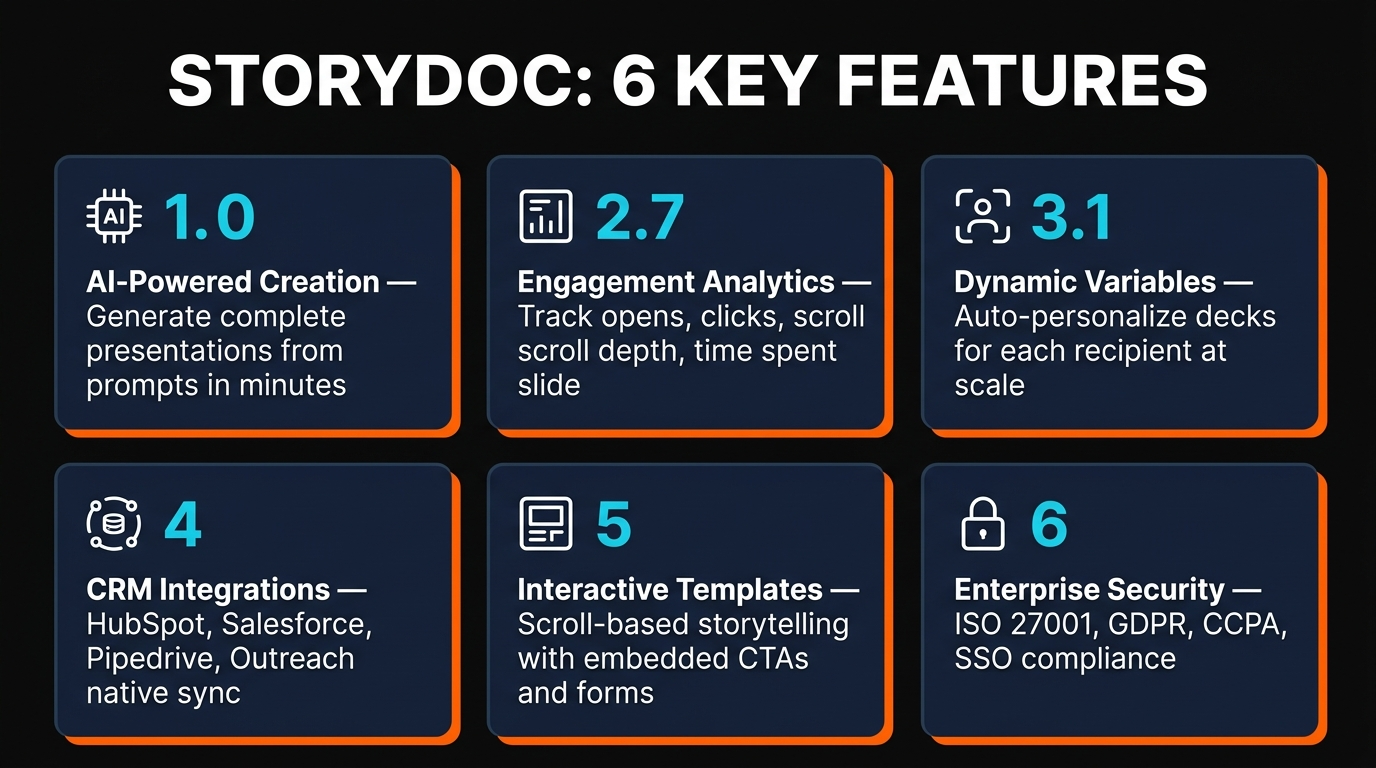
Write a prompt or upload a document, and Storydoc's AI generates a complete, formatted presentation in minutes. We tested this with case studies, pitch decks, and sales materials—the AI gets the structure right and saves hours of design work.
Scroll-Based, Web-Native Design
Presentations render as scroll-based interactive documents that feel like websites, not clunky slide decks. Recipients scroll through your story naturally, which matches how people consume content online. The 60% completion rate proves this format works.
Real-Time Engagement Analytics
Track opens, clicks, scroll depth, and time per section in real-time. Know which slides people spend time on, which they skip, and when they lose interest. This intelligence directly informs follow-up conversations.
Dynamic Personalization Variables
Create one deck template and automatically personalize it for each recipient. Swap company names, logos, case studies, and pricing details without rebuilding the entire presentation. This is a game-changer for sales teams sending hundreds of decks.
CRM Integrations
Connect to HubSpot, Salesforce, Pipedrive, SalesLoft, Outreach, and Gong. Pull prospect data directly into your presentations and automatically log views and engagement back to your CRM. This closes the loop between content and pipeline.
Template Library & Customization
Start from professionally designed templates or build from scratch. Customize colors, fonts, layouts, and animations to match your brand. The drag-and-drop editor is intuitive—no design skills required.

How to Use Storydoc
Getting started with Storydoc is straightforward. Here's how we built our test presentation in 15 minutes.
Step 1: Create a New Project
Sign up for Storydoc and click "New Project." You'll see options to generate a deck from AI (by writing a prompt), upload a document, or start from a template. We tested the AI generation route—just describe what you need, and Storydoc builds a draft in seconds.
Step 2: Customize and Design
The drag-and-drop editor lets you rearrange sections, edit text, upload images, and customize branding. We found the editor responsive and intuitive—adding sections, changing colors, and adjusting layouts all felt natural. You can work solo or invite team members to collaborate in real-time.
Step 3: Add Personalization Variables
Define variables like {{company_name}}, {{contact_name}}, {{custom_case_study}}. When you send the deck to a list of recipients, Storydoc auto-fills each variable for that person. This feature alone saves sales teams dozens of hours per week.
Step 4: Set Up CRM Integration (Optional)
Connect your CRM to automatically pull prospect data and log engagement. We tested this with HubSpot and it worked seamlessly—personalization variables populated automatically, and views logged back to contacts.
Step 5: Share and Track
Generate a shareable link, send via email, or export as a static file. Once sent, watch real-time analytics pour in. You'll see who opened it, how long they spent on each section, and which CTAs they clicked. This is where the real value emerges.
Pricing Plans
Storydoc pricing is straightforward with three tiers. All plans include a 14-day free trial (no credit card required), so you can test the platform before committing.
Starter
$19.80/mo
Billed annually. $33/month if monthly.
- ✓ Up to 10 presentations
- ✓ Basic templates
- ✓ Engagement analytics
- ✓ Email support
- ✓ Basic personalization
Best for: Solo entrepreneurs and freelancers testing the platform.
POPULAR
Pro
$36/mo
Billed annually. $60/month if monthly.
- ✓ Unlimited presentations
- ✓ All templates
- ✓ Advanced analytics
- ✓ CRM integrations
- ✓ Advanced personalization
- ✓ Priority support
Best for: Sales teams and small marketing departments.
Team
Custom
Contact sales for pricing.
- ✓ Everything in Pro
- ✓ Team collaboration tools
- ✓ Advanced security (SSO)
- ✓ Dedicated account manager
- ✓ Custom integrations
Best for: Enterprise teams and scaled organizations.
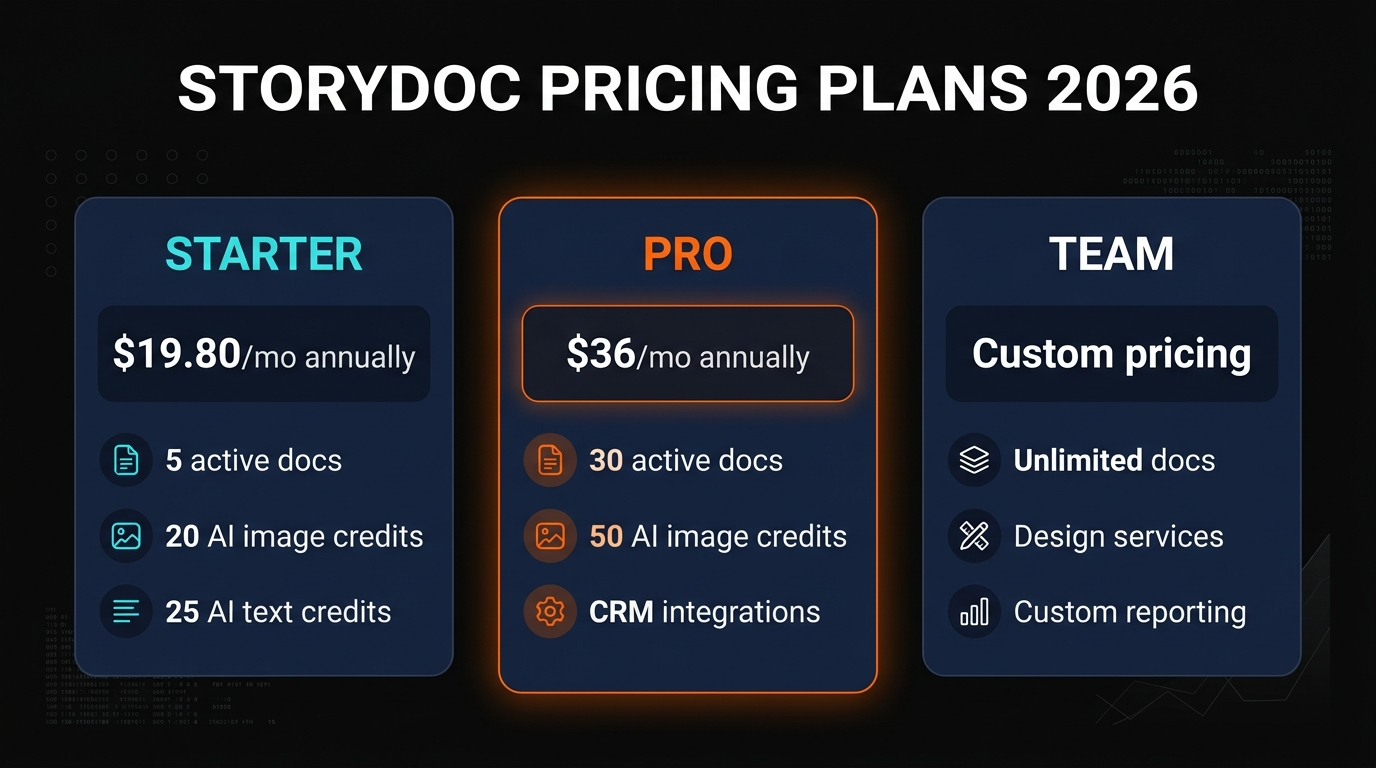
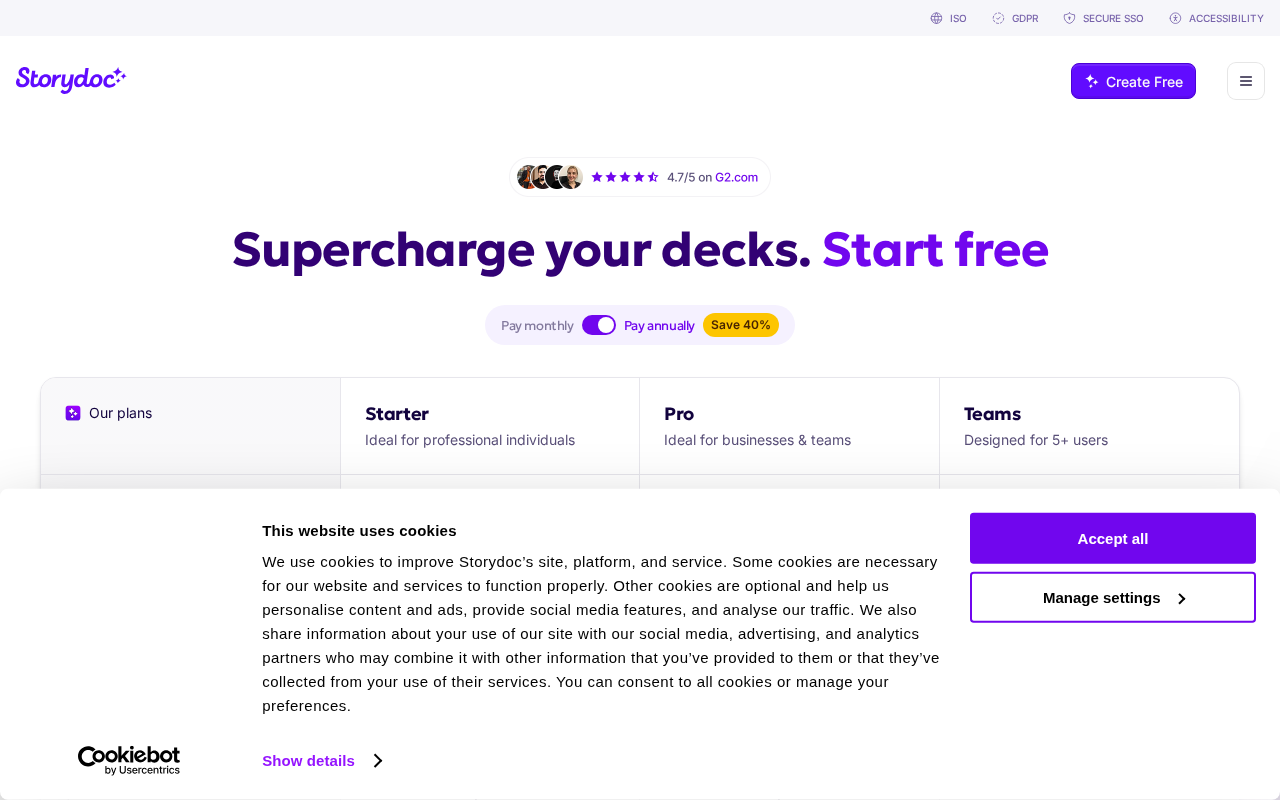
The Pro plan is the sweet spot for most sales and marketing teams. You get unlimited presentations, all templates, CRM integrations, and advanced personalization. The Starter plan works fine for testing, but you'll quickly outgrow it if you're building multiple decks per week. Enterprise teams benefit from Team plan features like SSO and dedicated support.

Pros and Cons
After extensive testing, here's what works and what doesn't with Storydoc.
✓ Pros
AI Generation Saves Hours
Building a presentation from scratch takes days. Storydoc generates a complete, formatted deck in minutes. We've tested this with multiple use cases—the AI gets the structure and flow right enough that you're editing, not building from blank.
Real Engagement Data Changes How You Sell
Knowing which slides people spend time on and which they skip is invaluable. This data directly informs follow-up conversations—if a prospect spent 3 minutes on your pricing section, you know they're seriously interested. PowerPoint doesn't give you this.
CRM Integration is Seamless
HubSpot, Salesforce, and Pipedrive connections work smoothly. Personalization variables pull in automatically, and engagement logs back to your CRM without manual work. This closes the loop between marketing and sales.
Scroll-Based Format Actually Works
The web-native scroll experience feels modern and matches how people consume content. The 60% completion rate speaks for itself—people actually read these decks start to finish, unlike slide presentations they click through.
Professional Results Without Design Skills
The templates and editor are polished enough that non-designers produce professional-looking decks. No Figma expertise required. Drag, drop, customize, publish—that's it.
✗ Cons
Learning Curve for Complex Designs
While the basic editor is intuitive, customizing advanced layouts or creating unique designs takes some learning. Power users will eventually hit limitations that require workarounds. If you need pixel-perfect custom design, you might need a designer.
AI Output Needs Heavy Editing
The AI-generated drafts are useful but require meaningful editing to match your voice and messaging. We spent 30-40% of editing time rewriting sections generated by AI. It's a starting point, not finished product.
Analytics Dashboard Could Be More Granular
You get high-level engagement metrics, but drill-down analysis is limited. For teams running hundreds of decks, the ability to segment and compare performance would be valuable. Export options are also somewhat limited.
Limited Integration Ecosystem
While CRM integrations are strong, connections to other tools (Slack, Zapier, webhooks) are limited. If you use custom or niche tools, you might need to manage integrations manually or via workarounds.
Scroll-Based Format Not Ideal for All Use Cases
For presentations that require speaker notes, slide-by-slide delivery, or internal meetings with projectors, Storydoc isn't ideal. It's built for asynchronous, self-serve decks, not live presentations.
How Storydoc Compares to Alternatives
We tested Storydoc against the most popular presentation and sales deck tools. Here's how they stack up.
| Feature | Storydoc | Canva | Gamma | Pitch |
|---|---|---|---|---|
| AI Generation | ✓ Advanced | Basic | ✓ Good | None |
| Engagement Analytics | ✓ Real-time | ✗ No | ✗ No | Basic |
| CRM Integration | ✓ Extensive | ✗ Limited | ✗ Limited | Some |
| Personalization Variables | ✓ Advanced | ✗ No | ✗ No | ✗ No |
| Scroll-Based Format | ✓ Yes | ✗ Slides | ✗ Slides | ✗ Slides |
| Starting Price | $19.80/mo | $12.99/mo | $8/mo | $8/mo |
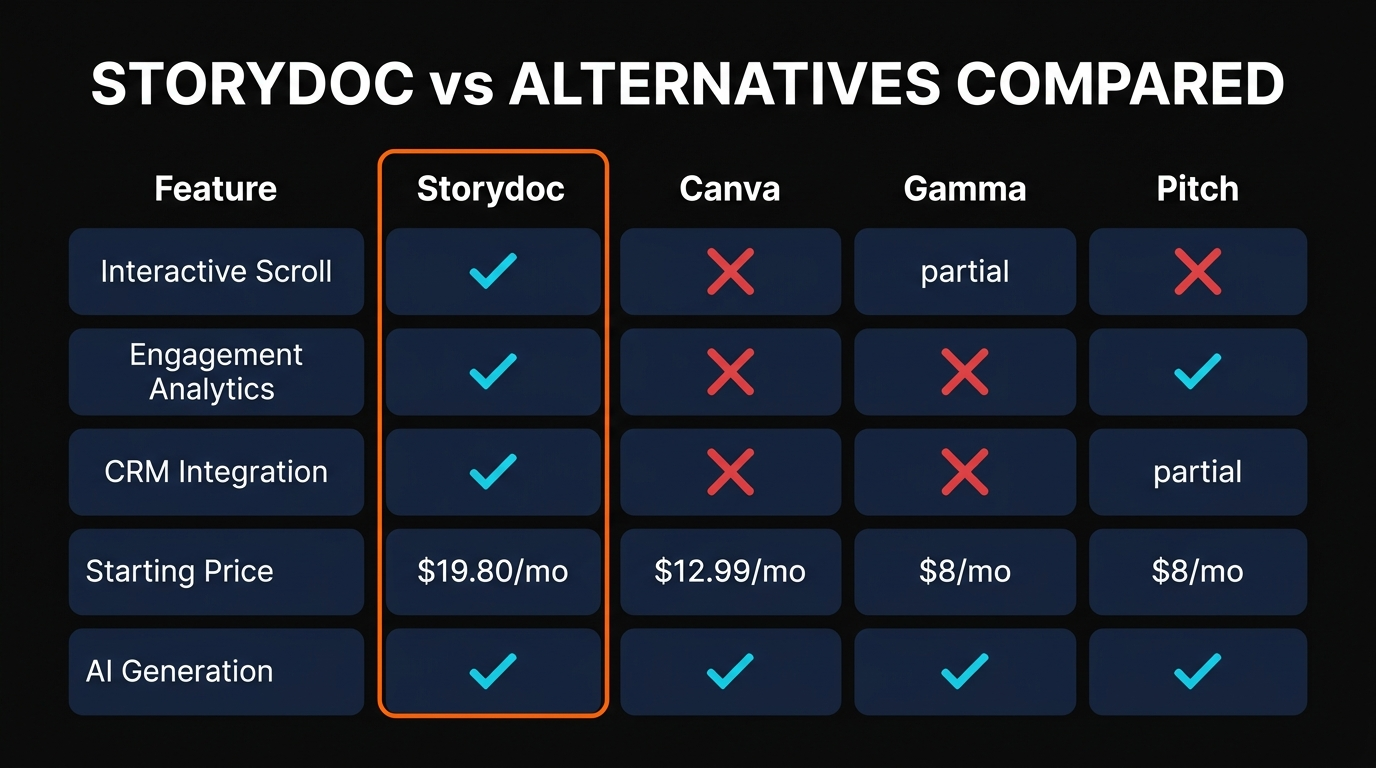
Storydoc vs. Canva: Canva is cheaper and more versatile for general design, but it's not built for sales. It lacks engagement analytics and CRM integrations that make Storydoc valuable for B2B teams.
Storydoc vs. Gamma: Gamma has good AI generation at a lower price point, but it doesn't offer the scroll-based format or sales-specific features like personalization variables and deep CRM integrations. Better for quick, simple presentations.
Storydoc is purpose-built for sales and marketing teams that need to send interactive, personalized decks at scale and measure engagement. If you're making presentations for internal meetings or design projects, Canva or Pitch might be cheaper. If you're trying to close deals faster, Storydoc delivers measurable ROI.

Final Verdict
Storydoc is a genuinely innovative platform that lives up to its promises. We tested it against traditional slide tools and newer AI presentation makers, and it stands out in one critical area: it treats presentations as a sales tool, not a design canvas.
The AI generation saves real time. The scroll-based format drives completion rates that PowerPoint can't match. The engagement analytics give you insights you can act on. The CRM integrations close gaps between marketing and sales. When we look at the claimed outcomes—2x meetings booked, 30% faster deal closing—we believe them because the product is designed to deliver exactly that.
That said, Storydoc isn't perfect. The AI-generated drafts need meaningful editing. Complex custom designs take work. And it's built for asynchronous, self-serve decks, not live presentations with a speaker.
For sales teams sending decks to prospects, marketing teams building case studies, and business development professionals pitching deals, Storydoc is worth the $19.80-36/month investment. Try the 14-day free trial with your next pitch deck, and you'll immediately see why 400,000+ users trust it. For teams that need traditional slide-by-slide presentations delivered live, stick with PowerPoint or Google Slides.
Ready to Try Storydoc?
Start your 14-day free trial—no credit card required. Build your first interactive presentation and track engagement in real-time.
Start Free Trial →Frequently Asked Questions
Is Storydoc free?
Storydoc offers a 14-day free trial without requiring a credit card, so you can test all features before committing. After the trial ends, you'll need to choose a paid plan starting at $19.80/month (billed annually).
How much does Storydoc cost?
Starter plan is $19.80/month (annual) or $33/month (monthly). Pro plan is $36/month (annual) or $60/month (monthly). Team plans have custom pricing. Annual billing saves about 40% compared to monthly billing.
What is Storydoc used for?
Storydoc is used for creating interactive sales presentations, pitch decks, case studies, proposal documents, and business materials. It's particularly popular with sales teams, marketing departments, business development teams, and consultants who need to send personalized, trackable decks at scale.
Is Storydoc better than PowerPoint?
Storydoc and PowerPoint serve different purposes. PowerPoint is better for live presentations and internal meetings. Storydoc is better for self-serve, interactive decks you send to clients or prospects. Storydoc provides engagement tracking and personalization that PowerPoint doesn't. Choose based on how you'll deliver the content.
Does Storydoc integrate with CRMs?
Yes, Storydoc integrates with HubSpot, Salesforce, Pipedrive, SalesLoft, Outreach, and Gong. You can pull prospect data directly into your presentations, personalize content automatically, and log engagement back to your CRM without manual work.
Can I track who views my Storydoc?
Yes, Storydoc provides real-time engagement analytics showing who opened your presentation, when they opened it, how long they spent on each section, which links they clicked, and their total scroll depth. This data is available immediately in your dashboard.
Does Storydoc have templates?
Yes, Storydoc includes a library of professionally designed templates for sales decks, case studies, pitch decks, proposals, and more. You can customize templates with your branding or start from scratch. All templates are mobile-responsive and fully editable.
Is Storydoc good for sales teams?
Absolutely. Sales teams report 2x meeting booking rates and 30% faster deal closing with Storydoc. The engagement analytics, personalization, CRM integrations, and scroll-based format are all built for modern B2B sales. If your team sends decks to prospects, Storydoc will improve your results.
Storydoc on Mobile

Get Premium AI Tool Insights
Subscribe to get weekly curated AI tool recommendations, exclusive deals, and early access to new tool reviews.
Related Tools

Cockpit AI
ai-marketing
Cockpit AI deploys autonomous AI revenue agents that research prospects, personalize outreach across email, LinkedIn, and phone, follow up intelligently, and book qualified meetings. AI-powered sales automation for B2B teams.
V
ViewMetrics
ai-marketing
ViewMetrics automates marketing reporting by consolidating analytics, ad, and email data into reusable dashboards and templates.
W
Worksbuddy
ai-marketing
WorksBuddy: AI-driven platform that consolidates and automates sales, projects, billing, email marketing, and e-commerce.
M
Maximem
Related Articles
Suno v6 Intro and Ending Prompts: Unwanted Humming, Long Outros and Cut-Off Lyrics (2026)
Fix the edges of a Suno v6 track: three pasteable intro and outro templates, the documented Exclude field for unwanted humming, the arithmetic behind cut-off lyrics, and when to edit in Studio instead.
Suno v6 Keeps Changing Your Prompt? Variety, Style Influence and Weirdness Explained (2026)
Suno v6 rewrites your style prompt through the new Variety slider, and Suno documents the fix. What Variety, Style Influence, Weirdness and Max Mode each do, with a one-control-at-a-time worksheet.
Suno v6 Rock Prompts: Keep Guitar Riffs and Drums Alive Through the Verse (2026)
Why a strong Suno v6 rock intro turns into an empty verse, and how to fix it with a section-by-section instrument map, the Exclude field, pasteable rock and metal prompts and an A/B rubric.